• Skip to primary navigation
  • Skip to main content
  • Skip to primary sidebar
  • Skip to footer
Athlete Media Group

Athlete Media Group

find your inspiration

  • Our Story
  • Manifesto
  • Athletes
  • Pioneers
  • Journal
  • Work
  • Contact
  • Join Us

‘The Flying Scotsman’ Cameron Main — Rising Star of Long-Course Triathlon

8 December 2025 by

Now based in Loughborough, England Cameron Main has taken 2025 by storm.

From Short Course to Long — Why the Switch

Main’s triathlon journey didn’t begin on the long roads: as a teenager he was into short-course races, with a background even in Taekwondo, earning a black belt at a young age.

However, after years of competing in shorter formats — national events, U23 and senior European and world level — he felt drawn to the challenge of long-distance racing.

For Main, the move to long course was about more than medals: it was about pushing his limits, embracing bigger challenges, and realising a long-held ambition of competing at the highest level across distances. On his personal site he emphasises that a big motivator is “a new opportunity to push your limits and achieve something really cool.”

2025: A Breakout Season

The 2025 season has seen Main build real momentum — consistently strong across multiple races in the IRONMAN Pro Series, culminating in two major wins.

🏅 First Big Win: IRONMAN 70.3 Knokke‑Heist (Belgium)

  • On 7 September 2025, Main crossed the line first with a time of 3:39:37 — his first ever pro-level long-course victory.

  • The win was especially meaningful given he’d struggled with a shin injury earlier in the summer, which had severely disrupted his run training.

  • Despite doubts over whether he’d even start, he turned things around — proving his resilience and readiness for long-distance racing.

🏁 First Full-Distance Triumph: IRONMAN Western Australia 2025

  • Later in the year, at his first ever full IRONMAN distance race, Main delivered a composed and confident performance: leading from swim through bike, then decisively pulling away on the marathon to finish in 7:38:26.

  • He won with a comfortable margin — over four minutes ahead of second place — and secured what many describe as a “breakout full-distance victory.”

  • This win not only validated his move to long-course but also marked him as a serious contender in the global IRONMAN scene.

In between, his 2025 campaign featured strong Pro Series performances: 2nd place at IRONMAN 70.3 Venice‑Jesolo, top-10 at IRONMAN 70.3 Aix‑en‑Provence, and 5th at IRONMAN 70.3 Zell am See-Kaprun — results that paved the way for his success.

🏁 Consistent 70.3 Performance Leading to Long Course

Earlier in 2025, Main posted notable results such as 2nd place at IRONMAN 70.3 Venice-Jesolo and a top-10 in IRONMAN 70.3 Aix‑en‑Provence — building a strong base for his long-distance aspirations.  He also took a 4th place finish at Ironman 70.3 Geelong Pro Series earlier in the year as well (in his first 70.3 of 2025).

These results paved the way for his full-distance ambition in the longer term.

What Drives Him — Sport and Something Much Deeper

For Main, triathlon is more than just sport. His transition to long course reflects a deeper purpose: challenging himself, expanding his capacity, and exploring what he is capable of physically and mentally.

But perhaps the strongest driving force behind much of what he does as an athlete and as a person is his commitment to his sister’s legacy — through Abbie’s Sparkle Foundation.

Abbie’s Sparkle Foundation — A Legacy of Love, Loss, and Light

The Story Behind the Charity

Abbie Main was Cameron’s younger sister, a vivacious, spirited young girl who, tragically, passed away on Christmas Day 2017 at the age of 15 after battling a rare form of cancer (sarcoma).

Before she died — while still just a child — Abbie dreamed of something more than her illness would allow. She and her best friend came up with the idea of a charity, writing down the name, the logo and her wish to “raise money towards hospitals and stuff.” That simple phrase embodied her desire to help others facing the same hardships she had.

After Abbie’s death, her family honoured her dreams: they registered the charity as a Scottish Charitable Incorporated Organisation (SCIO) in March 2018, naming it Abbie’s Sparkle Foundation.

What the Charity Does

Abbie’s Sparkle Foundation supports children with cancer (age 18 or under) across Scotland and the UK.

The charity provides “sparkles” — gifts, grants, treats, and sometimes respite breaks or holidays at their own lodge near Aviemore. The goal is to bring small joys, relief, and normalcy to kids and families facing the heavy burden of cancer treatment.

Support might come in the form of toys, help with school supplies or bedrooms, treats, holidays, or simply a distraction from hospital stays — “a moment to forget the challenges and just smile.”

Impact So Far

Since its founding, Abbie’s Sparkle Foundation has raised hundreds of thousands of pounds — and helped thousands of children and families.

As of recent reports, the Foundation has raised over £800,000 and supported more than 2,000 children affected by cancer.

Beyond money and gifts, the charity serves to raise awareness of childhood cancer, and specifically of sarcoma — a rare but devastating disease. The charity also hopes to support early diagnosis and bring comfort to families when treatment is often gruelling.

Ongoing Activities & Challenges

One of their signature fundraising efforts was a challenge named Miles to the Moon, which encouraged people to log exercise miles (running, cycling, swimming, etc.) to collectively reach the distance from Earth to the Moon (≈ 238,855 miles).

This challenge was done to mark what would have been Abbie’s 18th birthday, and it attracted hundreds — uniting people globally for a cause rooted in personal loss.

Other fundraising activities span everything: from charity balls and events, to monthly “Sparkle-bags” for children in hospitals, to respite holidays at their lodge, and occasional special grants to families in need.

How Cameron Main Carries the Torch

Cameron is not just a fundraiser — he’s the chairman of Abbie’s Sparkle Foundation.

For him, the charity is deeply personal. He often speaks of Abbie not just as a sister that he lost — but as a motivating force behind everything he does, both on and off the race-course.

He wears the charity’s logo on his triathlon suits: a symbolic reminder of Abbie’s support, her spirit, and the “sparkle” she wanted to spread.

Balancing elite sport, studies, and a pro athletic career — all while serving as charity chairman — is no mean feat. But for Cameron, this isn’t an extra burden: it’s a purpose.

He’s spoken publicly about how the charity and his sport are deeply connected: every time he endures pain, long hours of training, or tough conditions — he’s thinking of his sister and the children the charity supports. The grit he shows in races is the same grit that fuels his charity work.

Why the Charity Matters — And Why It Makes the Blog More Than Just Sport

  • Turning tragedy into hope: Abbie’s Sparkle Foundation is a powerful example of how personal loss can be transformed into a force for good: helping hundreds, maybe thousands, of children and families when they need support the most.

  • Humanising elite sport: For all the times we celebrate triathlon podiums and athletic success — Cameron carries with him a reminder that sport can also be a platform for compassion, awareness, and meaningful community impact.

  • Inspiring activism beyond sport: The story shows that athletes don’t have to just be competitors — they can also be changemakers, using their visibility, energy and networks to uplift others.

  • Celebrating a sister’s legacy: Even though Abbie is no longer here, her wishes, dreams and compassion live on — in every donation, every “sparkle bag”, every holiday break at the lodge, every life they touch.

Conclusion — More Than Medals

2025 may well be the breakout season for Cameron Main as a long-course triathlete. But what makes his story resonate even more deeply is that behind every swim stroke, pedal, and run — there lies a purpose that goes far beyond personal glory.

Through Abbie’s Sparkle Foundation, Cameron keeps alive the memory of his sister, turning grief into goodwill. Every race is a tribute. Every sponsorship, every grant, every gift to a child — a spark of hope.

In a world often captivated by medals and times, Cameron and Abbie’s journey reminds us: sport can heal. Sport can honour. Sport can give back.

Cameron is currently supported by brand partners Tri-Fit and PF&H.

LET’S TALK! If you want to work with Cameron in a media or commercial capacity please emailmark@athletemedia.co.uk or call him on +44 7952 304340. 


Gill Burns MBE: A Trailblazer in Women’s Rugby

4 December 2025 by

Her journey — from late arrival to the sport to world champion, captain, administrator, and mentor — is a testament to her passion, resilience, and dedication. Burns doesn’t just represent what women’s rugby has become; she helped define it.

Early Life & Entry into Rugby

Gill Burns was born on 12 July 1964 and grew up surrounded by a love of sport. As a young woman, she was already excelling in a number of disciplines: dance, athletics, swimming, basketball and hockey.   Her athleticism and coordination were shaped by her childhood training in ballet and modern dance — skills she later credited as helping her power and core stability on the rugby field.

Burns first picked up rugby in her early 20s while studying at Liverpool Polytechnic. Within a couple of seasons, she was already playing for England — a lightning-fast upward trajectory in a sport that was still deeply amateur for women.  Her England debut came in 1988, in a match that she helped organise — against Sweden at Waterloo RFC — at a time when opportunities for women to play were minimal.

International Career: World Cups, Captaincy & Records

Burns’s international career spanned 14 years (1988–2002), during which she won 73 caps for England — a remarkable achievement in her era.  She played in four Women’s Rugby World Cups, including the historic 1994 tournament, when England defeated the USA 38–23 to become world champions.

In 1994, Burns became captain of the national side, a role she held until 1999.   Under her leadership, England not only won that World Cup but also solidified their position as a major power in women’s rugby. Her playing position was number eight — a role that allowed her to combine ball-carrying strength, leadership, and physicality.

Club Rugby & Grassroots Development

Burns wasn’t just a star on the international stage. She was deeply rooted in club rugby too. She founded the Waterloo Ladies (now Firwood Waterloo) in 1989 and played for them throughout her career — more than 250 appearances for the club.   Her commitment to grassroots rugby didn’t end when she stopped playing: she later became President of Waterloo and remained deeply involved in the club’s growth.

Leadership & Legacy Off the Field

After hanging up her boots, Burns’s influence only grew. She served as President of the Rugby Football Union for Women (RFUW) for ten years, helping to shape and support the women’s game in England at a time when it was still building structure, recognition, and funding.

She was also the first woman to be made a Privileged Member of the RFU (Rugby Football Union), a mark of respect and recognition for her contributions.  In 2014, Burns was inducted into the World Rugby Hall of Fame, cementing her place among the most influential figures in the sport.

Recognition & Honours

In 2005, Gill Burns was awarded an MBE (Member of the Order of the British Empire) for her services to rugby.  Her contribution to rugby, particularly in an era when women’s sport faced serious structural challenges, made her a role model for generations to come.

In 2019, she was also made an Honorary Doctor of Science by Edge Hill University — a further recognition of her impact both on and off the pitch.

Additionally, her legacy lives on in competition: the Women’s County Championship in England includes the “Gill Burns Cup,” named in her honour.

The Pioneer’s Spirit: Overcoming Adversity

One of the most remarkable things about Burns’s era is how challenging it was to be a female rugby player. In her early days, women’s teams were rare, and support was limited.  As she later recalled, in the 1990s, the England women’s team often financed their own travel, kit, and accommodation.

Despite these obstacles, Burns’s passion and commitment never wavered. She once said that being captain and playing for England was “tremendous honour,” but even then she felt there was more to be done for the women’s game.  Her leadership came at a time when change was desperately needed — and she helped drive it.

A Voice for the Next Generation

Even in retirement, Burns remains deeply engaged with rugby. She has coached younger players, often working with youth and schools to encourage participation and development.   She has also remained a passionate ambassador for the sport — speaking, mentoring, and using her profile to push for equality and recognition in rugby.

Her speeches are remembered for their sincerity and emotional power. To younger players, she is not only a legend of the past but a living example of how far the sport has come — and how far it still has to go.

Final Thoughts

Gillian “Gill” Burns MBE is more than a rugby legend — she is a living foundation of the women’s game in England. From establishing club rugby to captaining her country to a World Cup, from self-funding her early years to shaping the future of the sport in leadership roles, her journey embodies resilience, passion, and unwavering dedication.

In an era when women’s rugby was fighting for its place, Burns never just showed up — she built, led, and inspired. Her legacy is felt in every corner of the women’s game today: in grassroots clubs, in the power of international competition, and in the belief that future generations can dream bigger. Her story is not just history; it’s a blueprint for what it means to be a true trailblazer in sport.

LET’S TALK!  If you want to work with Gill in a commercial, speaking or media capacity please contact james@athletemedia.co.uk or call +44 7952 304340.

Why Elite Athletes Are Brands Too: The New Era of Performance, Influence & Identity

4 December 2025 by

But today, elite athletes are not only competitors — they are brands. They influence culture, drive global conversations, shape fashion and wellness trends, launch businesses, and hold commercial power comparable to major corporations.

This shift didn’t happen overnight. It emerged from the collision of performance, personality, technology, and purpose. And it has reshaped the global sports landscape forever.

1. Performance Creates the Platform — But It’s Only the Starting Point

At the heart of every elite athlete brand is performance. Record-breakers, champions, and viral moments create visibility — the vital foundation of any brand.

But in the modern era, performance alone is no longer enough.

Today’s athlete must build around their achievements. They must be:

  • storytellers

  • community builders

  • media personalities

  • entrepreneurs

  • advocates

Performance opens the door, but identity sustains relevance.
Athletes who understand this — from LeBron James to Eliud Kipchoge to Serena Williams — turn sporting success into long-term, multidimensional brands.

2. Social Media Has Turned Athletes Into Direct-to-Consumer Brands

For the first time in sporting history, athletes can communicate directly with millions without needing traditional media.

Instagram, TikTok, X, and YouTube have transformed athletes into direct-to-consumer brands who can:

  • tell their own story

  • share their training and lifestyle

  • monetise their platform

  • build communities

  • attract sponsors aligned with their values

This disintermediation has increased an athlete’s commercial value and given them total control over their personal brand narrative.

Instead of relying on journalists to tell their story, athletes now are the storytellers.

3. Authenticity Is the New Currency of Influence

Fans no longer want polished PR statements or inaccessible heroes. They want authenticity.

Elite athletes who share their:

  • vulnerabilities

  • motivations

  • routines

  • setbacks

  • purpose

are the ones generating the deepest loyalty and longest-term brand strength.

Think of Simone Biles speaking openly about mental health, Tom Daley knitting at the Olympics, or Sha’Carri Richardson embracing self-expression.

Authenticity builds trust.
Trust builds influence.
Influence builds brand equity.

4. Athletes Are CEOs of Their Own Enterprises

Today, many elite athletes operate like founders and CEOs, leveraging their brand into diversified commercial portfolios.

Common pillars include:

  • fashion lines

  • media companies

  • wellness brands

  • technology investments

  • equity partnerships

  • sports academies

  • philanthropy foundations

LeBron James, Naomi Osaka, Roger Federer, Lionel Messi, and Lewis Hamilton exemplify a new generation of athlete-entrepreneurs who treat their brand like a company — with strategy, values and long-term vision.

The athlete entrepreneur is no longer a rarity; it’s becoming the norm.

5. Purpose Has Become a Core Part of Athlete Branding

The most influential modern athlete brands stand for more than success. They stand for values.

Purpose-driven athletes are shaping the future of sport and society by advocating for:

  • racial equality

  • LGBTQ+ inclusion

  • gender equity

  • education access

  • sustainability

  • mental health

  • community development

Marcus Rashford’s child poverty campaigns, Siya Kolisi’s foundation work, and Eliud Kipchoge’s environmental programs show that purpose is not an accessory — it’s a pillar of brand power.

Fans want to follow someone who believes in something.
Brands want to partner with athletes whose values align with consumers.

Purpose expands an athlete’s impact far beyond sport.

6. Globalisation Has Turned Athletes Into Universal Icons

Sport has never been more global.
A Premier League match is watched in Kenya.
An NBA Playoffs game trends in China.
A sprint final lights up screens in Brazil.

Elite athletes now reach global audiences instantly. That global reach increases:

  • sponsorship value

  • cultural influence

  • brand pricing power

  • longevity

Cristiano Ronaldo, for example, commands worldwide visibility that transcends sport entirely. Naomi Osaka reaches audiences in Japan, the U.S., and across Asia. Kylian Mbappé is a global youth icon with relevance far beyond football.

Elite athletes are no longer national heroes.
They are global brands.

7. The Lines Between Sport, Culture & Business Have Blurred

Athletes today shape:

  • fashion trends

  • music collaborations

  • political movements

  • documentaries and streaming content

  • gaming and esports

  • health and wellness trends

They influence how people dress, train, eat, think, vote, and behave.

When Lewis Hamilton releases a fashion line, it sells out.
When Serena invests in a startup, it grows.
When Eliud Kipchoge advocates for education, governments listen.

This cultural influence is the defining feature of the modern athlete brand.

8. Legacy Now Includes More Than Medals

Perhaps the most important reason elite athletes are brands is that they are thinking about legacy differently.

Legacy now includes:

  • businesses built

  • communities supported

  • impact made

  • stories told

  • barriers broken

  • opportunities created

Athletes want to build something that outlasts their career — something that matters.

They want to be remembered not only for winning, but for leading.

Conclusion: The Athlete Brand Era Is Here to Stay

Elite athletes have become some of the most influential brands on Earth.
Not because they score goals or win medals — but because they:

  • inspire

  • connect

  • create

  • lead

  • and shape culture

Performance may be where it begins, but brand is where it grows.

The future of sport belongs to the athletes who understand that their greatest power lies not only in what they do — but in who they are, what they stand for, and how far their influence can reach.

LET’S TALK! If you are a brand or agency that has a campaign or project that needs elite athlete or pioneering talent powered by purpose get in touch.  Email mark@athletemedia.co.uk or call him on 07952 304340.

Eliud Kipchoge: The Marathon Legend Driven by Purpose, Performance and Humanity

4 December 2025 by

From breaking the two-hour barrier to building libraries in rural Kenya, Kipchoge shows that greatness is not just about speed — it is about service. It is about living a life shaped by values, humility, and responsibility.

This is the story of how one man runs with both power and purpose.

The Greatest Marathon Runner of All Time

Eliud Kipchoge’s competitive record borders on mythical. He has won 15 of the 17 major marathons he has ever run. His official world records, set in Berlin, pushed the limits of what a human body could achieve. But the defining moment of his career came in Vienna in 2019, when he became the first person in history to run a marathon in under two hours — a staggering 1:59:40.

It wasn’t an official world record, but that was never the point. Kipchoge meant it to be a message to humanity:

“No human is limited.”

His success is built on four simple but profound pillars:

1. Extreme Simplicity

Despite global fame, Kipchoge lives like a monk. At his training camp in Kaptagat, he washes his own clothes, tidies his room, and sweeps communal spaces. He believes that simplicity reduces distraction, allowing the mind to focus on what matters.

2. Relentless Consistency

There is nothing flashy in his training. It is a slow, steady layering of disciplined weeks — tempo runs, long runs, recovery, and strength work. He trusts the process, not the stopwatch.

3. Control and Flow

Kipchoge rarely forces intensity. Instead, he speaks about “running with the mind” — holding back until the body naturally unlocks its speed.

4. Community Over Individualism

Even though he is the star, Kipchoge trains like any other athlete in his team. He believes greatness is shared:
“A marathon is not run alone. It is run by a community.”

These pillars have made him the most consistent marathon runner in history — but they also underpin his philosophy of purpose beyond sport.

Purpose: Why Kipchoge Runs

Unlike most elite athletes, Kipchoge talks about running with the vocabulary of a poet or philosopher. He sees the sport not as a competition but as a teacher — a tool for understanding oneself and the world.

Running as a Path to Self-Mastery

To Kipchoge, running is meditation in motion. It teaches patience, resilience, calmness and compassion. His famous smile during races is deliberate:
“Smiling relaxes the mind,” he says.
Relaxed minds run faster.

Running as a Universal Teacher

Kipchoge believes every person has a marathon inside them — not necessarily a race, but a metaphor for challenge, growth and endurance.

This belief drives his purpose-driven projects off the track, where he invests in education, environment, and community.

Spreading Knowledge: Kipchoge’s Libraries & Education Work

Through the Eliud Kipchoge Foundation, education sits at the heart of his mission. Born in rural Nandi County, Kipchoge understands how limited access to books and resources can hold young people back — and he is determined to change that.

Building and Transforming Libraries

Kipchoge has helped build and refurbish multiple libraries in Kenyan schools — especially in remote areas where children walk long distances each day simply to learn.

His work includes:

  • Renovating school libraries in Nandi

  • Building new reading centres

  • Donating thousands of books

  • Providing desks, computers and learning materials

  • Supporting teachers through training and resources

For Kipchoge, a library is not just a building. It is a symbol of possibility.

“A child with a book has no limits.”

In communities where opportunities can feel small, Kipchoge believes education opens windows — and through those windows, children can imagine a bigger world.

He funds scholarships, supports girls’ education, and promotes reading culture as passionately as he promotes running. His foundation creates a legacy that is not measured in medals — but in minds empowered.

Protecting the Planet: Wildlife & Environmental Conservation

Kipchoge’s purpose extends far beyond human potential. He is also a leading voice in conservation, driven by a belief that Kenya’s natural beauty is a treasure that must be protected.

Tree Planting and Forest Restoration

He has helped plant over 100,000 trees through partnerships with local conservation groups and the Kenya Forest Service. Kipchoge regularly joins schoolchildren and community members in reforestation projects.

He sees trees not only as environmental assets, but as symbols of mental and physical wellbeing:
“A green environment is a clean mind.”

Wildlife Protection

Kipchoge’s foundation collaborates with conservation programs supporting:

  • elephant and rhino protection

  • anti-poaching education

  • wildlife corridor preservation

  • sustainable tourism training

He uses his global platform to shine a light on Kenya’s endangered species and fragile ecosystems including ForRangers and Lewa Conservancy.

Climate and Sustainability Advocacy

From attending environmental forums to promoting eco-friendly lifestyle choices, Kipchoge reminds the world that performance and sustainability go hand in hand. He dreams of creating green community running routes across Kenya — combining health, environment and community.

Legacy: A Life That Runs With Purpose

Eliud Kipchoge’s legacy is not just the records he broke, but the lives he has touched, the forests he has helped restore, and the libraries he has filled with hope. He is a rare figure in sport — an athlete whose greatness is matched by his humility and his heart.

He runs fast, but he thinks deeply.
He wins races, but he builds communities.
He inspires athletes, but he educates children.

In a world searching for meaning, Eliud Kipchoge reminds us that true greatness is not measured only in time — but in impact.

Because in the end, the greatest lesson he teaches us is this:

“No human is limited — not in running, not in learning, not in caring for the planet.”

LET’S TALK! If you are a brand or agency wanting to work with world class sporting talent please email mark@athletemedia.co.uk or call him on +44 7952 304340. 
Pen Hadow: The Evolving Mission of a Modern Polar Explorer

4 December 2025 by

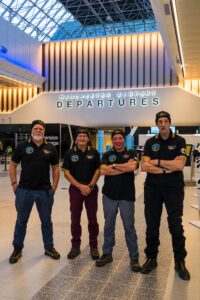
Best known for his 2003 solo journey from Canada to the North Pole without resupply, Hadow’s accomplishments go far beyond extreme endurance. His career reflects a profound shift: from testing personal limits in the harshest environments on Earth to championing science-based conservation in the rapidly changing Arctic Ocean.

Pen Hadow

A Benchmark Performance in Polar Exploration

When Pen Hadow completed his record-setting solo expedition to the North Pole, he closed a chapter on one of the last major “firsts” in Arctic exploration. The journey from Ward Hunt Island to the Geographic North Pole is notoriously treacherous—drifting ice, pressure ridges, hypothermia risks, and the unpredictable movement of the pack make it a battlefield of nature. Completing it alone, without resupply, is a test that combines physical endurance, mental resilience, and logistical mastery.

Hadow’s performance was remarkable for several reasons:

1.⁠ ⁠Extreme conditions and personal vulnerability
Solo travel across the high Arctic forces a unique psychological pressure. Unlike team expeditions, a solo explorer cannot rely on companions for warmth, morale, or safety. Every decision is final, and every mistake could be fatal. That Hadow not only survived but succeeded speaks to an inner discipline developed over decades.

2.⁠ ⁠Evolution from athlete to strategist
Years of preparation shaped the expedition: training in cold-weather survival, optimizing equipment load-out, and navigating constantly shifting ice. Today, the feat is recognized not only as an endurance milestone but also as a testament to the strategic skill required to move efficiently through such a volatile environment.

3.⁠ ⁠A symbolic last chapter in classic polar exploration
Hadow’s accomplishment is often cited as one of the last great polar “firsts” from the heroic tradition of exploration. It marked the culmination of an era when explorers pushed into remote landscapes simply because they were there—uncharted, unforgiving, and irresistible.

Redefining Purpose: From Personal Challenge to Planetary Stewardship

While many adventurers might rest on such an achievement, Hadow’s career since 2003 has taken a very different and more consequential direction. As climate change accelerated the transformation of the Arctic, he shifted from exploration for exploration’s sake to purposeful, science-driven missions.

1.⁠ ⁠Translating exploration into environmental advocacy
Hadow became a prominent voice calling for protection of the Arctic Ocean, especially the Central Arctic Ocean above 88 degrees north—a region beyond national jurisdiction that is rapidly losing its permanent sea-ice cover. His message is grounded not in abstract environmentalism but in firsthand witness.

2.⁠ ⁠The Catlin Arctic Survey
One of Hadow’s most significant contributions has been leading the Catlin Arctic Survey (2009–2011). These expeditions brought together explorers and scientists to gather data on sea-ice thickness, ocean acidification, and the impacts of warming on Arctic ecosystems.

These surveys filled critical gaps in scientific knowledge because they delivered on-the-ice measurements that satellites could not reliably provide. Hadow’s teams traveled hundreds of miles to collect samples and deploy instruments that helped refine climate models and deepen global understanding of Arctic change.

3.⁠ ⁠Mission-driven exploration as a model for the future
Hadow has championed a new model of exploration: one that uses human presence not for conquest or records but for scientific access, environmental monitoring, and policy influence. His work helped normalize the idea that explorers can serve as data gatherers and advocates, pushing the field toward relevance in a warming planet.

Leading the Charge for Arctic Protection

Hadow’s purpose today centres on pushing for conservation of the Arctic Ocean’s international waters—what he has described as the “last great wilderness” on Earth. His organization, the 90 North Foundation, campaigns for long-term protection of this region before increased access invites industrial exploitation.

1.⁠ ⁠A wilderness under threat
With diminishing sea ice, the Central Arctic is becoming seasonally navigable. Fishing fleets, shipping lanes, and potential seabed mining activities could reshape this ecosystem long before scientists fully understand its dynamics. Hadow argues that the region should be safeguarded proactively—before exploitation becomes the default.

2.⁠ ⁠From exploration to diplomacy
Hadow’s advocacy blends the credibility of lived experience with diplomatic outreach to governments, scientists, NGOs, and international bodies. His unique position—as someone who has physically traversed the very spaces he seeks to protect—adds moral resonance to his arguments.

The Broader Meaning of Hadow’s Legacy

Pen Hadow’s career traces a rare arc: from elite adventurer to environmental guardian. The performance that made him famous—his 2003 solo journey—is now only one piece of a much larger legacy. His deeper purpose, cultivated over years of witnessing the Arctic’s transformation, lies in elevating the role of exploration in service to the planet.

He represents a generation of explorers who understand that the era of discovery is not over; it has simply changed. The frontier now is not just geographical—it is ecological, political, and moral. Today, the measure of a great expedition is no longer the planting of a flag but the strength of the data collected, the clarity of the message conveyed, and the impact on global policy.

Conclusion

Pen Hadow’s evolution from solo polar pioneer to leading advocate for Arctic protection illustrates how exploration can remain vital in a changing world. His performance set a benchmark of human endurance, but it is his purpose—safeguarding one of the planet’s most fragile and important ecosystems—that may prove to be his most enduring legacy.

LET’S TALK! If you a brand, agency or the media and want to talk to Pen about an article or working brief please email mark@athletemedia.co.uk or call him on +44 7952 304340.
Toby Harries: From Rugby Pitch to Olympic Podium

4 December 2025 by

At just 27 (born 30 September 1998), he has already collected a major Olympic medal, personal bests that hint at more to come, and a vision far beyond the track.

From School Fields to Sprinting Glory

Harries grew up in Brighton, attending Brighton College before studying Biological Sciences at University College London (UCL).  His early athletic ambitions were split: he played rugby seriously, even joining the Harlequins Elite Development Academy, but the speed and precision of athletics eventually won him over.

He discovered his spark in sprinting around the age of 16, joining Brighton Phoenix and training under coach Jon Bigg — Sally Gunnell’s husband and a respected international 800m coach.  He moved to train with David Sadkin full-time in 2018/2019 while studying at UCL.  Over the years, he made rapid progress — winning two British indoor titles over 200m and taking gold in the 200m at the European U20 Championships in 2017.

Injury & Comeback Context

During school years, Toby suffered two major injuries requiring surgery:
    • One that split all cartilage off his right knee,
    • And a Grade 4c hamstring tear that retracted the muscle by 10 cm and had to be surgically stapled back on.
Despite these setbacks, he came back the next season to win gold at the European U20 Championships in 2017, even while running slower than his pre-injury PB.
It took eight years to set a 200 m PB again after that hamstring injury — an injury he believes cost him some of his peak pure speed and contributed to his later transition toward the 400 m.

Transition & Breakthrough: The 400m Relay

Although Toby Harries began as a 200m specialist, he made a crucial pivot toward the 400 metres and the 4×400m relay.  This shift paid off in a big way: Harries was selected for Great Britain’s 4×400m relay squad for the Paris 2024 Olympic Games, running in the heats and helping the team secure a bronze medal.

His role in the relay is more than just about running fast—he brings tactical insight, strength endurance, and relay experience. The bronze medal is a validation of years of hard work, and his contribution in the preliminary rounds earned him a well-deserved place on the podium.

Performance & Personal Bests

Toby continues to improve on his own times. According to World Athletics, his personal bests stand at 20.22 s in the 200m (set in 2025) and 45.13 s in the 400m (also in 2025).  These times signal his growing maturity as a 400m runner: he now balances raw speed with the strength and stamina needed for one full lap of the track.

He remains committed to both the open 200m and the relay — a rare dual focus at this level — and draws on his scientific background to optimise his training, nutrition, and recovery.

Overcoming Setbacks

Harries’ journey hasn’t been without its hardships. He has battled multiple injuries, including a major hamstring tear that threatened his career.   But he’s also shown remarkable resilience, repeatedly returning to top form and continuing to push boundaries.

In interviews, Harries has admitted to moments of doubt, even considering quitting. But his perseverance, combined with a disciplined, analytical training approach, helped him return stronger — and claim his place on one of Britain’s premier relay teams.

Progression & Training Philosophy

Although noted as likely, 2026 World Relays selection is not yet official — but he is widely expected to compete based on being Great Britain’s standout relay performer, regularly producing one of the fastest splits among all athletes at the World Championships.
Returned to his roots in the 200 m last season, with his and David’s open-minded, highly adaptable programming creating major gains — including hip-strength work, posture improvements, and tempo-based training not commonly used by UK coaches.
This approach helped make him the 4th fastest man in Europe this year over 200m.

Beyond the Track: Science, Mental Health & Purpose

What makes Harries unique isn’t just his speed — it’s the way he applies his scientific education to athletics. After graduating from UCL with a first in Biological Sciences, he has used his understanding of biology, training physiology, and nutrition to refine his performance.

He’s also vocal about mental health, frequently speaking about the importance of community, resilience, and the therapeutic power of sport. His own journey — including injury comebacks and public documentation of his Olympic qualification — has inspired many.

Off-Track Work

Toby mentors younger developing athletes — offering support in:
  • physical training
  • lifestyle structure
  • burnout prevention
  • performance nutrition
  • performance mindset and long-term athlete development.

Looking Ahead: Future Ambitions

Toby’s career trajectory suggests he is far from finished. He’s already been selected for major upcoming events, including the 2025 World Athletics Relays.  His selection for the European Athletics Team Championships underlines his growing importance to the national squad.

He also seems to be balancing ambition and humility: while he has the talent to specialize in individual 400m events, his contribution to relay teams remains a central part of his identity. And with his scientific mindset, he’s likely to continue pushing the limits of his own performance, using data, recovery strategies, and smart training to get faster.

Final Thoughts

Toby Harries is more than just a sprinter. He’s an athlete who blends raw talent with academic rigor, determination with thoughtfulness. His Olympic bronze in the 4×400m relay is a milestone — but it’s just one chapter of his evolving story.

From rugby fields to international tracks, from speeding in the 200m to anchoring relays, Toby Harris embodies the modern athlete: powerful, curious, resilient, and purpose-driven. As he continues his journey, he’s not just chasing medals — he’s raising the bar for what it means to be a sprinter in the 21st century.

WANT TO WORK WITH TOBY?  If you want to work with Toby in a commercial or media capacity please contact mark@athletemedia.co.uk or call +44 7952 304340.

Savannah Marshall: Purpose, Power And Poise Of A Champion

4 December 2025 by

Where some athletes rely on bravado, Marshall lets her fists do the talking—quiet outside the ropes, thunderous within them. Her story is one of purpose-driven performance, an evolution from a young girl in Hartlepool punching her way into boxing gyms to becoming one of the world’s most talented and respected fighters.

A Silent Storm

Marshall has often been described as introverted, even shy, especially in contrast to the loud personalities that populate combat sports. But shyness should never be mistaken for weakness. In Savannah’s case, it’s her superpower. Her calm approach fuels a laser-like focus, allowing her to step into the ring without distraction. Watch her fight and you’ll see what true discipline looks like—controlled aggression, technical precision, effortless timing, and a devastating punch that earned her the nickname The Silent Assassin.

From her early amateur days, where she became the first British woman to win a World Championship gold, to her professional reign as an undisputed champion in the middleweight division, she has consistently proven that presence speaks louder than volume. There is something intentional, almost methodical, about the way she moves: economical, strategic, yet explosive when opportunity opens.

Performance with Purpose

Marshall’s performance record reflects more than athletic skill—it reflects years of persistence in a sport where visibility for women has historically been limited. Each fight showcases her evolution: better footwork, sharper counters, an ever-growing ring IQ, and the type of power that surprises anyone unfamiliar with her calm demeanor. She doesn’t waste energy on theatrics. Every punch has direction. Every round has intent.

Her purpose extends beyond victories. Savannah fights not only for titles, but to push the boundaries of women’s boxing and bring it the respect it deserves. She is part of the generation rewriting what’s possible. Alongside fighters like Claressa Shields and Katie Taylor, Marshall has helped drive forward sell-out arenas, main-event cards, and pay-per-view numbers that once seemed unreachable for female fighters.

To the young girl watching with gloves too big for her hands, Savannah represents possibility. The message is clear: you don’t need to shout to make noise. Show up. Work hard. Believe in your ability. Purpose fuels performance, and when those align, greatness follows.

The Rivalry that Elevated the Sport

No discussion of Marshall’s career is complete without Claressa Shields—their rivalry is one of the most captivating in boxing today. Two champions, two contrasting personalities, one unforgettable storyline. Their highly anticipated clash showcased not only skill but history, emotion, and the growth of women’s boxing on a global stage. Even in defeat, Marshall displayed heart and grace, proving that a champion is not defined simply by wins, but by how they respond to challenges. She came back hungrier, sharper, more determined. The potential for a rematch remains one of the most exciting possibilities in the sport.

Beyond the Ring: A Purpose Larger Than Titles

What makes Marshall compelling isn’t just her success—it’s what she stands for. She is candid about her upbringing, her struggles with confidence, and her development both mentally and physically. While boxing demands toughness, she has embraced vulnerability, proving that strength comes in many forms. Sharing her journey has made her relatable to fans who see their own insecurities reflected in her story.

Marshall advocates for women in sport, not through headlines or controversy, but through presence and achievement. When she steps into the ring, she carries with her every woman who was told she wasn’t strong enough, fast enough, or simply didn’t belong in a space built for men. Savannah is evidence that belonging is earned through passion, not permission.

She also highlights the importance of mental health and balance. Boxing requires discipline: early mornings, strict diets, relentless training cycles. Yet she reminds us that athletes are human. Her personality—grounded, light-hearted outside the ring, unafraid to laugh at herself—adds warmth to her warrior image. She isn’t performing a role; she’s living her purpose.

A Future Fueled by Legacy

The next chapter for Marshall feels like it’s just beginning. Whether defending titles, climbing divisions, or seeking new challenges, her purpose remains steady: to box beautifully, to inspire, and to elevate her sport. With each fight she adds a new layer to her legacy—power mixed with patience, danger balanced with discipline.

Fans connect with Savannah not just because she wins, but because she fights with intention. Every performance is a brick in the foundation she is building for herself and those coming after. At her core, Savannah Marshall is proof that greatness does not need to shout. It shows up, gloves laced, eyes clear, ready to work.

Savannah moves like a storm—quiet until the moment she strikes—and when she does, the boxing world feels it.

Her purpose is clear. Her performance speaks. And the best chapters of her story may still lie ahead.

LET’S TALK: If you are a brand/agency or work in the media and want to work with Savannah please contact mark@athletemedia.co.uk or call on +44 7952 304340.

Attention to Checkout: The Powerhouse Talent Mix Fuelling Modern Brands

4 December 2025 by

Today, the winning formula is a strategic blend of talent, content creators, influencers, and e-commerce. Together, these forces are reshaping how consumers discover, trust, and purchase from brands.

Why This Blend Matters More Than Ever

Consumers spend more time online than at any point in history. Social media, streaming platforms, and digital communities have become the new storefronts. As attention shifts, so does influence—and brands must evolve to stay relevant.

Here’s how each element contributes to building a dynamic, growth-driving ecosystem:

1. Talent: The Creative Engine Behind Brand Success

Whether it’s a visionary designer, a charismatic spokesperson, or a skilled strategist, talent drives innovation. In today’s competitive environment, talent is not limited to traditional roles; it includes digital storytellers, editors, videographers, and community managers.

Real-World Talent Examples

  • Rihanna turned her artistic talent into a multibillion-dollar beauty empire with Fenty Beauty, redefining inclusivity in cosmetics.

  • Zendaya brings global cultural influence to brands like Bulgari and Valentino, elevating brand relevance through fashion and storytelling.

  • Travis Scott transformed a McDonald’s collaboration into a cultural sensation, showing how talent can create massive consumer demand.

  • Pharrell Williams, now Louis Vuitton’s Men’s Creative Director, blends music, culture, and fashion to reinvent brand identity.

Top talent helps brands:

  • Develop strong, authentic identity

  • Produce high-quality digital experiences

  • Keep up with fast-moving cultural trends

Without strong talent, brands struggle to stand out—or even stay afloat—in a crowded digital world.

2. Content Creators: The Storytellers Shaping Demand

Content creators are the architects of online conversation. They produce the videos, images, and narratives that shape culture and influence purchasing decisions.

Real-World Content Creator Examples

  • MrBeast turned his massive YouTube presence into successful product lines like Feastables and MrBeast Burger.

  • Emma Chamberlain used her creator personality to build the booming Chamberlain Coffee brand.

  • Marques Brownlee (MKBHD) influences millions of tech-buying decisions with high-quality product reviews.

  • Khaby Lame, TikTok’s most-followed creator, collaborates with global brands like Hugo Boss and Ferrari.

Creators offer brands:

  • Authentic storytelling

  • Native-platform expertise

  • Fresh, compelling content at scale

They bridge the gap between brand and consumer by speaking the same language as their audiences.

3. Influencers: The Trust Builders and Trend Drivers

Influencers have become modern-day tastemakers. But unlike traditional celebrities, their power comes from relatability and trust. Followers feel connected to them as real people, which gives their recommendations unique credibility.

Real-World Influencer Examples

  • Alix Earle regularly sells out beauty and skincare products through her GRWM videos.

  • Chiara Ferragni, one of the first major influencers, built a global fashion empire from her social presence.

  • NikkieTutorials drives beauty trends worldwide through honest, high-impact product reviews.

  • Addison Rae expanded her TikTok influence into beauty and film partnerships.

Influencers help brands:

  • Reach targeted audiences quickly

  • Build social proof

  • Drive meaningful, measurable action

The most effective influencer partnerships go beyond promotional posts—they create ongoing conversations that amplify brand awareness and drive sales.

4. E-Commerce: The Transaction Engine Behind It All

The final pillar is e-commerce—the platform where attention converts into revenue. Today’s shoppers expect instant, seamless buying experiences across all touchpoints.

Real-World E-Commerce Examples

  • TikTok Shop has skyrocketed brands like Made By Mitchell through creator-led selling.

  • Shopify powers major creator and talent-led brands like Kylie Cosmetics, Gymshark, and Skims.

  • Amazon Influencer Storefronts allow creators to drive large-scale product sales directly from their recommendations.

Modern e-commerce enables:

  • Immediate conversion from influencer content

  • Personalized shopping experiences

  • Data-driven decisions based on real-time behavior

Whether it’s a TikTok shop, Instagram checkout, or a traditional online store, e-commerce ties the entire ecosystem together.

The Real Magic Happens When They Work Together

Individually, each of these elements is powerful. But the true marketplace advantage comes when they operate as a unified system:

✨ Talent crafts the brand vision.
✨ Content creators tell the stories.
✨ Influencers amplify them to the right audiences.
✨ E-commerce turns engagement into sales—instantly.

Real-World Examples of This Blend

  • Skims blends Kim Kardashian’s talent, influencer campaigns, creator-generated content, and a seamless e-commerce engine to fuel explosive growth.

  • Prime Hydration (by Logan Paul & KSI) leveraged creator influence + digital content + social buzz + e-commerce to dominate the beverage space.

  • Fenty Beauty used Rihanna’s talent, influencer support, creator content, and DTC e-commerce to become one of the fastest-growing beauty brands ever.

This integrated approach creates a continuous loop of attention, trust, and conversion. Brands that master this blend see faster growth, stronger communities, and more sustainable success.

What This Means for the Future

The marketplace is moving toward a creator-driven economy where content is currency and community is the new competitive advantage. Brands that embrace this shift will thrive. Those that don’t risk becoming invisible.

The future belongs to those who understand how to blend creativity, influence, and commerce into a seamless, strategic engine.

LET’S TALK! If you’re a brand or agency in need of talent strategy support or you have a specific brief to discuss please email mark@athletemedia.co.uk or call +44 7952 304340. 

Celebrating a Legend: Collins Injera and his Legacy

2 December 2025 by

Born on 18 October 1986 in Nairobi, Kenya, Injera rose from humble beginnings to become one of the most prolific players in the history of the sport. Over a career that spanned 17 years, his pace, skill, and instinct for the try-line made him an icon—not just in Kenya, but across the global Rugby Sevens community.

But Injera’s story is more than just tries and trophies. It’s a story about perseverance, impact, and purpose. In this post, we’ll revisit his sporting achievements and highlight the purpose-driven work that continues to define him.


Sporting Achievements: A Career of Firsts, Records and Glory

🏉 From Vihiga High School to the Global Stage

Injera’s rugby journey began at Vihiga High School in Kenya. After graduating in 2005, he joined the military-affiliated Ulinzi RFC, playing in Kenya’s domestic league. When Ulinzi was disbanded, he shifted to Mwamba RFC, based in Nairobi, and soon found his niche playing on the wing.

His breakthrough came in 2006, when he made his debut for the Kenya national Rugby Sevens team at the prestigious Dubai Sevens. From there, a legendary career unfolded.

Record-breaking try-scoring machine

  • Over his sevens career, Injera scored 279 tries, making him the second-highest try scorer in the entire history of the World Rugby Sevens Series, behind only one other player.

  • During the 2008–09 season, he was the top try scorer with 42 tries and scored 210 points, finishing second on the overall points table behind England’s top pick.

  • In 2015 he celebrated his 200th World Sevens Series try in dramatic style — by signing a television camera lens with a marker pen in what would become one of the most iconic celebrations in Sevens history!

Moments of triumph for Kenya

Injera’s performances helped transform the reputation of Kenyan Sevens Rugby. Among his standout moments:

  • At the 2009 Rugby World Cup Sevens in Dubai, he helped Kenya reach the semi-finals, a breakthrough for the East African nation.

  • In 2016, he played a starring role in arguably Kenya’s greatest sevens achievement — clinching their first-ever World Series tournament win at the Singapore Sevens, where he was named Player of the Final.

  • Injera also represented Kenya in the Olympic Games: both in 2016 (Rio) and 2020 (held in 2021, Tokyo).

Recognition and honours

Injera’s brilliance didn’t go unnoticed:

  • He was named Kenyan Sportsman of the Year in 2009.

  • In 2010, he received the prestigious national honour of Order of the Golden Warrior (OGW) for his contributions to Kenyan rugby.

  • Post-retirement, his legacy was further acknowledged: in 2023 he was inducted into the Melrose Sevens Hall of Fame in Scotland — at the very birthplace of Rugby Sevens.

  • Additionally, he was honored by the Coral Coast Sevens tournament in Fiji, where he was named a Hall-of-Fame inductee and invited as an ambassador.

In January 2023, after 17 remarkable years, Injera announced his retirement from playing — leaving behind an unmatched legacy of excellence on the rugby pitch.


Life After Boots: Coaching, Service and Impact

For many athletes, retirement means stepping away. But for Injera, it marked the start of another journey — one grounded in giving back, nurturing talent, and positively influencing his community.

From star winger to mentor and coach

Just months after retiring, Injera returned to his former club, Mwamba RFC, not as a player, but as a coach — joining the technical bench as assistant coach in charge of defence and attack. This signalled a smooth transition from on-field star to behind-the-scenes builder.

As a “club man through and through,” the club’s leadership expressed confidence that he would help bring in fresh talent, instil values, and guide a new generation of players hungry to leave their mark.

Public service & purpose beyond sport

Injera’s sense of service extends well beyond the rugby field. He holds a degree in Communication and majored in public relations from Daystar University.

After retirement, he was recruited — in mid-2023 — as a Senate Liaison Officer in the office of the Clerk of the Senate of Kenya through the Parliamentary Service Commission.

His public service role underscores his commitment to contribute to national development beyond the sporting arena — a powerful model for athletes looking to build lives of impact.

Furthermore, while playing, he used his platform to engage in community upliftment. He has been associated with charitable endeavours, youth development, and promoting rugby at the grassroots level.


Why Collins Injera’s Story Matters — Today and Tomorrow

  • Representation and inspiration: Injera’s rise from school-level rugby in Kenya to becoming one of the highest try-scorers in global sevens history stands as a testament that world-class talent can come from anywhere. For many young players in Kenya and across Africa, his journey shows that with dedication and discipline, dreams are very much within reach.

  • Legacy beyond records: While his 279 tries and accolades are impressive, Injera’s commitment to coaching, mentoring, and public service hints at a deeper purpose — using sport as a foundation for broader social impact.

  • Bridging sport and society: By stepping into a parliamentary liaison role, Injera is setting an example: athletes can contribute meaningfully to governance, community development, and national discourse long after they hang up their boots.

  • A model of reinvention: His seamless transition from elite athlete to coach to public servant embodies resilience, adaptability, and vision — qualities that resonate far beyond the rugby pitch.


In Conclusion

Collins Injera’s story is more than just a highlight reel of tries, wins, and awards. It’s about ambition, hard work, humility, and a deep sense of responsibility. From scoring hundreds of tries in the world’s most competitive rugby sevens circuit to nurturing future talents at Mwamba RFC, and then stepping into public service for his country — Injera shows that true legends aren’t defined solely by what they do on the field, but by the lives they impact beyond it.

As Kenya and the global rugby community continue to evolve, Collins Injera’s legacy will remain a touchstone — a reminder that greatness is measured not just in stats, but in the lasting change one inspires.

LET’S TALK! If you want to work with Collins in a media or commercial capacity please email mark@athletemedia.co.uk or call +44 7952 304340.

Mondo Duplantis: Redefining What’s Humanly Possible

2 December 2025 by

In 2025, that athlete is Armand “Mondo” Duplantis.  Awarded Athlete of the Year, he stands as a symbol of innovation, elegance, and relentless ambition in world athletics.

Mondo Duplantis isn’t just breaking records — he’s resetting expectations. Pole vault was once seen as a niche event, a technical spectacle tucked between sprints and throws. But Duplantis has turned it into a headline act. Crowds come specifically to watch him. Stadium noise dips to a hush when he begins his run-up, and every leap feels like a moment suspended between gravity and possibility. He’s not merely competing; he’s performing art through athletics.

Mastery Elevated to a Different Realm

What separates Duplantis isn’t just his physical talent — though it is remarkable. His speed down the runway rivals elite sprinters, his strength and technique are refined beyond his years, and his flexibility allows him to bend, twist, and soar in ways that challenge biomechanics textbooks. But the difference lies in how he approaches improvement. His career is a continuous cycle of adaptation: higher standards, sharper technique, greater mental poise.

Record after record, meet after meet, Mondo makes the near-impossible seem routine. While many athletes peak at a single world record moment, Duplantis has normalized progression. The bar goes up — and the world watches him clear it.

By 2025, he’s not only pushed past heights that were once thought unreachable — he’s done it repeatedly, with consistency that borders on unbelievable. He competes not against others, but against physics itself.

The Mental Game Behind the Magic

Athleticism can get you to elite level — mindset keeps you there. Duplantis has both in symphony.

Pole vault is a sport of calculation, confidence, and courage. One small hesitation can lead to failure. One moment of doubt can stop momentum mid-run. Yet Duplantis carries an energy of calm assurance. He smiles before attempts most athletes would approach with tension in their shoulders. He thrives on pressure, using high stakes as fuel rather than fear.

That mental resilience is why he continues to raise the standard. When you’ve already achieved more than most athletes dream of, complacency becomes the silent opponent. But Mondo’s hunger hasn’t dimmed — if anything, success accelerates it. The greater the bar, the greater his ambition.

A Global Icon, Not Just a Champion

Part of what makes Duplantis the 2025 Athlete of the Year isn’t only what he does, but what he means. He has become a global ambassador for track and field — bringing youth back to athletics, filling seats, and inspiring future vaulters who now believe heights over six meters are not only possible, but expected.

He carries this responsibility with grace. Charismatic, humble, and effortlessly engaging, he has the rare ability to make excellence feel relatable. Kids watch him compete and think, Maybe that can be me. He signs autographs with sincerity, celebrates competitors’ successes, and remains grounded despite the spotlight.

And that spotlight is bright. He has helped pole vault trend on social platforms, appear in mainstream media, and hold its own against heavyweight sports in popularity. He doesn’t just win — he elevates the game for everyone.

The 2025 Season — A New Peak in an Already Golden Career

The year 2025 will be remembered not only for titles or records, but for the narrative of dominance wrapped in grace. Each major meet felt like another chapter in a historic run. Fans began watching not to see if he would win, but how highhe would go. His presence at any championship automatically heightened anticipation.

Athletes of the Year are chosen because of impact, consistency, breakthrough performance, and legacy. Duplantis checks every box — and then clears the bar above it.

  • He shattered previous world records with heights that blurred the line between human and superhero.

  • He maintained competitive excellence across major championships and world stages.

  • He inspired new audiences to fall in love with athletics again.

  • And he positioned himself not just as the best pole vaulter ever, but as one of the greatest athletes of his generation.

Legacy in Motion — And It Isn’t Over

The most exciting part about Duplantis isn’t what he has done — but what he will do next. He is still young, still improving, still chasing greater heights both literally and metaphorically. If 2025 is the year he solidified his status as Athlete of the Year, the years ahead may define him as one of the greatest of all time, across any sport.

Records eventually break, but legacies remain. Mondo’s legacy is already forming: an athlete who refused to be limited by history, who made innovation his normal standard, who carried joy into competition, and who inspired millions by showing that the sky is not the limit — just the next target.

As long as Duplantis continues stepping onto the runway, the world will continue to look up.

And with every leap, he reminds us:

Greatness doesn’t just aim high — it keeps going higher.


  • « Go to Previous Page
  • Page 1
  • Page 2
  • Page 3
  • Page 4
  • Page 5
  • Interim pages omitted …
  • Page 27
  • Go to Next Page »

Primary Sidebar

Recent Comments

    Archives

    Categories

    • No categories

    Meta

    • Register
    • Log in
    • Entries feed
    • Comments feed
    • WordPress.org

    Subscribe to AMG Newsletter here

    Footer

    © 2026 Athlete Media Group Ltd All Rights Reserved

    MENU

    • Our Story
    • Manifesto
    • Athletes
    • Pioneers
    • Journal
    • Work
    • Contact

    USEFUL

    • Advisory Board
    • Privacy Policy

    CONTACT

    mark@athletemedia.co.uk

    tel: 07952 304340

    VAT REGISTERED ADDRESS

    Thatch Barn
    Ryewell Lane
    Hoath Corner
    Edenbridge
    KENT TN8 7BS

    We use cookies to ensure that we give you the best experience on our website. If you continue to use this site we will assume that you are happy with it.