• Skip to primary navigation
  • Skip to main content
  • Skip to primary sidebar
  • Skip to footer
Athlete Media Group

Athlete Media Group

find your inspiration

  • Our Story
  • Manifesto
  • Athletes
  • Pioneers
  • Journal
  • Work
  • Contact
  • Join Us

“Athletes are taking responsibility to get their sports more sustainable”

1 October 2019 by

Picture this. It’s your turn to buy the drinks. You’re at a major rugby event and it’s half time. The bar is ten-deep. When you finally get served, you buy four drinks. They are in single use plastic cups. You’re given a flimsy cardboard tray. By the time you get to your seat, the second half has started. You’ve spilt a lot of beer. One beer nearly fell out. You don’t want to go to the bar again. Sound familiar?

According to research by Tappit, the global payment ecosystem for events, stadia and venues, 62% of rugby fans and 72% football fans claim queueing at games is the worst part of the match experience.  STACK-CUP™ is looking to change that. Not only are they solving a problem, but they are making the sports and entertainment industry more sustainable in the process. 

With their reusable cup, and patented handle that allows for the stacking of multiple drinks, STACK-CUP™ is changing the game. They have evidence to show that bar service is twice as quick.

James Roles, Global MD of STACK-CUP™, started his career in marketing, working for numerous media agencies and media outlets before he took on the Global Managing Director role at STACK-CUP™. 

He admits that STACK-CUP™ was an attractive proposition as not only did it offer up the opportunity to have a stake in the company but it was also a product that was addressing two issues. Removing single use plastic from major events and providing fans with a better experience.

“Our purpose at STACK-CUP™ is to eradicate
single-use plastics from stadiums, events and festivals”

Blue Planet was a tipping point. Attitudes toward single use plastic have hardened and behaviour (and government legislation) is changing for the better.  In particular, the negative impact on our oceans is firmly in the social consciousness across the world. James views this as a very real gap in the market for a company and product like STACK-CUP™. 

“There are  few Industries that are currently in high demand with significantly more headroom for growth. Our purpose at STACK-CUP™ is to eradicate single-use plastics from stadiums, events and festivals by replacing them with a reusable cup programme. We have invested significantly in washing facilities and logistics to enable this to happen successfully.”

“Many stadiums and venues are resistant to change. But the day is coming when they’ll have to adapt. Giving customers a better experience makes change easier. The stackable handle makes such a big difference. You can carry a whole bunch of cups in one hand and have your phone or a pie in the other.”

Changing behaviour is exactly what is being called for across the board. After a year that has seen a huge increase of media attention on the issues around sustainability and single-use plastics, James sees the sport and entertainment industries as key to switching the impetus onto sustainability. 

stack cup, sustainability, saracens, newcastle falcons, o2, wembley, single use plastic, beer, ocean plastic

“Sport and entertainment venues are in the spotlight. They’re naturally going to be the ones that people look to change their behaviour and the most progressive one have already.” 

This is shown through the impressive list of clients STACK-CUP™are working with, with the likes of The O2, The Oval, Leicester Tigers, Saracens and Major League Baseball to name just a few.

But whilst many businesses have joined the STACK-CUP™revolution, James admits that there are still multiple challenges he faces in attracting more venues, clubs and stadiums to switch from single-use to reusable cups. 

The danger is a stadium simply opts for the cheapest
option. When this happens, the end result is nobody wins

“Sustainability comes at a cost. There is an ongoing challenge for stadiums to balance the need to be more sustainable, but not a commercial drain. To add to that, there is a need to ensure that a stadium’s operation is not disrupted to the detriment of customers whilst change is happening. The danger is a stadium simply opts for the cheapest option. When this happens, the end result is nobody wins.”

“It’s a real joy for me to see fans using STACK-CUP™for the first time. One guy even said it had changed his life. When you see a person’s face light up the first time they carry four beers in one hand and a slice of pizza in the other, I know that we are onto something. It’s fun, convenient and it does what it says on the tin .”

stack cup, sustainability, saracens, newcastle falcons, o2, wembley, single use plastic, beer, ocean plastic

To address the cost of reusable cups, stadiums have started to charge customers a deposit or fee to use a reusable cup. Typically this is a £1 that is refundable. This is an effective way of mitigating the cost of reusables and one that customers now accept as normal practice. Much like charging for carrier bags in the supermarket. 

“As long as customers don’t get ripped off with the deposit sum, this model is here to stay and that’s a really positive step.”

Another key element James acknowledges in the fight against single-use plastics is the interest and campaigning of the athletes themselves. 

“Athletes themselves are taking responsibility as
spokespeople to get both their own sports and
other sports to change and be more sustainable”

“Athletes themselves are taking responsibility as spokespeople to get both their own sports and other sports to change and be more sustainable.  You see that especially in sailing where it is directly related to polluting oceans, with the likes of Dee Caffari who are really authentically involved in making the change.” 

Alongside athletes like Caffari, you also have individuals like Kiko Matthews, with her #KikPlastic project, and 2016 Olympic gold medallist sailor Hannah Mills, with the recently launched Big Plastic Pledge, who are all using their platforms to change the way we view plastic use in sport. 

STACK-CUP™ has launched a number of it’s own programmes to complement the work being done by athletes. Its Cup4Clubs programme donates cups for reuse in youth sports clubs that struggle to afford the cost of everything, let alone cups. They are also involved in the implementation of charity deposit bins with clients they work with. At Leicester Tigers for example, customers have the opportunity to donate their deposit fee by placing their cup into the charity bin at the end of the match. 

stack cup, sustainability, saracens, newcastle falcons, o2, wembley, single use plastic, beer, ocean plastic

“It is a really nice circular way of making sure that the venue does the right thing, we do the right thing and we raise money for fantastic causes.” 

“We have a unique opportunity to make the customer
experience better. Let’s eradicate single
use plastic and half time nightmares”

The future of STACK-CUP™ looks promising. Europe is their main market, but having also partnered with the hugely popular Hong Kong Sevens, global expansion is already well under way. The US and Australia have suddenly started to wake up to the possibilities with STACK-CUP™. 

“Our main goal is to take our reusable cup programmes to as many venues and stadiums as we can, as fast as we can. With our STACK-CUP™ we have a unique opportunity to make the customer experience better. Let’s eradicate single use plastic and half time nightmares.”

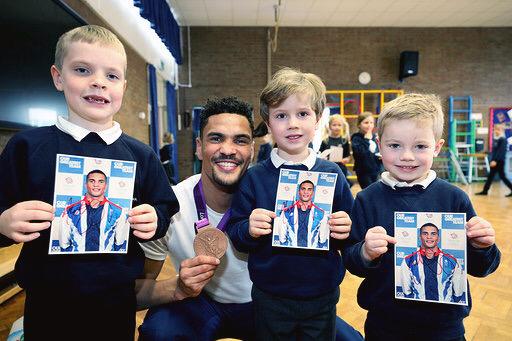
“Don’t judge me on my Olympic bronze, judge me on the story around it” | Anthony Ogogo 

23 September 2019 by

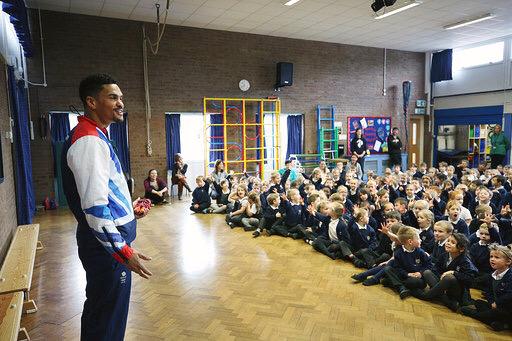
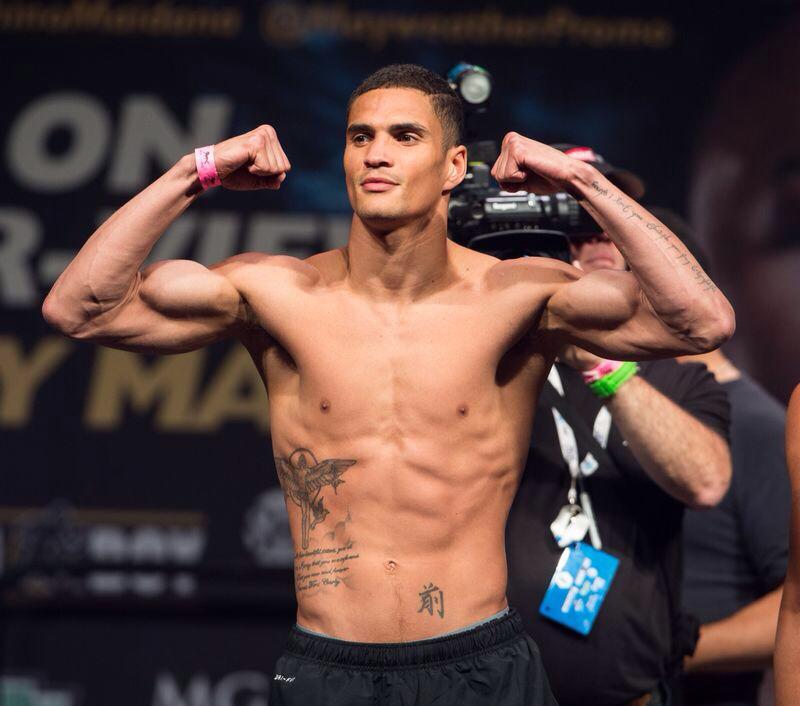
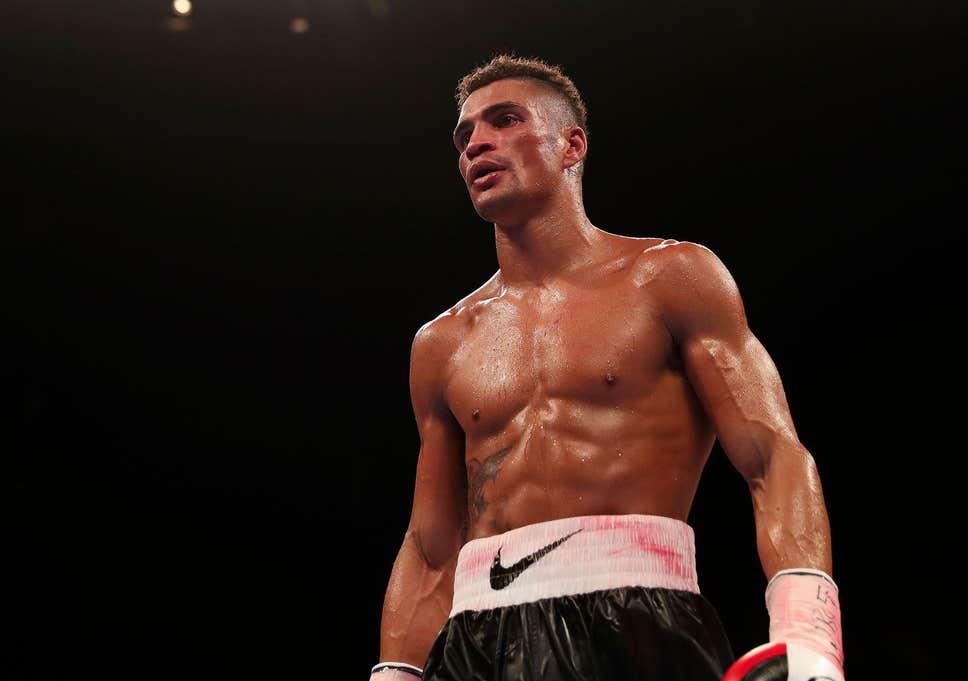
This year, at 30 years old, Anthony Ogogo was forced to retire from boxing. All he had ever wanted to do was be in the ring, fighting for titles and for the love of the sport. But an eye injury forced him out of the sport in a way that left a lot of his own questions and dreams unanswered. 

“I spent 3 years hoping and believing that I would be able to get back in the ring and resume my career. 

“I maintained that belief in spite of how slim the chances were and rolled the dice on more than one occasion.” 

Anthony Ogogo, Boxing, London 2012, Bronze Medal, Oscar De La Hoya, Inspiration, LGBTQ+, Overcoming Adversity

Now, as we sit in a coffee shop in Hammersmith, Anthony is at peace with how his career ended. Whilst he wished he could still fight, he can’t, and he is alright with that.  

But his journey is one that is so much more than the tale of an injured fighter. At every turn Anthony was fighting against the current to ensure he can look back on his career with pride, and just because he is no longer in the ring, that does not mean he has a different approach. 

Growing up as the only male in his household, with his mum and four sisters, he admits boxing is not what you would have expected him to pursue a career in. 

Yet, Anthony was sport mad and ‘thankfully excelled in most sports [he] tried.’ 

It was only after a playground fight, with the winner proudly exclaiming that he won due to his attendance at a boxing club, that Anthony ventured down to the gym. 

“I walked into the gym and thought ‘This is
amazing, I love everything about it, I love
the smell, the posters on the wall, everything”

“I walked into the gym and thought ‘This is amazing, I love everything about it, I love the smell, the posters on the wall, everything. 

“I had no clue if I was going to be any good or not, but I knew either way it was what I wanted to spend the bulk of my life doing.” 

It didn’t take long for Anthony to rise to the top, being crowned National and British Champion soon after starting the sport. 

As a kid, he was also achieving in school, captain of the county football team and playing in Norwich City FC’s Under 14s squad. But he knew boxing was the one. 

He didn’t slow down. After winning the Junior Olympics in 2004, he went on to win the Junior World Championships, ‘boxing out of his skin’ to be named Best Boxer of both tournaments as well as collecting gold medals in both. 

However, it was at this point that Anthony hit a wall. After entering the ABA Championships, he suffered an injustice that would rock his confidence. 

At the end of the 3rd, and penultimate round, of a fight he was winning comfortably, Anthony was hit in the back of the head so hard he could not remember the fight. 

“I don’t remember anything from there on, I was in the changing rooms, I had a sweat on and I asked my coach when my fight was on, I didn’t know I had boxed.” 

“I was Junior World Champion, Junior Olympic
Champion and they kicked me off the team. The Performance
Director told me ‘you’re no good to me injured” 
 

Anthony lost confidence and admits he almost became scared of getting hit. The hardest part? He couldn’t take anything away from the fight. He was 11-1 up when he was deemed to have been knocked out. 

After struggling for a while in the amateur division, he suffered a major injury, a dislocated shoulder, whilst fighting. It ended his hope of competing at the Beijing Olympics in 2008. 

“I was Junior World Champion, Junior Olympic Champion and they kicked me off the team. The Performance Director told me ‘you’re no good to me injured.”  

Anthony had dropped out of school during his A-Levels to pursue his boxing and within a month, due to his injury, he was working in a bar for £5.85 an hour to pay for his recovery. 

It took a year, but Anthony came back more determined than ever. 

“I was always very talented and very skilful but because I was hit in the back of my head but I struggled at senior level. 

“The hypothesis with me was ‘he’s very talented, skilful and quick but he’s not tough enough, he’s not robust enough’ and that pissed me off. 

“I eventually proved it and was the golden boy in the Great Britain team. Every tournament I went to I just won gold.” 

A year on in the European Championships, Anthony suffered another dislocated shoulder. He lost the fight by a point, even with the injury, and was told he would miss the London Games. 

Anthony Ogogo, Boxing, London 2012, Bronze Medal, Oscar De La Hoya, Inspiration, LGBTQ+, Overcoming Adversity

But, as he had promised himself, he wasn’t going to let someone else control his actions. He begged the GB coach, Rob McCraken to let him go to the World Championships. 

After making his way through the rounds, he came up against the Georgian who had dislocated his shoulder. Whilst the game plan was to box, in which Anthony would win comfortably, as soon as he entered the ring, he saw red and the bout turned into a street fight. 

In a three–round fight, Anthony was 6 points down after 2 rounds, but became the first boxer to overturn a 6–point deficit to qualify for the London Games. 

“I was finally qualified and I had 8 weeks to go until the Olympics. I went back to East Anglia and spent a week with my family. The next week I went back to Sheffield where the GB Team trained and then my sister called me.” 

Anthony’s mum had suffered from a brain aneurism, and he returned to see her, not lacing up a glove for 4 weeks. It was only his sisters ‘guilt tripping’ him, telling him that his mum would not want to be the reason he did not fight, that ensured he competed in the Olympic Games. 

He headed back to training, and it was during a friends and family open sparring session, in which Anthony had no one to attend, he realised the magnitude of what he was up against. 

“I sat on the edge of the canvas, my achilles were recovering
having had surgery on them before, my shoulder
was really sore, my rib was broken and
I thought my fucking mum is going to die”

Having not thrown boxed in a month, he was caught with a punch that broke his rib. 

“I sat on the edge of the canvas, my achilles were recovering having had surgery on them before, my shoulder was really sore, my rib was broken and I thought my fucking mum is going to die and I was never see her again.” 

He did not let it stop him, but he found a way to cope. 

During the Olympics, Anthony would wait for the coaches to sleep, get the tube out to his car and drive to Cambridge. He would ‘beg’ the nurse to let him in to see his mum for 20 minutes so he could hold her hand. 

Anthony Ogogo, Boxing, London 2012, Bronze Medal, Oscar De La Hoya, Inspiration, LGBTQ+, Overcoming Adversity

He would then travel back and sneak into bed before the coaches woke up. This was Anthony’s Olympic experience. 

Yet despite having had to face all of this in the run up to the Games, Anthony pressed on, and got through to the semi-finals, where he fought the Brazilian who had beaten him in the World Championships by one point, despite his bad shoulder. 

“It beat me, the situation beat me, I lost to
him because I was tired both physically and emotionally” 

“He beat me, but he didn’t really beat me. It beat me, the situation beat me, I lost to him because I was tired both physically and emotionally.” 

After the Games, whilst on the podium, Anthony did not feel pride, or a sense of achievement. 

“I just wanted to go home, I didn’t feel particularly proud or happy. I felt pissed off because even though I was under so much pressure, I should have beaten the Brazilian.” 

Anthony’s mother made a recovery, but the memories of his Olympic experience were too painful to relive. The idea of facing another 4-year cycle was too much, so instead Anthony signed for Oscar De La Hoya’s Golden Boy. 

Whilst it seemed like the next step, De La Hoya and his business partner split, leaving Anthony in a state of limbo. He was forced to fight on Matchroom undercards and as the away fighter, even though he felt he deserved to be the headline fighter. 

After battling back from another and 3rd shoulder dislocation where he had to fight the entire fight with one arm, and 4 achilles surgeries, Anthony was back boxing and knocking people out and on the cusp of a world title fight when the eye injury stuck. 

He admits boxing was never about the money, he had never wanted to go pro, but he felt as though his career was beginning to push on from a more stable position. 

“Those things you overcome in boxing, you
go through the same things in life, you’ve got to carry on” 

It was now, however, that during sparring, Anthony fractured his eye socket. The medical advice he received was questionable at best, and thus causing the injury to exacerbate. 

Despite spending all of the money he had earnt in his career on trying to fix his injury, it would end his boxing career and earlier this year, at 30, Anthony was forced to say goodbye to the sport he had given up so much for. 

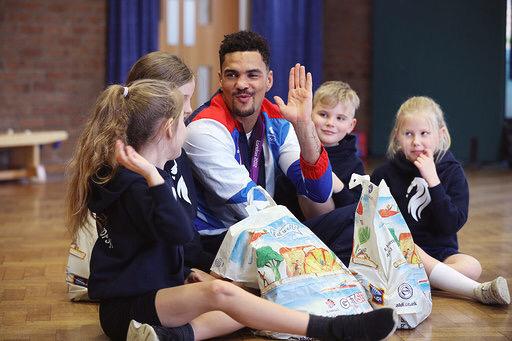
With all the obstacles Anthony had faced, he now spends his time telling his story to ensure other people know that they can overcome their own obstacles. 

He may have harboured some resentment to begin with, due to the way his career was ripped away from him, but Anthony insists that rather than become a ‘bitter and twisted old man’, he is more interested in telling his story to show others that you can overcome your battles and improve as a person. 

“The reason there are so many boxing films is because boxing is a snapshot of life. The things you go through in a boxing match, the ups and downs, you get hit, you come back,  you go through the same things in life. 

“People can’t relate to being hit in the body, but you can relate to being sacked at work or your mum being poorly. Those things you overcome in boxing, you go through the same things in life, you’ve got to carry on.” 

Anthony Ogogo, Boxing, London 2012, Bronze Medal, Oscar De La Hoya, Inspiration, LGBTQ+, Overcoming Adversity

On top of all the issues Anthony had faced, he witnessed injustice from another unsuspected source recently after experienced homophobic discrimination firsthand towards someone he cared about.  

“You get one shot in this life, you deserve to live it the way you want as long as you’re not doing any harm to anybody and you’re being nice and respectful, you deserve to do it in the only way you see fit.” 

Now Anthony is talking at more and more LGBTQ+ events, and admits that he doesn’t see what he does as a big deal, it is just the right thing to do. 

Anthony refuses to let the eye injury stop him achieving big things and he is currently embarking on a new career as a professional wrestler, which is another boyhood dream. 

He wants to prove that you can achieve great things with a good attitude and perseverance. 

As we wrapped the interview up, Anthony told me his two favourite quotes: 

Nelson Mandela’s ‘Do not judge me by my successes, judge me by how many times I fell down and got back up again’ and Audrey Hepburn’s ‘As you grow older, you will discover that you have two hands, one for helping yourself, the other for helping others.’ 

Both are pertinent, and both describe the way Anthony has lived his life in a nutshell. 

“I want to achieve big things in life, and they’re going to take quite a lot of focus to do so, but if I can help others achieve as well, I’d like that.” 

“Pressure is a privilege” | Dylan Fletcher Scott

20 September 2019 by

Dylan Fletcher Scott is busy. Between training for the Olympics, competing in the Sail Gp and taking part in beach cleans, he feels a responsibility to help educate and raise awareness about the growing issue that is ocean plastics, he does not have a lot of spare time. 

Whilst he may be enjoying competing at the top level in sailing on numerous fronts, it wasn’t an easy, or orthodox, route into sailing for Dylan. 

Growing up, Dylan’s parents were successful ballet dancers who tried to get him to pick up the family trade. He ‘was having none of it’, and rather than the arts, Dylan’s focus was on sport. 

Dylan Fletcher Scott, olympian, sailing, motivational speaker, tokyo, 2020, brand ambassador, sports sponsorship, sail go, british sailing

At 11, he went on a sailing course and fell in love with the sport. Whilst it may not have been what he wanted to do as a profession, the entertainment industry did play a part in his sailing journey. 

“Because Mum and Dad were ballet dancers, I had an agent, so I was on The Bill and other bits and bobs, so I was able to buy myself my first boat.” 

It wasn’t long before it was apparent that Dylan had a future in the sport and, at age 18, he was selected to be part of the transitional squad. 

Whilst it wasn’t funded, the squad occupied the space between youth and Olympic sailors, Dylan knew it was an opportunity he could not turn down. 

“When I was 16 years old, I decided that I wanted to be an Olympics sailor and win a medal. 

“I turned around to mum and dad and said I was going to differ University for a year and pursue sailing.  

“The feeling you get from the country being
behind you and how many people get
into it in those two weeks is just amazing” 

“They said, ‘no you’re not’ and I said, ‘I am, you were both ballet dancers, so I can do this.” 

Whilst it is not the normal gap year, pursuing a career as an Olympic athlete, his results improved, and Dylan realised he had a real chance to represent his country. The conversation around not attending university all together was a harder one. 

“You’re trying to take up Olympics sailing, in which the amount of people that start and the amount of people that finish is very few. 

“But I’ve been told that I’m determined and committed, certainly sometimes overly so, but I just threw myself at it. The only way I was going to get there was to do everything I can.” 

Having got himself onto the fully funded programme, Dylan was selected for the Rio 2016 Olympics.  

For Dylan, the feeling of competing at an Olympic Games was amazing, and something that you do not experience in sailing on a regular basis. 

“The whole atmosphere of being part of the team and representing your country is something unique to us sailors. The feeling you get from the country being behind you and how many people get into it in those two weeks is just amazing.” 

After missing on a medal, the Rio Games lit a ‘fire in his belly’ to ensure he was not left disappointed next time round. 

Dylan Fletcher Scott, olympian, sailing, motivational speaker, tokyo, 2020, brand ambassador, sports sponsorship, sail go, british sailing

“I wasn’t depressed, but it was certainly a comedown. I had just spent 10 years of my life training and I just missed out on a medal.” 

The pressure of representing your country, coupled with the heartbreak of missing out on a podium finish, would affect most people. But, rather than avoiding the pressure and expectancy, Dylan’s reaction was to throw himself straight back into the sport. 

“When you’ve got that pressure, the pressure of doing a nation, yourself, your family and friends proud, that feeling makes it more special when it does go well. 

“Pressure is a privilege. If you don’t feel pressure, it’s because you’re not in a position where what happens matters.” 

After Rio, Dylan’s career changed direction as he and Stuart Bithell, Dylan’s former Great British rival and Rio Silver medallist, teamed up to race in the 49er category.  

“Pressure is a privilege. If you don’t feel pressure,
it’s because you’re not in a position
where what happens matters” 

The competitiveness that had existed between the pair posed no problem for the pair, as it became apparent that not only did the two make formidable partnership but got along off the water as well. 

“As soon as we started sailing together is was quite obvious we got on really well. 

“The speed of the boat married very well with how I steered, so instantly when we jumped in to sail in together, we were fast straight away. 

“One of our strengths is that we are quick, and we’ve really been able to build on that and develop a style of sailing that has allowed us to be consistently up there. 

Dylan Fletcher Scott, olympian, sailing, motivational speaker, tokyo, 2020, brand ambassador, sports sponsorship, sail go, british sailing

“We have chosen to operate, both as a team and as a campaign, to increase the level of professionalism than either of us had in the past.” 

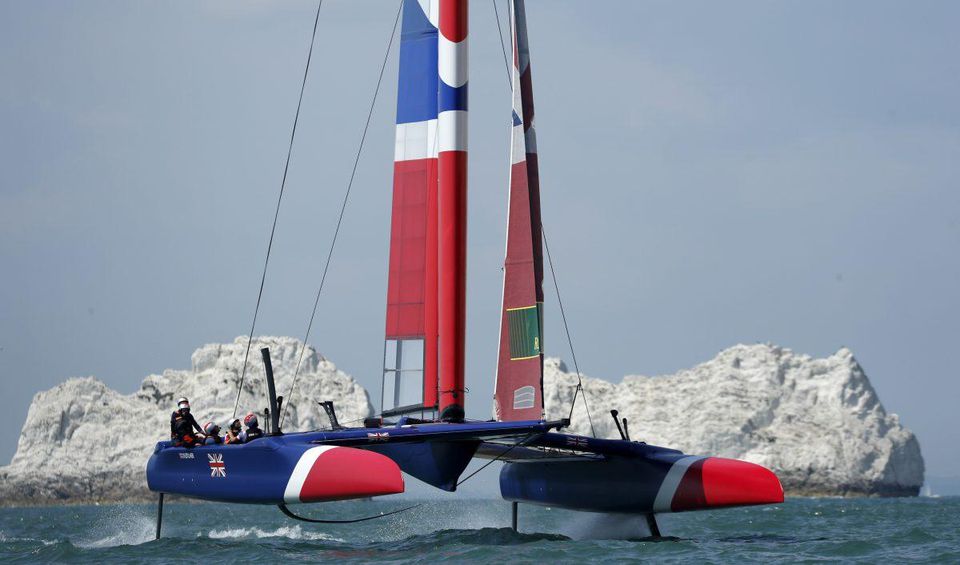
Alongside his Olympic pursuit, Dylan now competes in Sail GP. The competition is forming a sailing circuit that draws in the crowds, as well as TV viewers, through consistent sailing events throughout the year. 

 “With Olympic sailing, you do 4 years training for a World championships, European Championships and World Cup events, but they go largely under the radar. 

“They’re not on TV and it’s very low key until the Olympics come around. But Sail GP is obviously trying to create a sustainable circuit where people are going to want to tune in on the TV and come down and watch.” 

“We were the first boat to do 50 knots. No
matter what anyone says, you can go faster,
but we were the first people to break it” 

Whilst he ensures that nothing is like the tradition and heritage of the Olympics, Sail GP is the adrenaline pumping, high speed racing that tests your abilities as a sailor, as well as allowing for more frequent and consistent competition within the sport. 

“I’ve never been involved with a team this size, all working towards the same thing and it is incredible. 

“It is the best racing for adrenaline. This is just flat out racing. It pushes you harder than anything else, both cognitively and physically. 

“We’re doing it at this breath-taking speed on these close, short courses which makes it amazing to watch and amazing to race in.” 

At Cowes Week, the British leg of the Sail GP circuit, Dylan and his crew became the first to travel at over 50 knots.  

“It was insane, on home waters right in front of Cowes, to be the first boat over 50 knots. I think it really showed our progression. 

“We were the first boat to do 50 knots. No matter what anyone says, you can go faster, but we were the first people to break it.” 

Dylan also acknowledges that the live line technology employed in Sail GP can open up sailing to the masses and attract a wider audience to the sport. 

“It has allowed sailing to become something you can understand when you tune in, it’s not like the Olympics where you don’t know what’s going on. 

“Sail GP has broken a barrier and opened it up for everyone else, hopefully that is something we’ll see in the future of Olympic sailing.” 

“I wasn’t someone sailing boats from a
young age, I just worked very hard in
Olympic sailing to be the best sailor possible” 

In terms of his own future, Dylan wants to be on the podium. Whether that is at test events, the Olympics or at the conclusion of this season’s Sail GP. 

“Ultimately, I want to win gold next year in Tokyo and win the million dollars next year [by winning the Sail GP].” 

But alongside all his sporting ambitions, Dylan also wants to show that sailing is not a sport for the wealthy, and get more people watching and participating in the sport. 

“I really want the sport to be in a better place. I want there to be more opportunities for kids to get into sailing and, hopefully by being part of sail GP, show a different route into this kind of world. 

“I wasn’t someone sailing boats from a young age, I just worked very hard in Olympic sailing to be the best sailor possible.” 

The long tail of athlete brands

19 September 2019 by

The hat-trick combination of content, technology and data means athletes can flex their personal brand muscles like never before.

The estimated 30k professional athletes in the UK plying their trade are asserting much more control of the sports they train for, play in, love unconditionally and dedicate their lives to.

Smart, digitally-savvy athletes that are building off the pitch ‘exposure’ into their everyday routines and the rewards can be huge for the athletes and conversely for their sports.

There are 3 key drivers:

1.  Storytelling

Athletes are bypassing many of the traditional media platforms to tell stories on their own terms without editorial interference or the primal fear of being misquoted by a journalist.

Players’ Tribune in the US and the brilliant PlayersVoice in Australia are great examples of new technology platforms are giving professional athletes their own publishing voice in sport and effectively ‘coaching’ athletes to tell the most powerful and emotional stories.

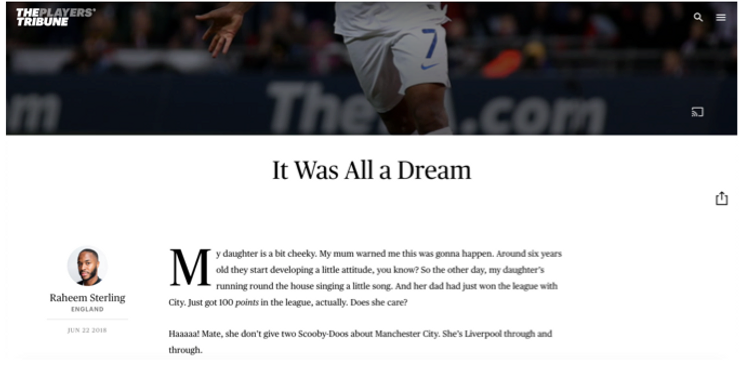
A great recent example is Raheem Sterling who after a difficult period with the UK’s media ‘re-branded’ with an exclusive interview with the US-led Players Tribune just before the 2018 Football World Cup.  Sterling’s emotional interview worked because it was counterintuitive revealing a side to the player that hadn’t ever been shown through the media’s coverage of him – that gap between the image and the real person. This showed extraordinary self-awareness on the part of the athlete/his team and is a great example of personal brand strategy executed perfectly that other athletes can learn from.

2.  Content Magic 

Content is opening up new avenues and audiences for athletes.

Professional athletes are increasingly using their own digital skills to change the perceptions of their own, often less well-known sports for the better.

In rugby the brilliant Women’s Rugby Hub is showcasing the talent, dedication and joy within the women’s game and is just one of several high quality online channels helping to grow the popularity of women’s rugby. It has an impressive 4,100 Instagram followers and its multi-media content informs fans and new audiences in ways that wouldn’t have been possible even 5 years ago.

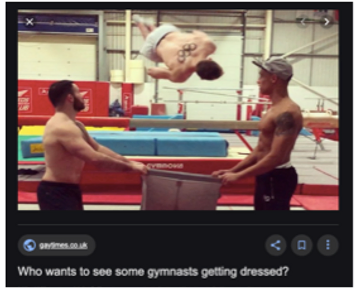
Then there’s gymnast Nile Wilson. The 2016 Olympic bronze medal-winning gymnast in the parallel bars, is on a mission is to make gymnastics as popular as football.  He uses insanely entertaining gymnastic moves to entertain his hundreds of thousands of social media followers and bring new fans into the sport. A triple somersault into a pair of y-fronts filmed with fellow gymnasts recently had 1.1m YouTube views so he is doing a lot right.

Content is also travelling across different sports for mutual benefit. To push the collective power of women’s sport in the UK and respective World Cups on home soil national teams in hockey, cricket and netball joined forces in late 2016 to promote themselves and each other in a campaign called TeamUp. A great example of a big idea leading to fresh content distributed socially via the powerful, collective voice of athletes.

3.  Sporting Revolution 

Many elite athletes have also become frustrated by how their sport is run and marketed.  Armed with success, passion, ideas, empathy and huge reach these athletes are fighting back to bring their sports into the 21stCentury.

In rugby union International Rugby Players is the new global representative body on issues of importance for professional rugby players. This athlete union, that includes Kieran Reed and Owen Farrell, was recently created to lobby World Rugby about player burn-out and the excessive demands of international rugby.

In snooker, the mercurial Ronnie O’Sullivan is challenging the status quo in snooker. He is passionate about wanting to bring more ‘razzamattaz’ and excitement to the sport and has actively used the UK media to campaign for change, much to snooker kingpin Barry Hearn’s disdain.

However, the best example for me is in swimming where GB Double Olympic champion Adam Peaty has channelled his dissatisfaction with global governing body, FINA, into changing his sport for the better.

Thanks to his and other swimmers’ actions, in November 2019 a new global swimming league will start with 6 teams from around the world competing for millions of pounds in prize money.

If you’re one of the c. 30,000 elite athletes in the UK, what route are you going to take? Before you start telling your story you need to make sure you’ve done your personal brand groundwork, so your brand is sustainable beyond the initial ‘origin story’. If you do that, you’ll help boost the ‘athletes are brands too’ revolution.

“You’ve got to go and try things. Don’t wait for the perfect time, go out and try it!” | Drew Povey

6 September 2019 by

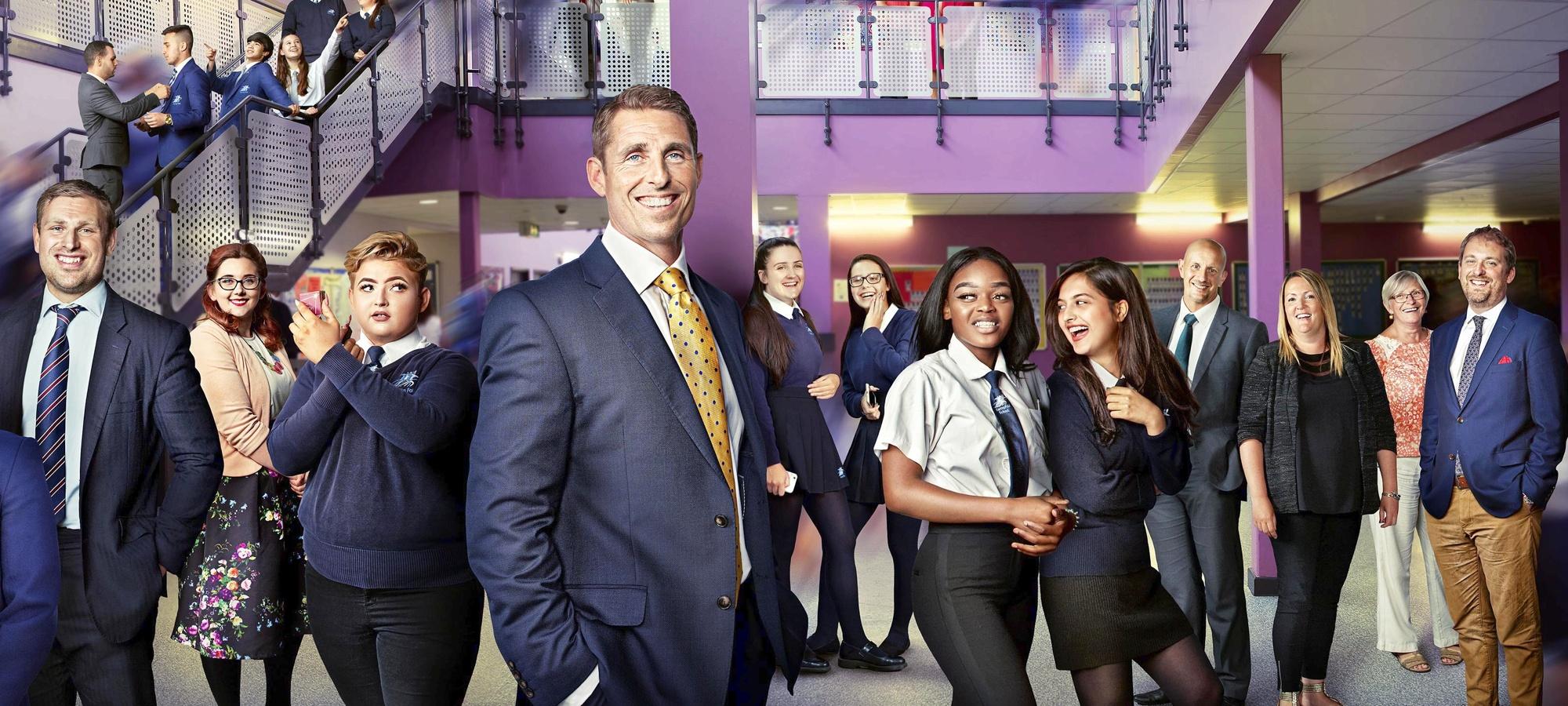
Drew Povey, Executive Headteacher from Channel 4’s popular show, Educating Greater Manchester, and self-confessed leadership geek, has been known to describe himself as “average on a good day”. 

This self-deprecation is arguably misplaced when you consider he has been invited to share his leadership principles and executive-coach with some of the biggest national international organisations including the NHS, Greater Manchester Police, Team Sky, Rolls Royce, Lloyds Banking Group, MITIE, Cash Convertors and England Rugby. Drew Povey is a man in demand!

At a young age, Drew admits he was not always the best-behaved and most engaged young man at school. However, he found his niche in rugby and played at a high level, including a Challenge Cup game against the Warrington Wolves. Through his love of rugby, Povey turned his hand to coaching, a move that proved to be significant for the rest of his life. 

 “From early on in my coaching, I began to see that there was great power in being able to help people to think in certain ways and believe in their abilities. The ultimate aim was to try and change the way that they approached the game.” 

Drew became more and more interested in the psychology of performance and went on to coach the Warrington Wolves Under 13s side (to Lancashire Plate success) before being asked to work with the Elite Development Squad and, eventually, the first team. These experiences were Drew’s first steps in implementing his leadership style in the context of sporting squads. After graduating, he went into teaching, and found that a lot of the lessons he had learnt from sport were directly transferable into the school setting. 

“You go in trying to get these people to raise
their expectations of themselves, tweak their attitude
and give them high levels of belief” 

“What you’re doing with a class of students is essentially what you would do with a group of athletes. You go in trying to get these people to raise their expectations of themselves, tweak their attitude and give them high levels of belief.” 

Drew’s transition from sport into education was seamless. He won two national awards within his first year of being a teacher and always managed to get the best possible results out of the students he taught. For Drew, however, the results were not the most important factor. 

“We’re obsessed with measuring things, winning in sport, exam results, Ofsted and business profits. What we should do is take one step back from those outcomes and reflect on the actions that generated the results.” 

Povey continues, “The first rung of the ladder will always be mindset, beliefs and attitude. However, it’s crucial to ensure that initially the right culture is in place. If you’ve not got the culture right, then developing the mindset, beliefs and the attitudes will be impossible. Finally, once these steps are in place then that is the time to roll out your strategy.” 

Drew’s most famous example of changing a culture to achieve success began when he was appointed as Headteacher at Harrop Fold School in Salford. Just prior to Drew joining the school, it had been labelled as the worst in the country. Drew’s approach of looking beyond just exam results and his relentless focus on the staff, young people and the community soon saw the school begin to turn around. 

“The pupils gradually began getting better exam results, but our success was measured over a bigger spectrum of performance rather than just exam results. To me, that’s too narrow and too superficial.  It wasn’t just about the exams, it was about those youngsters starting to believe in themselves and having more respect for themselves and others, thereby hopefully impacting on the local area. It’s about better developing better citizens for the community.” 

“Our success was measured over a bigger spectrum
of performance rather than just exam results. To
me, that’s too narrow and too superficial”

However, after tackling one challenge, Drew and the school were hit with another. Having moved into a new building, the school was faced with over £3m of debt. 

“Everybody said it couldn’t be done. I always believed that we should do our level best. Just because no-one had ever done anything like that before didn’t mean it couldn’t be done”, perfectly exemplifying Drew’s work on mindset and belief – practicing what he preached! 

“There were great governors, members of staff, students and parental support at the school and we all pulled together and made it work.” It was at this point that the school was contacted to be part of Channel 4’s Educating series. The decision to take part in the series was made by everyone, not just Drew. 

“We held a whole-school vote as I felt it was a decision that had to be taken by everyone and I really believe that that’s the way that good leadership should work. If it’s a big call, everyone should have a stake in it and therefore people will own the final decision.” 

The show was a huge success, but as Drew looks back at his time at Harrop Fold, it was the everyday, small victories that mean the most. 

“Interacting and having a laugh with the students was such a joy – seeing them enjoying school, growing and developing as people.” 

For Drew, a key factor for success is creating an environment in which people are happy, challenged, creatively encouraged and enjoying the process. From this, improved results are inevitable, whether in sport, education or business. 

“We worry, get obsessed and spend all of
our time looking at what we’re doing next. We
don’t spend time actually appreciating where we are now” 

“It’s not always about the big prize at the end, it’s about seeing those small wins on a daily basis.” 

A lot is made of mindfulness in today’s society, and Drew believes this is a key aspect.  

“We worry, get obsessed and spend all of our time looking at what we’re doing next. We don’t spend time actually appreciating where we are now.” 

In the future, Drew’s aim is to continue reaching as many people as possible with his leadership principles and easy to access techniques to improve organisations. For him, the most important and rewarding result is helping people improve. 

“Helping to develop people and getting them to the next level, there’s nothing better than that for me.” 

If you want to work with Drew on your leadership challenges then please contact mark@athletemedia.co.uk or 07952 304340.  

Paintball is like chess with guns | James Green

4 September 2019 by

Like most, James Green’s first taste of paintball came at a friend’s paintball party. 

“I was instantly hooked. As soon as I found out you could play it competitively, I jumped on a local team and have been competing ever since.” 

The sport had such an impact on James that soon he was watching competitions and documentaries on YouTube and made the decision to pursue paintballing to the highest level. 

At the elite level, paintball looks very different to the ‘birthday party’ format. Each team has five players, with the first to four points win. To gain a point, you have to touch a buzzer behind the opponent’s starter gate.  

“Paintball is like chess with guns and imperfect pieces. Strategy and decision making to control the field are just as important as the technical skills.”

This is often done by shooting all the opponent’s players, and this is exactly James’ role. 

“I form part of our attack. It’s my job to get down field and pick up easy kills on opponents who are unaware of my position.  

“This basically means I have to run far, find holes in the other teams game plan and exploit them to push downfield.” 

As soon as I found out you could play
it competitively, I jumped on a local team
and have been competing ever since”

Whilst James is now enjoying the highest level of paintball, he admits he hasn’t always found his journey to the top of the sport easy. 

“It was always a goal of mine to make it to the top level. Ever since I was thirteen on my first competitive team, I wanted to be on those top teams.” 

“When I came to university, I took a big step up by joining the Lucky 15s programme. I joined their feeder team, the Mustangs, that also competes in the top division of the UK against their first team.


“Even my teammates would agree I wasn’t ready for this step up and I had to work really hard just to tread water.” 

Now, not only does James compete for the Lucky 15s team, he also represents Great Britain. 

“It’s a real privilege. To spend so much time perfecting your game to be viewed as one of the best in the country is an honour.” 

In the 2019 World Championships, it will be James’ fourth time competing for Great Britain, something he admits is a ‘very proud moment.’ 

“Strategy and decision making to control the
field are just as important as the technical skills”

Alongside the pride of representing his country, the social element of being part of a squad is something James also appreciates. 

“The squads a bit of a mixed bag. Everyone is from all over the place and is in very different places in their lives.  

“It’s a really unlikely bunch of mates that is just a testament to how much this sport can bring people together, something I know I’ve experienced at every level of the sport.” 

Whilst his paintballing career has gone from strength to strength, James admits there are still areas of the sport that are yet to be utilised. 

“I’d say that coverage is probably the main link missing. If there’s an audience for it and we have the coverage, then funding and sponsorship should follow. 

It’s a really unlikely bunch of mates that is just
a testament to how much this sport can bring
people together, something I know I’ve
experienced at every level of the sport”

“I know some great work is being done to increase the coverage with live streams of the major events.” 

As the investment and broadcasting of the sport increases, James’ main goal is to continue competing at the top level. 

“As long as my body will keep letting me play, I want to see how far I can go. I know this a goal that I share with all of my teammates on the Lucky15s.” 

“I want to go pro and be World Champion”

28 August 2019 by

Most 11-year olds spend their summer holidays getting ready to make the step up to secondary school. But for Dylan Smith, English snooker prodigy, it has been a summer of learning.

This summer has seen Dylan play against adults, learning more and more about the game he is determined to be a success in – having already made a few century’s in line-up, practice – last week he hit a 105 break.

Snooker, Dylan Smith, Up and Coming, Rising Star, Kent, Tumbridge Wells, Champion, Jimmy White

“It gives me much more experience. They’ve been playing for years so they’re good tactically.

“I learn from watching them play and learning what to do to be able to beat them.”

And beating them is exactly what he has been doing. Competing in the Summer League in Tunbridge Wells, Kent Dylan came through a field of 30 adults to reach the final, beating his opponents 3-0 in the quarter-final and 3-1 in the semi-final.

“I learn from watching them play and
learning what to do to be able to beat them”

And it is not just his opponents that have become more challenging, so too has his training.

“The routines are harder, so I’ve got to concentrate a lot more. I’ve adapted slowly, when I first started, I would practice for 1 or 2 hours.

“I realised that I needed to get better and play better, so I’ve upped it to 3-4 hours. It was easy to get into and now I want to stick to that.”

Snooker, Dylan Smith, Up and Coming, Rising Star, Kent, Tumbridge Wells, Champion, Jimmy White

Just as he is aware that he needs to continue improving, Dylan also knows that there is a long way to go before he reaches his goal of becoming pro.

“There are certain tournaments you need to win, so there’s one called Q School. Before you can turn pro they have to enter that.

“Around 100 people enter and it’s £1,000 to enter across three tournaments, with only 16 people going pro. It’s tricky and it’s full of really good players

“You have to make a century ever 10 frames or so to stand a chance, so it’s very difficult. That’s probably 5 years away, that’s how tough it is.

“The main goal is to train as hard as you can to win that tournament.”

Snooker, Dylan Smith, Up and Coming, Rising Star, Kent, Tumbridge Wells, Champion, Jimmy White

In the meantime, Dylan will look to completing his summer season before he takes on the winter season in his local adult league. Alongside his sporting career, he will be starting secondary school.

Balancing school and snooker are something that Dylan has come accustomed to, and the school holidays have provided him with the perfect time to continue progressing and maximising his sporting ability.

“I worked hard to get to the final and
I think losing has made me improve”

Across the bank holiday weekends, most people spent the time relaxing.

But for Dylan, Monday night represented the opportunity for him to win an adult tournament for the first time at such a young age.

Whilst Dylan lost the final 4-2, he admits he sees it as a learning curve that will help him in the future.

“It’s the closest I’ve been [to winning an adult tournament.] I worked hard to get to the final and I think losing has made me improve and I now know what I need to work on.”

Whilst it will represent a big step in his sporting career, Dylan remains focused on the bigger picture.

Outlining his goals as ‘becoming pro and [eventually] World Champion’, Dylan has big aspirations. He hasn’t even started Year 7 yet!

School of Hard Knocks charity rugby match breaks world record   

27 August 2019 by

School of Hard Knocks (SOHK) – the social inclusion charity that uses sport, mentoring and an evidence-based curriculum to improve people’s physical and mental wellbeing – broke the Guinness World Record for the longest marathon of full-contact rugby union.  

During one of the hottest bank holiday weekends the UK has witnessed, SOHK went to head-to-head with children’s rugby charity, Wooden Spoon, with only 23 players per side to play rugby continuously for over 30 hours.

SOHK, M Restaurant, M Club, World Record, Bank Holiday, Rugby, School of Hardknocks, Wooden Spoon, Rugby Union, World's Longest Rugby Game

The match was initiated to raise £100,000 for SOHK’s life-changing programmes across the UK, which helps vulnerable adults and at-risk children using rugby, boxing and strongman training. 

The SOHK line up included high-profile ambassadors including, World Cup finalist Andy Gomarsall MBE, Scottish International Ben Hinshelwood and English International referee, Wayne Barnes.  

The two-day event attracted a number a sponsors who helped make the record a success, with charity partner and renowned steak restaurant, Gaucho, serving a BBQ for the spectators.

Sports scientists from Catapult, were able to record some impressive metrics from the team despite running in heat for 30 hours.

SOHK, M Restaurant, M Club, World Record, Bank Holiday, Rugby, School of Hardknocks, Wooden Spoon, Rugby Union, World's Longest Rugby Game
SOHK’s CEO Ken Cowen and M Restaurant owner Martin Williams

Joshua Lee, Sports Scientist at Catapult Sports, was full of admiration for the players; “For players to be hitting speeds of over 30kph after playing continuously for 30 hours is a huge achievement.

The athletes were exposed to a high player load over the duration of the match, and the volume of work they would have done over the 30 hours would be difficult for even the fittest of athletes.”

“For players to be hitting speeds of over
30kph after playing continuously for
30 hours is a huge achievement”

SOHK are thrilled to have reclaimed their title, having held the record in 2015 with a time of 28 hours and 30 minutes, however they were beaten by The Fire Fighters Charity in 2017.

SOHK, M Restaurant, M Club, World Record, Bank Holiday, Rugby, School of Hardknocks, Wooden Spoon, Rugby Union, World's Longest Rugby Game
2003 World Cup winners Simon Shaw and Andy Gomarsall

The event raised in excess of £40,000 but they hope to reach their record, with donations still pouring in from online platforms.  

DONATE to SOHK to support their incredible cause:  

https://www.schoolofhardknocks.org.uk/donate/sohk-gwr-match-2019/5/credit-card  

“Winning is a habit. There is one more medal I’d like to win in Tokyo!” | Jamie Cooke

14 August 2019 by

In 1912, the Pentathlon was introduced to the Olympic Games. To date, no British male has medalled in the event. But Great Britain’s Jamie Cooke is determined to change that. 

Having originally started his sporting life as a swimmer, Jamie’s sporting horizons were broadened when he was introduced to the triathlon. It was through the National Schools triathlon event that Jamie was noticed by the Team GB and placed onto their performance pathway. 

James Cooke speaking engagement public appearance panel appearance brand ambassador product endorsement advertising video podcast pentathlon

With horse riding, shooting, fencing, swimming and running making up the pentathlon, the training regime is gruelling, but he admits he cannot imagine doing anything else. 

“When you start adding on the other sports, you can’t get off the carousel. It’s so good to constantly have a challenge every day.  

“We can do 7 or 8 sessions every day in four or five different sports. I can’t imagine not doing all of them.” 

Jamie admits that balancing all these sports, training for both endurance and skill events, as well as maintaining the motivation to push yourself across all five events can be tricky. But the challenge is something he loves. 

“When you start adding on the other sports,
you can’t get off the carousel. It’s so
good to constantly have a challenge every day”
 

“I started transitioning into the pentathlon at 16. I loved picking up new challenges, it’s every young athlete’s dream to be able to pick up challenges, have fun along the way and be constantly learning. You’ll never have a dull moment.” 

For Jamie, preparation and learning is key to any success in the sport. It is about looking at the season, and seeing which disciplines need to be focused on in order to give you the best chance of victory. 

“You can’t focus on the five sports every day because you’ll burn out. It’s like juggling or spinning plates.” 

Along with the challenges of preparing for an event that involves numerous disciplines, there is also the challenge of performing at the elite level. 

How do you go from running, with a high heart rate and adrenaline pumping through your veins, to remaining calm and composed in a shooting range? Process. 

“Knowing your process, when you are switching and running into the range. So knowing that you are switching over mentally to this skill, you need to pick up your rhythm and pick up your sites. 

“We talk a lot about being process orientated rather than goal–orientated. A lot of people will say I shot, and I hit the target but actually, if we focus on the process: ‘I picked up my sights well, I started to squeeze the trigger and then I slowly release the shot’, that’s what we’re looking for. That’s perfect shooting.” 

Alongside process, Jamie believes that it is vital to worry about yourself, not those around you, and remain focused on the job in hand. 

“Challenge yourself to perform as best as you
can and everything else will take care of itself” 

“You are actually only competing against yourself, fencing is the only one where you’re relying on your opponent on the day. 

“Challenge yourself to perform as best as you can and everything else will take care of itself.” 

In January, all the handwork, years of training and persistence to keep improving paid off. Jamie became only the second British male to win Gold at the Pentathlon World Championships. 

After being beaten out the blocks, Jamie found himself in third place coming into the final stretch of the run. But rather than settle for bronze, he believed he could win.  

https://www.youtube.com/watch?v=1De6MHJCMtA

“My dad has always said ‘don’t settle’ and he even said afterwards that he was shouting at the TV ‘Don’t settle for third, don’t settle for third.’ 

“It’s very easy to say, ‘Right I’ve got a medal here, 4th place can’t catch me, but I was really pleased with myself because I just thought ‘Let’s see what we’ve got in these legs.” 

As it turns out, a lot. As he began to kick on, Jamie realised that he had more in the tank. 

As the French leader began celebrating, Jamie found an extra gear to push past him and clinch first by 0.03 of a second in one of the greatest sporting finishes of all time. 

“The feeling was unbelievable because it’s something that British male pentathletes haven’t done before. 

It is years and years of hard work, that’s what I don’t think people quite understand. You very rarely see the hard, dark grind days that take over. 

“I was really pleased with myself because
I just thought ‘Let’s see what we’ve got in these legs” 

“What you do see is me crossing a line, celebrating and it’s all exciting, but that is the cork pop moment of a lot of hard work.” 

Just last week, Jamie added European Champion to his ever-growing list of accolades, alongside a fantastic showing for Team GB as they won men’s team gold, women’s team gold and women’s individual silver through Kate French. 

WithFrancesca Summers, Jess Varley and Jo Muir also contending for Tokyo, GB’s pentathlon team look to be in good shape. It is the same for the men, with Joe Choong having already qualified for Tokyo earlier this year.

However, Jamie wasn’t always on the path to Pentathlon glory.  In 2012, he qualified for the London 2012 Olympic Games, but wasn’t selected to compete. 

James Cooke speaking engagement public appearance panel appearance brand ambassador product endorsement advertising video podcast pentathlon

He recalls being at the M5 Gloucester service station when he received the news that he wouldn’t be competing, and acknowledges it being the biggest challenge of his career. 

“I had an emotional half an hour there while I went through the range of ‘I’m quitting, I’m retiring, I’m coming back, I hate sport, I love sport. 

“After sitting down with my parents and having a really good conversation, I came to realise that I have so much more to give in this sport.” 

“I went through the range of ‘I’m quitting,
I’m retiring, I’m coming back, I hate sport, I love sport”

Jamie competed at Rio but admits that his fencing let him down as he failed to qualify for the latter stages. Now, he looks back and admits that all the challenges he has faced has made the victories in 2019 even sweeter. 

With the European Championship victory coming so close to the Olympics, he has an added level of confidence. As Jamie says, ‘winning is a habit.’ 

He looks to have picked up the habit just in time, with the World Championships taking place in Budapest in just three weeks. 

After that, it is onto the Olympics, the last event on Jamie’s list. 

“I have won the World Cup, World Championships and the European Championships. 

“There is one more medal I’d like to win and then I can retire happy knowing that I’ve completed the Grand Slam.” 

With the form Jamie is currently in, you wouldn’t bet against him.  

“I thrive on bringing groups of people together to do remarkable things” | Andy Gomarsall MBE

15 August 2019 by

Andy Gomarsall MBE, 2003 Rugby World Cup winner, is a team player. He always has been and, even after ending his playing career, always will be. 

Ever since his introduction to the sport, playing mini–rugby at just 5 years old, he admits that the attraction of the game was the sense of ‘mucking in’ and helping your mates. 

From the 5-year-old playing mini–rugby, Andy rose through the ranks to play for Gloucester, Worcester, London Wasps, Harlequins and eventually England. 

 After missing out on county trials, he went on to miss out division trials and England trials the first-time round. He made the teams eventually, but it was never on the first attempt. 

“I was so determined that they saw something different to me. I matured physically and they made me captain of England under 18s, so if at first you don’t succeed, try again.” 

Andy went on to enjoy many successful years in the Premiership and was selected to be part of Sir Clive Woodward’s 2003 World Cup squad.  

With the England team going on to beat Australia with Jonny Wilkinson’s dramatic last-minute drop goal in the final, you would think the first emotion would be euphoria. Or elation. But instead, Andy admits it was relief. 

“There was huge pressure on the England team in 2003 because we were favourites having beaten the Southern Hemisphere teams’ home and away. All eyes were on England. 

“It was massive pressure. I think that from
every single player, the backroom staff and
management, there was a huge sense of
relief that we achieved it”

“It was massive pressure. I think that from every single player, the backroom staff and management, there was a huge sense of relief that we achieved it.” 

Following the 2003 World Cup, Andy’s career took a turn. After suffering from a back injury, he was told by surgeons they didn’t know if he would ever play the game again. 

But, after successful operations and a good recovery, he was back out and playing. But it was in 2006 that Andy suffered a major setback. 

After a knee injury, he was released by Worcester Warriors, and found himself watching professional rugby from the outside. 

“I’d lost faith in professional rugby because I was so hurt for being sacked. When I was sacked from Worcester, my knee had gone and quite frankly I wasn’t sure if I was ever going to be able to play again.  

“I’d lost faith in professional rugby
because I was so hurt for being sacked

“I’d lost my job so I couldn’t prove that I was match fit either, so that was tough, but at that moment I became a father, so I had other concerns in my life.” 

Andy, disillusioned with the professional game, began to play for a pub team, the White Hart Marauders. 

“We were playing for a dear friend, who is not with us anymore, and his wife had died. We were playing in her name and it just hit me again.  It made me ask myself ‘why are you doing this?’ It just made me realise that I play because I love it.” 

After the White Hart Marauders beat the Army in the final of a 7s competition, Andy was offered a chance to resurrect his career at Harlequins. 

“Harlequin’s Dean Richards showed an interest in me. I said to him I would sweep the floor, clean up the changing rooms, anything to play rugby again for a club and he gave me that chance.” 

18 months later and Andy was playing in his second World Cup final, the 2007 narrow defeat to South Africa.  

“I would sweep the floor, clean up the
changing rooms, anything to play rugby again for a club”

“It was the best time for me because it was the last chance. Also, the fact that it was not expected. 

“I think we believed once we beat Australia in the quarterfinals, we believed we could win it and that made it really special.” 

Whilst England went on to lose that final, Andy admits that a lot of the squad, himself included, enjoyed the 2007 tournament a lot more than the successful campaign in 2003. With the team not playing well, as well as the added experience the squad had gained, and a lot less expectation, the whole tournament was a lot more enjoyable. 

Andy also admits that the drama in both finals, with the late drop goal to win and the ‘in or out’ debate for an England Mark Cueto try in 2007, shows the fickle nature of professional sport. 

“It’s just absolutely mental when you think that all those hard training sessions, all the hard work behind the scenes, the strategy, commitment and sacrifice can come down to that tiny margin.” 

“If you’ve given everything and there is
nothing else you could have done, then
you are calm with your outcome”

But, whilst it was disappointing, Andy was not disheartened by the result. 

“It‘s about performing to the levels and being better every day. In sport and general life, it is about giving everything collectively and, if you’ve given everything and there is nothing else you could have done, then you are calm with your outcome.”  

After retiring from professional rugby in 2010, Andy transitioned into the business world, and has taken his lessons from sport with him. 

“I was used to wearing a tracksuit, but I was ready to dress like an adult, wear a suit and commute, but there were moments when I’d look in the mirror and think ‘What the hell am I doing?” 

From dealing with pressure, forming a successful team, constantly looking to improve and delivering on a game plan, professional sport sets athletes up with numerous transferable skills. 

“From an elite sporting level, the leadership that you learn is so good compared to business. We’re so used to dealing with pressure, whereas many businesses aren’t used to reacting and dealing with pressure.” 

But the transition away from playing is still a period many athletes struggle with. For Andy, he was prepared. He had trained to get his coaching badges, set up a business and started consulting for his father’s company. 

After exploring many avenues, he decided to take on the family business and now, wants to replicate his playing success within business. 

“The transition isn’t easy, and nor should it be. You have to go and make it happen, but you can really affect that in your playing career by planning.” 

As well as moving into the business world, Andy also became involved in the School of Hard Knocks (SOHK). 

“The tremendous value that rugby has is
that it is a team game, everyone is different,
but you just try and help one another”

SOHK looks to try and help adults and children turn their life around through the power of sport and, whilst SOHK is best known as a programme on Sky Sports with Will Greenwood and Scott Quinnell, they have gone on to become a leading charity with Andy as a patron. 

“I loved the program, what it stood for. Will told me to come down and have a look, and I was carrying water bottles and helping with a bit of coaching. I just fell in love. 

“The tremendous value that rugby has is that it is a team game, everyone is different, but you just try and help one another. 

“Everyone thought because it was on Sky it didn’t need support, but it was a start-up charity.” 

Next week, SOHK will attempt to break the Guinness World Record for the longest game of rugby ever played. The game of full contact rugby will go on for over 30 hours, with 46 players from SOHK and rugby charity Wooden Spoon playing against each other. 

“All of these events, including the Guinness World Record attempt, are about fundraising to help those the charity works with. 

“If we can help through the vehicle of Sport then that’s what we’re trying to do, so this Guinness World Record is a great way of raising awareness and money.” 

When asked what the biggest challenge he had faced in his career, Andy said it was changing people’s opinion of him for being disloyal, due to the number of clubs he had played for. 

“You want to be remembered for pulling
the strings, leading well, bringing a team
together and enjoying that success” 

But he admits that after some self-reflection, he acknowledges that he is someone that ‘likes to be liked’ and ‘being a team player’ to ‘bring a group of people together.’ 

“[My] legacy is being a team player and bringing groups of people together to do remarkable things, that’s what I thrive on and love.” 

“You want to be remembered for pulling the strings, leading well, bringing a team together and enjoying that success.” 

Just as Andy did on the pitch, that is exactly what he is doing off it, whether it is through rugby, business or charity. 

  • « Go to Previous Page
  • Page 1
  • Interim pages omitted …
  • Page 22
  • Page 23
  • Page 24
  • Page 25
  • Page 26
  • Page 27
  • Go to Next Page »

Primary Sidebar

Recent Comments

    Archives

    Categories

    • No categories

    Meta

    • Register
    • Log in
    • Entries feed
    • Comments feed
    • WordPress.org

    Subscribe to AMG Newsletter here

    Footer

    © 2026 Athlete Media Group Ltd All Rights Reserved

    MENU

    • Our Story
    • Manifesto
    • Athletes
    • Pioneers
    • Journal
    • Work
    • Contact

    USEFUL

    • Advisory Board
    • Privacy Policy

    CONTACT

    mark@athletemedia.co.uk

    tel: 07952 304340

    VAT REGISTERED ADDRESS

    Thatch Barn
    Ryewell Lane
    Hoath Corner
    Edenbridge
    KENT TN8 7BS

    We use cookies to ensure that we give you the best experience on our website. If you continue to use this site we will assume that you are happy with it.