• Skip to primary navigation
  • Skip to main content
  • Skip to primary sidebar
  • Skip to footer
Athlete Media Group

Athlete Media Group

find your inspiration

  • Our Story
  • Manifesto
  • Athletes
  • Pioneers
  • Journal
  • Work
  • Contact
  • Join Us

RESILIENT NUTRITION PARTNER WALKING WITH THE WOUNDED FOR CHRISTMAS

16 November 2020 by

Walking Home For Christmas is Walking With The Wounded‘s annual, nationwide walking challenge which aims to raise money to continue their work with the NHS, who support ex-military and their families who are in urgent need of mental health care.

“The coronavirus has created huge challenges for Walking With The Wounded as a charity. All our events have been postponed, except Walking Home For Christmas. In spite of everything, we continue to support ex-military on a daily basis so they can thrive once more. And with the support of innovative companies like Resilient Nutrition we can continue to deliver this support throughout this crisis – especially to those who are vulnerable and at risk of withdrawing further during this time of increased isolation. Thank you to everyone who gets involved and tackles 12 miles on 12 December.” – Ed Parker, CEO of Walking With The Wounded

Resilient Nutrition are aiming to encourage as many people as possible to sign up and get walking. This could be solo, with families or in a small (socially distanced) team. Walk home, somewhere important to you, or just explore somewhere new.

The partnership was brought together by Resilient Nutrition’s sports marketing agency, The Athlete Media Group, who have a long-standing relationship with Walking With The Wounded and previously supported events such as the 2016 and 2017 Marathon des Sables, previous Walking Home For Christmas campaigns and are supporting the 2021 Walk of Oman.

“The amazing work Walking With The Wounded do is crucial and critical to the mental health of military veterans and their families. Their annual Walking Home for Christmas campaign was a perfect fit for Resilient Nutrition given your Long Range Fuel capabilities and the military personal you have partnered with on their journey so far. This hugely meaningful connection will help raise valuable funds at a time when Covid-19 has hugely increased the challenges they face.” – Mark Middlemas, CEO & Founder, The Athlete Media Group

Resilient Nutrition are aiming to raise a minimum of £10,000 and would love your help in doing so. Head over to the Resilient Nutrition 12 Miles of Christmas page, sign up, and start getting those practice miles in!

To go one further, Resilient Nutrition Co-founder and CEO Ali Macdonald will be completing 12 consecutive days of ‘12 Miles for Christmas’ from 9th-20th December, each day joined by a different business leader and supporter of Walking With The Wounded. If you fancy joining him on one of the days, get in touch.

“Walking and talking is one of the most powerful way’s I’ve found to clear the mind and create the space we all need to feel and operate at our best. This time of year, when the nights are drawing in, and it’s getting cold outside, can be very difficult for so many people, especially this year and especially for veterans. I hope that our 12 miles of Christmas events allow more people to talk and find the support they need to find a way forward together.” – Ali Macdonald, CEO & Co-founder, Resilient Nutrition 


Trailblazer Tackling ‘Shrink It & Pink It’ Sports | Laura Youngson, Ida Sports

29 October 2020 by

As the interview begins, Youngson lists the activities she was involved in from a young age: “We’d go cycling and play tennis and do all sorts of things. As a kid, I did a lot of ballet – that was my thing… a lot of hockey [but] there wasn’t really the opportunity to play football. I played in the garden with my brother and cousins, but other than that it wasn’t really a sport for women”.  Times have certainly changed since Youngson’s first interaction with the game – in 2018 the Women’s Super League (WSL) became fully professional, the women’s football World Cup in 2019 surpassed 1.12 billion viewers, and the latest figures from The FA reveal more than 2.63m women aged 16 and over in England now play football. Youngson’s realisation that she enjoyed football and being part of a football team wasn’t until university – since then, it has been “a big part” of her life.

Much like AMG partners Resilient Nutrition, Youngson’s desire to change attitudes towards women’s sport was due to “a culmination of a lot of frustrations”. She often saw that men’s amateur teams were receiving salaries, whereas elite women’s teams could not afford to play without a job to help fund them. Media outlet The Conversation reported in 2019 that 89% of women footballers consider leaving the game early and were looking for opportunities outside the sport, with low pay and precarious contracts playing a significant role.

It was because of this that Youngson decided that women’s sport needed to be promoted, showing that women were capable of great physical triumphs. 90 minutes of football at 18,799ft after reaching the 19,330ft summit were completed by women of various ages from around the world, making history and breaking records. Entering the record books was not the primary purpose for Youngson however, rather “it’s about the stories and the conversations you can have off the back of it in order to create positive change.”

The gender divide in football was not continually present in all sports Youngson commented, as she was a regular participant of futsal in Melbourne, Australia, where the inclusion of both genders is “really strong”. There is a greater focus on pitch performance rather than the division of genders, focussing on the team as a whole. Inclusivity and working together struck Youngson as important tenets in her, and eventually Ida’s, attitude to the sports world.

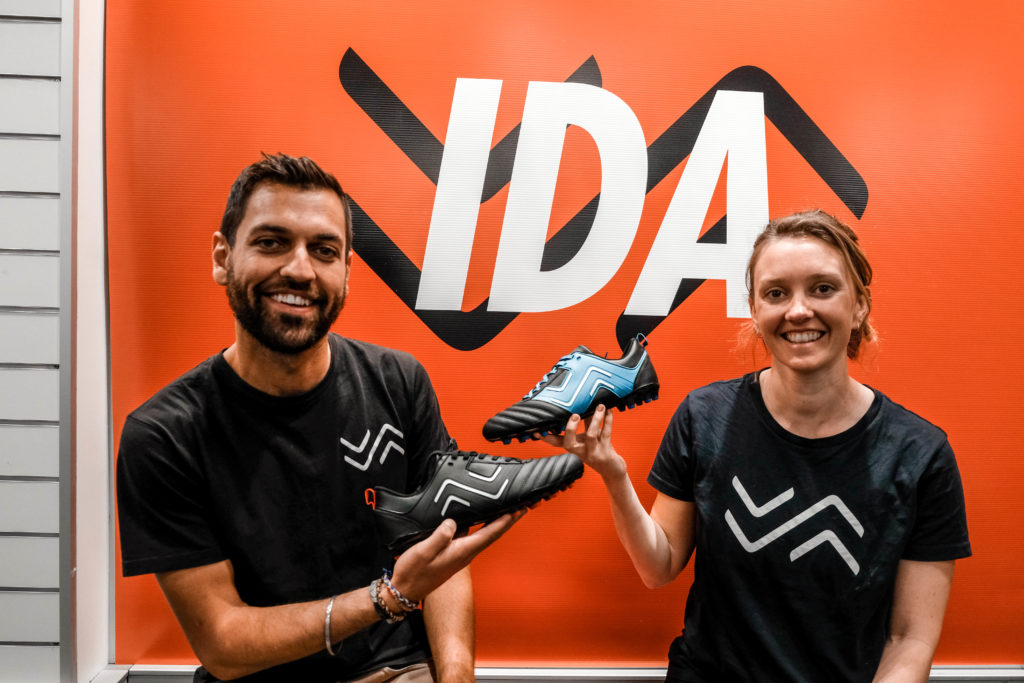
A major downfall that hindered sports inclusivity, Youngson realised, was the kit available for women. Not only were the products on offer by big brands ‘shrinked and pinked’, but they were also inappropriate for a comfortable experience. All too often women who wanted boots for grass sports – predominantly football and rugby – did not offer sizes small enough. In many cases, there was no women’s boot offered at all, and women who were some of the best in the game were wearing either men’s or kid’s shoes. “[I] went home, researched, [and] realised that actually women’s men’s feet are fundamentally different” Youngson recalls, “and that you’re putting yourself at risk of injury if you’re wearing the wrong boots.”

Instead of advocating for women’s shoes to be more readily available to turf sports athletes, she responded to the crisis by building an entire business dedicated to the cause instead. Along with her co-founder Ben Sandhu, Youngson’s research discovered that women generally have a different width to length ratio of their toes compared to men, different pressure loads and bend points as well as narrower heels and higher arches: “we cut up shoes. We really learned about. What it is that female athletes need and want.”

Ida Sports is about more than just business – it is a proactive response to closing the gender gap in women’s sports. The business aims to promote a philosophy that women have the right to be seen and heard. “We know that there are a lot of, players who are perhaps not getting the equipment and the contracts that they deserve. So can we start to push the industry a little bit, and improve conditions for players?” Youngson asks.

Upon being asked whether she thinks more needs to be done for the sportswomen Ida Sports are marketing themselves towards, Youngson highlighted the need for investment: “You have to invest to see a return. And I think that is where women’s sport is at the moment. When you do invest you see all these incredible things like higher numbers of participation, more medals…more engagement with fans.”

Not only this, Youngson argues, but companies such as Ida Sports need to exist as change isn’t “necessarily going to happen through the status quo”. She discusses the need to not only narrow the gender gap, but steer the direction of women’s football into a new, more positive direction: “Some of the systems that are in place are too entrenched to change and change fast, whereas the grassroots is demanding change. So by [Ida Sports] existing, I know for a fact that other companies connect with us and have been inspired” and they are consequently “doing great things”.

Consumers, and particularly female consumers, need to be more demanding in the eyes of Youngson. A major goal of Ida Sports is teaching consumers to be more demanding. Female athletes should not settle for equipment that is, at best, functional – rather they should push for change and wear boots that let them reach their athletic potential (and avoid blistered toes and blackened nails). For Ida Sports “if that means kind of standing up and being a brand that says, look, we’re made working for you, then that is that.”

Ida Sports have only scratched the surface with the introduction of their football boots ‘Red Dust’ and ‘Sky Blue’, with demand beginning to rapidly increase. As women’s participation levels grow, so does consumer demand. Consequently, Ida Sports is beginning to rapidly grow as a brand and they are developing their second version of turf boots: “Now we’re going to do it again and do it better.”

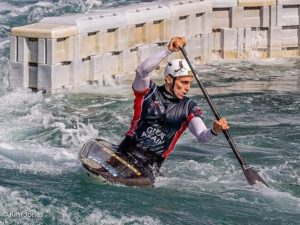
“Setbacks can be our biggest lessons.” | Adam Burgess, GB Canoe Slalom

23 October 2020 by

Preparing for success and overcoming setbacks is a common challenge in many elite athlete’s careers.

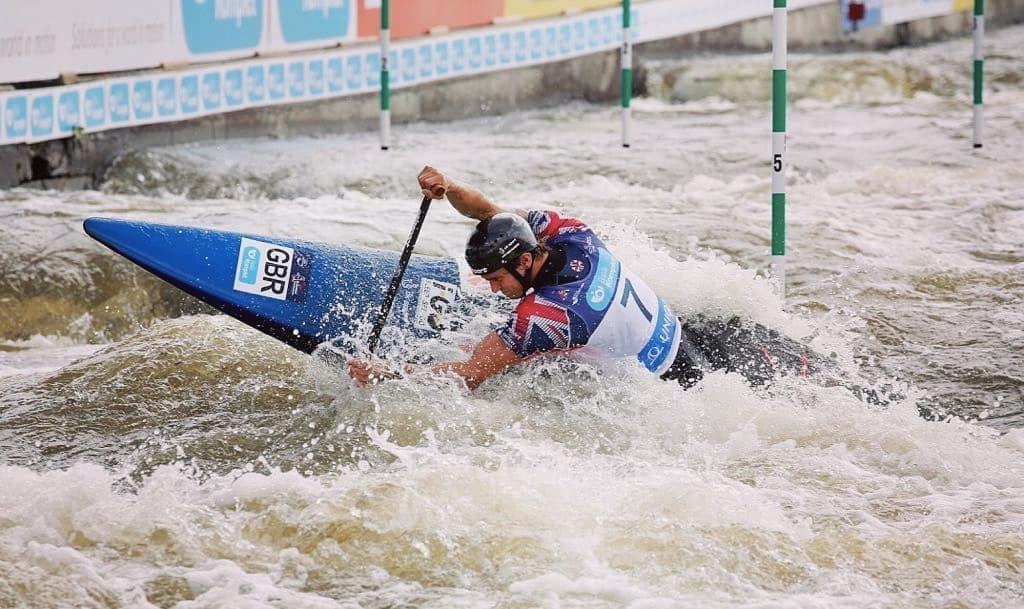
Adam Burgess began canoe slalom at the tender age of ten at his local club Stafford & Stone CC and it wasn’t long before he knew that he wanted to continue the sport to its highest level. He represented GB at the age of 14, and at the age of 16 he moved to Nottingham to train full-time at the white-water centre. Fast forward a few years, Burgess completed his studies and moved to train at the Lee Valley White Water Centre, London. Despite high rankings throughout his junior career and a “breakthrough” year which saw Burgess 5th at U23 World Championships and 4th at his first Senior World Cup, 2013 threw a curveball.

“It has been a journey…” Burgess notes, “I fully believe I would not be where I am today though without the setbacks, they can be our biggest lessons”.

Burgess suffered a stress fracture to his lumbar spine that forced him out of the boat completely for six months, making his return in 2014 somewhat of a steep learning curve: “My doubles career (C2) was going well, we were already competing at senior level, but C1 has always been my passion and I was feeling a bit forgotten by the national federation. I made the final at U23 World Championships again that year but messed up the end of my run and finished in 9th.”

Nonetheless, Burgess’s luck began to change when he moved to London and met a new coach from Spain. The following season he made the senior team for first time, won gold at the U23 World Championships in Brazil, and made the final at the Senior World Championships. In 2016 Burgess became a regular finalist on the senior circuit, made the overall World Cup podium, and broke into the top 10 World Rankings. The successful streak was soon broken however, with Burgess’ following seasons plagued by a shoulder injury.

Rather than focus on the negative Burgess decided that it was time for change. With the help of a close support team he finally found how to keep himself fit enough for consistent results at a high level, and he bases this on both an individualised programme and outlook – “2019 was a year never to forget. The mentality shift simply would not have happened had I not experienced the setbacks.”

The shift is what allowed Burgess to bring his A-game to the Olympic trials. With only one place up for grabs the field was extremely competitive, especially as he was pitted against his own friends which caused some “conflicting” feelings surrounding the achievement of his dreams. “I told my support team in a planning meeting and I could tell that they believed it too” Burgess explains. “On paper I was probably the underdog, but we knew how affected by injury my past two seasons had been. We believed that keeping continuity of training was the key for me. The more people I told about my vision though the more my confidence grew. It was the look in their eyes as I told them, I knew that they believed it too.”

A key part of Burgess’ mentality shift was his ability to make decisions under pressure, staying calm and collected in the face of victory. He claims that in previous competitions he has suffered from “paralysis by analysis”, overcomplicating his race plan and wasting precious mental energy. Now, he relies on “instincts and responsible planning”, meaning that “when the stakes are high, rather than nervously try to figure out a solution to the puzzle [I] focus on something simple” and then lets the instinctual canoeist he has become to take the blows the course delivers.

Burgess also accredits yoga and exposure training to his ability to keep his cool. Effective breathing and overcoming the mind by taking the plunge in an ice bath gives him not only confidence, but a feeling of ultimate strength. Additionally, he aims “to pursue optimal preparation and recovery strategies relentlessly”, meaning napping after training sessions is a high priority “not only to help the body recover but to create stronger neural pathways and embed learning”.

2021 is set to be a big year for Burgess. Due to the Tokyo Olympics being pushed to 2021 Burgess will have the opportunity to compete in both the World Championships and Olympics with only months between the two. The circumstances are unique yet also challenging, so the bar is “set as high as it can [be]”. Burgess’ attitude towards the potential bumper-crop year of 2021 is one of composure and ambition. “We must dream big” he writes, “the focus though is about getting to those start-lines in the best physical, mental, and technical shape I can be to produce a performance.”

He describes the goals he has set for himself as “big”, “scary” and “exciting”, but also admits that his Olympic dreams are what get him “out of bed to train on a cold morning”. The setbacks have only made Adam Burgess and his team stronger. The stakes are high but the fire remains stoked.

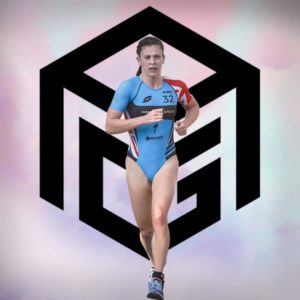
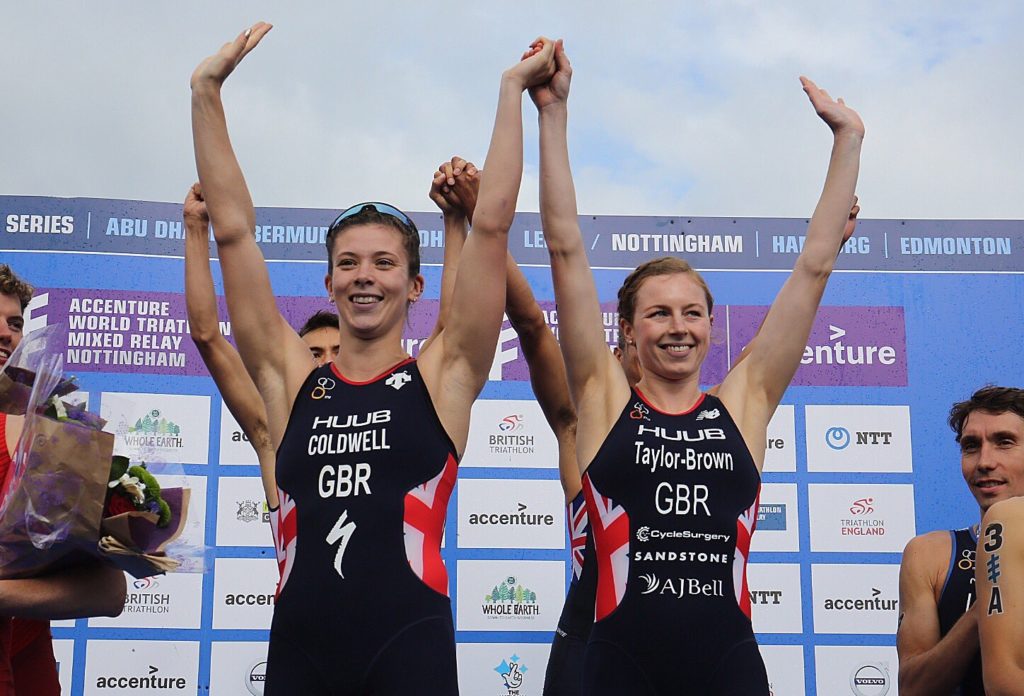
ATHLETE EXCLUSIVE: Team GB Triathlete, Sophie Coldwell, Joins AMG

21 October 2020 by

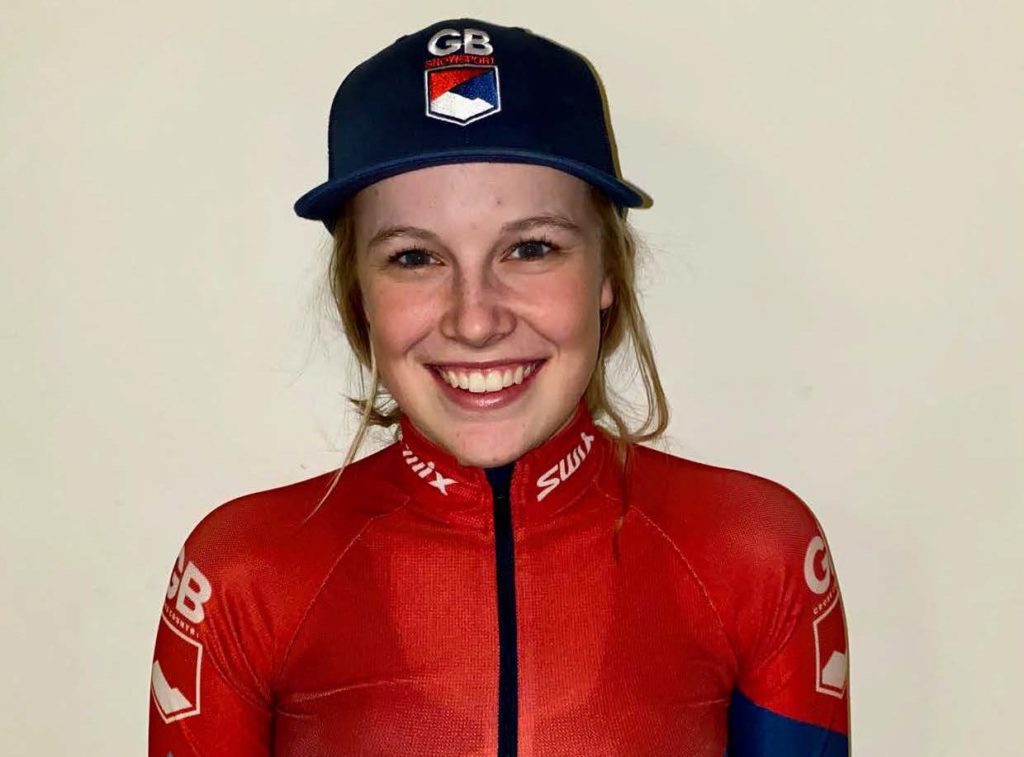
Flying high on a Winter Olympics mission | Mani Cooper, Nordic Combined

9 October 2020 by

We talked to Mani in Austria as she prepared to return to school for what promises to be a seminal year for one of Britain’s most promising snowsport athletes.

When did you first discover Nordic Combined? 

I first discovered ski-jumping in 2012 after watching the Bergisel Four Hills ski-jumping Tournament in Innsbruck with my Dad.   I was hooked straight away.  Even after my dad showed me videos of ski-jumping crashes, I still wanted to try it and I told him I wanted to start!

At the age of 10 I started having fun ski-jumping near Innsbruck with my local club `SV Innsbruck Bergisel.’   After 2 years I got into the regional squad (the Tyrolian Ski Federation -TSV) and started competing in the new sport of Nordic Combined (Ski-jumping and Cross-Country skiing) taking part in Austrian National Competitions and Championships.

Ski-jumping alone wasn’t enough.  I wanted more as I had always liked lots of different sports when growing up in the UK so by adding in the cross-country to the ski-jumping I knew Nordic Combined was my sport!

Where are you training currently?

I now attend the specialist Stams Ski Academy School in Tirol, which is a sports school specially focused on Skiing, Snowboarding and ski-jumping.   There are only 3 in the whole of Austria so it’s great to be there.  Since starting in 2018 I am now competing in FIS and Alpine Cup Events across Europe.   This year I am working towards competing at the first Nordic World championships (held every 2 years) with women’s Nordic Combined included and looking at Winter Olympics qualification in 2026 where my event is included for the first time.

What does your training involve?

I train at Schigymnasium Stams every week from Monday to Saturday. We normally go jumping 3 or 4 times a week together with ski roller or Cross-Country skiing. In addition, we also do a lot of gym work and fast jumping exercises. Every week is different as the training plan depends on what is coming up the following week and whether we have any competitions.

How does a Nordic Combined competition work?

A Nordic Combined competition weekend normally starts with a Ski Jumping competition, then using the points and ranking from that a Cross-Country race follows. Alternatively, the mass start format is occasionally used. This is where the Cross-Country race takes place before the Ski Jumping competition, everybody starts together, and the result is finally decided in the Ski Jumping.

What is it about the sport of Nordic Combined that you love?

It’s never boring for a start!   With ski-jumping you have to be fast, have good reactions.  The same in cross-country when you are taking corners and going downhill.  It’s all about endurance and making sure you have the right equipment.

I was at the Youth Olympics earlier this year representing GB and got the whole experience which was a real privilege for me.  I’m really looking forward to the future.

What skills do you need to have to be a top-level ski jumper?

For me personally it’s to never doubt yourself.  Nordic Combined is basically 2 very different sports so it’s important for me to know my goals and be focussed and confident.  The combination of the 2 sports means it always allows you to catch up.  If you have a poor ski-jump you can always make it up in the cross-country and vice-versa and it’s important for me that I know that.

What sort of equipment do you need?

For ski jumping I need my jumping skis which are 228m long, helmet, googles, gloves, jumping boots and one of the most important things is the jumping suit. With Ski Jumping the suit can make a big difference on the performance in a competition. I have a few training suits but one competition suit which is fitted specially for me.

For Cross-Country skiing I have a race suit, a head band, glasses, poles, boots, and, of course, skis. The skis are very important, if you have the wrong ski for the many different snow conditions then the race is over. Each athlete has pairs of skis for different snow conditions as there are some big differences between wet snow, hard snow, artificial snow, or if the sun is shining, or it is snowing, or raining it all comes down to the ski testing which is done before the race to select the right ski.

What goes through your mind at the top of the jump? 

If you think too much about the distance you need to make you lose focus and don’t do the technical points which make the metres.  Everyone’s different but for me personally if I’m mentally prepared, relaxed and calm I perform to my best.   I need to be calm and be by myself and take it one step at a time.

When I was at the Youth Olympics earlier this year I kept calm and took it one step at a time.  I’ve had competitions where I’ve wanted the distance too much and lost technical points so staying clam is vital.

What’s the furthest distance you’ve jumped?

My unofficial record in training is 96m and in competition I’ve jumped 74m!   I don’t compete for the British record though.  It’s amazing if I get a record but I just want to do my best and do the best jump I can in the competition I am in at the time.

Have you ever crashed?

Yes I’ve crashed in both sports!    Crashing at ski jumping is clearly more major.  There’s one thing you’re not supposed to do in ski-jumping which is pull your legs in.  And I have done that before which didn’t end well!   I had one major crash in Norway where my back bindings came open on my 3rd jump (!) and I crashed but I’ve never had a major problem so I’m very lucky and grateful for that!

You are Britain’s first female ski jumper in an Olympic competition after the Winter Youth Olympics in Lausanne. 

Yes, I am but I want the world to know I’m a Nordic Combined athlete not just a ski jumper.  There’s a big difference and it’s important for me that people know that.  Of course I focus my training on one versus the other but I am Mani Cooper, Nordic Combined athlete.

I do also like to mix things up with my training to keep things interesting and enter bike races for example.

What ambitions do you have in the sport?

It’s definitely my dream to be Olympic Champion.  For now though in this winter season I want to get to the World Cup and be confident and ready for the competitions I enter and work hard to improve all the time.  I have my goals and I am happy to work hard & will fight to achieve them!  It’s tough though.  Every athlete knows every other athlete so whatever competition you are in we all know each other.

I know I have to focus on the World Cup, the competitions and keep going in order to get to the Winter Olympics.  The competitions coming up will allow me to see how close I am to the best in the world.

What’s important to you away from your sport?  How do you relax?

I love music!  And cooking – baking cakes, doing something completely different.  Just switching off is really important to me!

I play in a band with my dad and sister! I sing & play the bass, my Dad plays the guitar and my sister the drums.  I also enjoy just listening to music and dancing around which is a lot of fun.  Those moments allow me to relax and I really enjoy my downtime away from the rigours of Nordic Combined!

What causes are important to you?

The environment is very precious to me given my sport and where I do it – in the snow!  The air and the environment and the mountains of the Austrian Tirol are just beautiful.  If we see rubbish it breaks my heart and it’s so important we do all we can to keep it as pristine a location as possible.

Who would be your ideal brand to partner with?

I’m just looking to partner with a company that has the right values, offers the right support for me, my team and the Nordic Combined event I love.  It such a fantastic event with so many aspects to it that the brand ecosystem is complicated.

I can name so many different companies who are involved in my sport in some way so I’d be happy to partner with one long-term partner if we could work together in the right way.

Power By Name, Performance By Nature | Keith Power

6 October 2020 by

Power Play: Keith’s Background

Keith Power has competed in four sports internationally, has the distinction of being the youngest person in history to be Head Coach at an Olympic Games and has worked with “best of the best” as a performance psychologist and high-performance expert.

Recently, this has included working for the Malaysian Government, as High-Performance Director (HPD), as HPD for The University of California – Berkeley, top GB Olympic Sports, the Welsh Rugby Union, top Premiership Football and Rugby Clubs as well as numerous Olympic champions and medallists and top leaders, managers and coaches in both sport and business.

In the corporate world he has worked at board and senior level with global organisations such as HP, Motorola, Credit Suisse and Toshiba. Previously, he was a senior executive member of the British Association of Sport and Exercise Sciences (BASES).

AMG:   How did you get into your line of work and sports?

Keith:   I came from a pretty tough background, a council estate in north London. I got stabbed when I was eight years old. It was a pretty harsh existence and sport was my way out.   We moved to a different area, and at the new school I had this amazing P.E. teacher and he was great at ‘getting out’ people’s talent. He recognised that I had athletic talent and could throw objects a long way!  This led me to becoming a junior international hammer thrower.  I then got a scholarship to Millfield School that was life changing from a sports, education and life lessons perspective.

On the back of that, I went to Brunel (Borough Road) University studying sport and ended up competing for GB1 Bobsleigh team.  I was a full-time international athlete and student, very tough. This passion for competing around the world, studying sports, learning from other people – that was really the genesis of things.

It was back in the early days of high-performance sport and I wanted to be different. So I trained, practised and worked in multiple performance disciplines –  strength and conditioning, performance psychology, as a sports physiologist and as coach, all at the same time. Pretty unique then and still is today. By my mid-twenties I was working with top football and rugby teams/players and was an Olympic Head coach!

AMG:   What has been your best experience as a coach?

Keith:  If I was if I was to pin down one it was my experience of being the national team head coach for GB Bobsleigh. I took on the position at 23 and I am very proud of the fact that I am the youngest ever Olympic coach in the history of the summer or winter Olympic Games aged 25 and had coached at two Olympic Games by the time I was 27. When I was competing bobsleigh for Great Britain our team became very successful and we won medals in the World Cup which was kind of against all odds for Great Britain.

Then there was a real disaster at the Calgary Olympics in 1988: the sport went from hero to zero. And I got brought as the head coach in 1989 because of my sports coaching/science and bobsleigh background. In a short period of time, we went from outside the top 25 in the world to having two teams consistently in the top 10 in the world. It was a fantastic time of my life, identifying and developing athletes, building a high-performance structure, culture, teams and mindset, then harnessing the power of sports science and sports technology.  I was begging and borrowing and stealing all sorts of really wonderful people and resources – getting top athletes in, working with top sports scientists, bringing in specialist coaches, I/we were way ahead of the game, getting things done that still today top teams don’t or can’t do.

We created a powerful culture and performance edge because we had about 10 percent of the budget that the top nations like the Swiss, Germans and the USA had. We just didn’t have the financial muscle to be able to throw resources. We had good talent, but we certainly didn’t have the kind of talent that the US a lot of other countries had, so it was an amazing journey for me to bring all these things together and actually get them to work.

AMG:   So how do you go from hammer throwing to bobsleigh?

Keith:   I’d always been a naturally talented athlete, loved being a goalkeeper, all sports in fact. Going back to Millfield, I competed in 8 sports for the school, but my scholarship was in athletics and hammer throwing. I was good but I realised although I was a junior international hammer thrower I was never going to be world class.  And that’s always been a real big philosophy of mine on a day to day basis – be the best you can be at something you love and if you can’t move on to something else you can be, so an opportunity came with the Great Britain bobsleigh team, there was one slot and I completely restructured my training and my mindset, my approach and the research I did into bobsleigh. I even got up at 5am to practice running on ice before I’d even seen a bobsleigh track. I never looked back from that moment.

AMG:   Incredible – you’ve had your hand in multiple sports then! What has been your hardest experience as an athlete out of all those sports?

Keith:   When I was halfway through my third year of bobsleigh with the GB team I got injured. We were having a very difficult season. I got injured in the middle of          December and the Olympics were in February. In January I slowly got back but then I got cut from the Olympic team. And that was probably one of the toughest things I’ve ever had to go through, especially at such a young age. It was brutal. Realising my dream to become an Olympic athlete was certainly over for at least four years.

But I’ve always been very positive and resilient and try to reinvent myself and turn things round in the world, and an opportunity came up to go [firstly] to New Zealand to work at their institute of sport and also out in Australia. I did a lot of sports mentoring work out there, had an amazing year – I learnt so much. It’s like sliding doors. When one door closes, another opens.

AMG:   What life-lessons has your line of work and coaching given you?

Keith:   I learnt this a bit too late in life and it’s only really been the last couple of years that I’ve realised this, and that’s to really be in the moment and smell the roses, as they            say. I’ve always been such a highly passionate person, a very intense person wanting to be high performing, high achieving, wanting to be the best person I can possibly be.

I mean, it’s a bit of a cliche now to talk about being mindful, it’s the buzz word, but I certainly wish that I’d practise that as a philosophy a lot more in my 20’s and 30’s. I was rushing around from bobsleigh coaching, to building my consultancy business, wanting every individual and team I was with to be great and always thinking what’s the next challenge? And I just wish that I’d maybe step back a little bit and enjoy those moments a little bit more. So that would be my biggest life lesson.

AMG:   What drives you as an expert?

Keith:   The thing that drives me is that all I can be is the best version of me that I can be.   What I expect of those who I partner with and I collaborate with is how can you be    the best version of yourself or how can you be the best team or the best organisation that you can be. So it’s not to say I’ve always got to have these completely unrealistic expectations about myself and it has all got to be do or die every single day.   I think I’ve just learnt that that just puts so much pressure on me.

What you have to do is just get really comfortable with this experience, this learning experience every day, looking to be the best that you can be in your personal life and your professional life with your family, with your friends. And that’s really what I try to work with, with various people I work with on a day-to day-basis.

AMG:   Would you say this is a philosophy of accepting our limitations?

Keith:   I’m certainly not saying put limits on yourself and go in with a mindset that you limitations, or just accept second best. I think you’ve got to live your life with no           limits – What is it I can do? How can I excel? What’s possible? – and shoot for the stars. I 100% believe that philosophy, but also be comfortable with yourself and know the right way to  search for excellence. Otherwise I just think you end up in a bad place.

You end up kind of disliking yourself and you don’t really enjoy the experience because all you’re thinking about when you get up, day in, day out, is just taking yourself to the next level. It is a contradictory existence: you’ve got to be able to do both at the same time!   You’ve kind of got to go in there with positive mindset that there are no limits. How do you create a framework that the skills, the tools that you need to be the best that you can possibly be? But at the same time be comfortable with yourself as well?

AMG:   So what you’re trying to promote is seeking balance in your performance. Would that be correct?

Keith:   100%. That’s a great summary. There are positive passions and negative passions.  And the positive passion is about wanting to be the best that you can be, about this love of the game, about this mastery experience. The negative passion is when you whole existence is caught up in what you do and if you don’t fulfil that it is literally breaking yourself down every single day. It’s not good for your well-being, it’s not good for your performance.  I’ve been there myself and seen too many people there. It’s not good.

AMG:   Fantastic! So moving onto our final few questions, which Olympics have you attended as a coach? Which was your favourite and why?

Keith:   I was the head coach for the Great Britain bobsleigh team, at the 1992 Winter Olympics, which was in Albertville in France, and in 1994 at the Lillehammer Olympics, Norway. And those experiences were absolutely fantastic. I was also the high-performance director for Malaysia at the 2016 Rio Olympics. It’s very difficult me to say pick any one and say it was the best. They were fantastic for different reasons. I would say 1992 because I had always dreamt of going to an Olympic Games as a kid. I missed out as a competitor going to the Olympics so to go there as a coach was fantastic. Lillehammer ‘94 was great because I’d matured so much as a coach and was able to better understand how to pull a team together under the pressure of the Olympic microscope.

I loved the Rio Olympics for different reasons.  Firstly, at a Malaysian level because of the nation’s love of sport. Malaysia ended [the games] against all odds winning [a total of] nine medals over the Olympics and Paralympics, and the most they’ve ever won before is one silver. That experience for Malaysia and what it meant to the nation of Malaysia…it transcends everything and that was just so special. It was also really special on a personal level because I’d not been to a Summer Olympics before.   I had been to the 2012 [Olympics] as a kind of ambassador for University of California, Berkeley (Cal), but not as a high- performance director. You could just smell and feel the whole Olympic experience in Rio. It was really, really intense and it was just absolutely fantastic.

AMG:   What is something you’d like to champion further as a coach? E.g. athlete wellbeing, anti-racism in sport, gender equality in sport etc.

Keith:   I would say from a personal point of view I’ve always championed all of those different causes. And throughout my life and career, just intuitively, because that’s who I am. Plus I have been fortunate to have always been around very diverse environments. For example, I was determined that there should be women’s bobsleigh World Cup circuit. And I championed that cause and GB’s Caroline Walker became the first women bobsledder driver in the world ever.

When I was in Malaysia I championed para-sport and women’s sport from grass roots to elite level. I brought in lots of different people from different perspectives to achieve that. It’s fantastic that all these issues have been highlighted and are being positively impacted, there’s so much passion going into all of these areas. They’ve always been things that have been really important to me.

AMG:   Do you have any projects for the future which you can tell us about?

Keith:   I’ve got a really exciting project that I’m working on right now in the world of soccer and also another amazing project that I hope to launch later this year. I can’t go into too much detail at the moment, but it’s going to be a game changer in the field of human performance. I’ve got some amazing human performance experts from the world of sport, corporate, the performing arts, media and the military committed to it.   Watch this space!

Keith can be contacted on keith@kpaelite.com, on twitter or Instagram @keithpowerelite.

The ‘nutty professors’ revolutionising long range athlete fuel | Resilient Nutrition

1 October 2020 by

Ali and Greg, the founders of Resilient Nutrition, began their journey after meeting at a biohacking conference in Stockholm. With Ali coming from a data and intelligence background, and Greg from a human performance and science background, the decision to put their heads together to create a product that would meaningfully impact human performance promised an exciting endeavour – it was “love at first sight” laughs Greg.

Resilient Nutrition was formed out of both a gap in the market and, in part, frustration: “It’s about this opportunity to create a range of products that help not just elite athletes, but every day people [to] perform at their best…in a meaningful way whilst respecting the environment,” Ali explains, “so one of the things we care about is the people involved in making our products and what we do to the planet when we go through that process.”

Resilient Nutrition also noted that many nutrition products on the market were not only ineffective at impacting performance, but were also cross-contaminated with banned substances. According to a 2018 study in the Sports Health journal, since 2002 ‘20% of legally sold sports nutrition products’ contained potent, synthetic oral anabolic androgenic steroids (AASs) ‘with many bona-fide AASs listed openly on product labels’*.  Athletes are consequently at risk of inadvertent doping. Thus, it was decided that a sustainable, impactful and safe product was essential.

The first Resilient Nutrition products emerged from prototypes that the pair created for the Resilient:X crew, Dave Spelman and Max Thorpe, who were participating in the Talisker Whiskey Atlantic Challenge. The rowers required nutrition which combatted not only physical tiredness, but mental, emotional tiredness too for a period of nearly 38 days. Resilient Nutrition therefore needed to go beyond traditional sport nutrition views, selecting high quality, scientifically-backed ingredients to form a food that really worked.

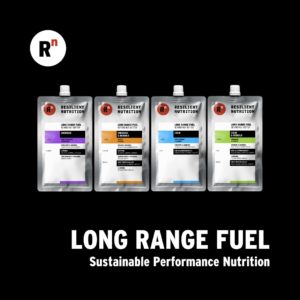
In response to the challenge of fuelling a gruelling endurance race across the ocean, Resilient Nutrition created four different variants of Long Range Fuel: ‘Energise’ products, ‘Calm’ products, plus ‘Energise & Rebuild’ products and ‘Calm & Rebuild’ products which have added protein. The founders chose these variations “because we need different effects from products at different times of day and in different circumstances”. Greg used the example of Ali running an ultramarathon which spans both day and night: he needed “something that’s going to keep him alert and support his brain function” as well as powering his body.

Discussing the Energise products, Greg explained in layman’s terms how it works: “Inside the Energise products there are two active ingredients. One is caffeine, the most widely psychoactive drug in the world, and caffeine improves both cognitive function and physical performance in the short term…in terms of physical performance, a dose of caffeine, which is perhaps between 3-6 milligrams of caffeine per kilogram of body weight, has repeatedly been shown to improve both endurance exercise performance and the strength and power exercise performance. And those beneficial effects are probably slightly stronger for endurance exercise.”

However, to prevent the dreaded caffeine-jitters, an amino acid commonly found in tea known as L-Theanine is added. The benefits of L-Theanine are highly favoured by Resilient Nutrition, with the amino acid helping those who ingest it cope with stress better by reducing anxiety. It has been studied in combination with caffeine too and has shown to offset certain negative effects of caffeine. Not only are the products dosed in accordance with scientific research, but Resilient Nutrition “only use the best studied forms of the active ingredients” Greg comments.

The ‘Calm’ products by Resilient Nutrition are also somewhat wondrous. They contain a herb known as Ashwagandha (KSM-66 Ashwagandha, specifically) which is known to promote relaxation in the body. Not only this, but the use of Ashwagandha can lead to faster increases in muscle mass from strength training and support cardio metabolic health. The added protein products, known as the ‘Rebuild’ line, help the consumer with body composition, supporting not only fat-free mass but also immune function, bone health – the list goes on.

What is also exciting about Resilient Nutrition is their commitment to be a sustainable brand and business, ensuring their “environmental footprint [is] to be as small as possible”. Resilient Nutrition does this in various ways, one being minimising the use of plastic, and  another being extensive use of recycled and recyclable materials.

Both Ali and Greg have spent extended periods of time abroad, particularly the jungle, therefore Resilient Nutrition “give[s] one percent of [our] sales to a charity named the Coalition for Rainforest Nations, which works with governments and communities and countries to help people responsibly manage their rainforest and thereby protect biodiversity and help mitigate climate change.”

Resilient Nutrition’s commitment is not only to environmental sustainability, but also to nutritional sustainability: “if nutrition is to be sustainable, then it has to involve consuming things that we actually want to consume and find the ease to consume. And so what this means is that we make products that are both practically packaged and really, really tasty”. The products are made to support performance in the short and long term, this meaning that the products “are very specific and targeted to the particular activities that we want to boost performance in, but also support numerous different facets of our health”.

Although Resilient Nutrition may be the new kids on the block as far as nutrition products are concerned, it is certain that their products are effective and ethical. As the brand begins to gain momentum, Ali and Greg have a few more projects up their sleeves.

“We are currently going through Informed Sport certification, and I’m hoping that next month we should be launching our Elite range” Ali comments. Resilient Nutrition have developed complimentary products and identified partners in order to create a nutritionally complete, lightweight, performance enhancing food system that forms part of an innovative trial with the military.  They also have a couple of interesting trials running that will hopefully lead to additional products that have both performance and sustainability benefit “so there’s plenty to look out for.”

Ali is currently trying to break the World Record for Cinnamon and Cashew Calm & Rebuild Long Range Fuelconsumption but secretly admits to fuelling his days and the occasional all-nighter with Coffee & Pecan Energise, whilst Greg is particularly partial to Dark Chocolate and Hazelnut Calm & Rebuild Long Range Fuel.

* Source: Prohibited Contaminants in Dietary Supplements – https://www.ncbi.nlm.nih.gov/pmc/articles/PMC5753965/


For more information on Resilient Nutrition pls go to https://resilientnutrition.com.

From the military to sport – the veteran giving back to UK athletes

23 September 2020 by

Tell us about you 

Steve Thornton served with 4 Regt, 669 Sqn, Army Air Corps for 5 years until 1995, service number  24901176, completing a tour of Operation Granby during the first Gulf War in 1991.

After leaving the military and a few years of working as a military car salesperson in Germany, Steve returned to the UK and set up Forces Cars Direct in Lincoln with his former employer (also a veteran) in 2001 to do more for military personnel, offering a vastly improved service and savings for not just personnel serving overseas, but UK personnel both serving and veterans. The business was also developed further with the launch of Motor Source Group in 2013 to aid emergency services personnel and teachers.


Tell us about why you launched Black Gold Vehicles?

With the long-standing partnerships we have made within the motoring industry we have pioneered a unique programme for our public service workers, of which we are very proud.

Working with the manufacturers, we then launched Black Gold Vehicles to offer the same streamlined, 5-star rated service to professional sports stars, celebrities and high-net worth individuals, who appreciate a service that will look after them, saving them both time and money.

Why are you supporting sports stars & others in entertainment?

Steve’s love of business and golf has presented him with many opportunities to meet and play with many high-profile sports stars whom expressed a desire for a concierge service to aid them in their car purchases. Something that would genuinely look after them and offer the service levels all customers deserve, so Black Gold Vehicles was really born from this need.


What sort of vehicles do you source and supply?

We source and supply all types of vehicles from a Fiat to a Ferrari, a city run around to a performance sports car. As we are independent, we are able to advise and source any vehicle for our client without bias.

We are also able to offer all forms of funding should anyone wish to take advantage of this, but there is no obligation to use this and their own funding or cash sales are welcome too.

What sort of benefits do athletes get from Black Gold Vehicles?

Not only can our clients benefit from great savings with Black Gold Vehicles, but our concierge service means that we take care of everything throughout the order and delivery process; making your purchase as smooth and hassle-free as can be, saving time as well as money.


Do you help athletes in any other ways? (eg: partnership / sponsorship)

Yes, we love getting involved with communities and events through partnerships and sponsorship too. For example, we are currently supporting golfer Liam O’Neill and sponsoring him through his progress towards the main PGA tour.  Through Forces Cars Direct we also support the GB Bobsleigh team, led by Royal Marine Adam Baird, and Motor Source Group are the title sponsors of the Emergency Services Football League. For us, it’s about much more than just car sales.

Who’s the biggest athlete you’ve worked with?

At Black Gold Vehicles we really do value our clients and a big part of our service is being discreet so we won’t comment too much on that.


What sports are the athletes in that you have been able to support?

All sports – our service is available for athletes in all sports, and so far we have been able to assist those in football, rugby, cricket, golf and much more.


Tell us about your work with the military

During my military service I was proud to be a member of the armed forces and was grateful to travel the world. I learned a lot from my experiences and made many friends. It tought me a lot about team work and allowed me to mature from a boy to a man. Having been based in Germany I was not only  lucky to travel around Europe but also Canada.

It wasn’t just about working with attack helicopters though, I was also lucky to be able to learn how to ski, paraglide, and glider training. Something I don’t think I would have done in as a civilian. Sport was also really important for the military. I played football as a goalkeeper for my regiment and played rugby and golf too.

My time came to an end after 5 years with great sadness but set me upon another road in my life, for which I am ever grateful.

For more information on Black Gold Vehicles please visit www.blackgoldvehicles.com.

Putting British beach volleyball on the map | Biakoloz-Batrane

22 September 2020 by

Olympic-level beach volleyball is a relatively new competition compared to other Olympic sports such as athletics, cycling and swimming, having only being added as an official sport at the 1996 games in Atlanta. Perhaps this is why it is yet to enter mainstream sports in the UK, despite an increase in facilities since its Olympic debut. Britain’s first beach volleyball team to make the Olympics, Audrey Cooper and Amanda Mo Glover, had to train in Amsterdam as the UK had no beach volleyball courts at the time. Fast forward to 2020 where there has been considerable uptake on beach volleyball, with team Biakoloz-Batrane looking to put the sport firmly on the British map by becoming the first British men’s volleyball team to qualify for the Olympics.

Having played with seasoned beach volleyballer Chris Gregory for some time, Issa Batrane was looking for a new partner to match his hunger for future competition. Batrane had recently moved to The Netherlands, not knowing who his partner was going to be for the upcoming seasons. He and his coaches created a spreadsheet listing the strengths, weaknesses, opportunities and threats of potential teammates to analyse who would be the best fit. They wanted a good blocker who was smart – “and basically every single box Freddie [Biakoloz] checked”. After the “no brainer” decision to form a team, the duo competed in France before deciding that the coupling would be a long-term decision.

According to recent statistics[1] volleyball is one of the less popular sports, with reports estimating that 47,000 Brits participate in the sport compared to the  2.1 million who play football and 224,400 that play rugby. Regarding the fact that beach volleyball is a small percentage of the overall volleyball number, it is arguable that the sport is somewhat niche. It is surprising that the uptake is not larger considering the advantages of playing the sport. Batrane became involved in beach volleyball as he was looking to keep off the summer pounds and “[trying] to stay in shape” when he wasn’t playing indoor volleyball. Later he won the junior British Beach Championships and decided to stick with it. Biakoloz came about the sport differently. His parents both being volleyball players, he naturally followed in their footsteps and was the sole junior member at Crystal Palace Club at the age of 14.

The pair have found stark benefits in playing beach volleyball, both physically and mentally. The additional challenge of playing in sand contributes to the athlete’s aerobic capacity and strength ability which Batrane enjoys: “ I do feel the benefits because when I do get a little bit of time off, my body kind of feels good just to get on with everyday life”.  Nonetheless, it would appear that the most salient feature of beach volleyball is the effect on the athlete’s psychological wellbeing. Both Biakoloz and Batrane cited the tight-knit spirit of the sport, the “community aspect” being something which they found great solace in: “we rely on each other to be able to talk and mentally feel well enough to be able to talk about whatever it is that could be bothering us at the time, so you kind of feel in a really good, close group”. Playing out in the sunshine is also a constant factor of the sport, and one which Batrane suggests contributes to the good-vibe feel of the sport as “it always makes people smile”.

Despite volleyball being generally non-mainstream in the UK, the statistics[2] reported by governing body Volleyball England suggests that the sport is highly diverse with “63% of the 6000 participants in the [Higher Education Volleyball Officer] programme being from a BAME background and 51% of the registered players in the National Volleyball League being from a BAME background”. The Volleyball England board is also diverse “with a 50/50 gender balance with BAME, LGBTQ and disability represented on the board”. However, these statistics are not reflective of beach volleyball itself. Batrane estimates that “the percentage of those from the black community [that play beach volleyball] is pretty much under 20 people in the country”, as well as his team being the “only British pairing that has a player…from the BAME community”.

Because of this, AMG and Biakoloz-Batrane discussed the recent movements of the Black Lives Matter campaign (also known as #BLM). Batrane is a vocal supporter of BLM, and a firm believer that athletes have a level of responsibility when it comes to supporting these causes. Elite athletes are making their stance known more and more in the fight for equality. Most recently, US Open grand-slam winner Naomi Osaka wore a mask naming different victims of racial injustice – specifically Breonna Taylor, Elijah McClain, Ahmaud Arbery, Trayvon Martin, George Floyd, Philando Castile, and Tamir Rice – for each of her appearances. Batrane echoes Osaka’s involvement: “For me, I think that being able to speak, to express why equality is important in all aspects of life, whether you’re black or white or wherever you’re from. That shouldn’t be a political statement”. Other athletes involved with BLM such as Lewis Hamilton are role models for society argues Biakoloz, adding that their position and platform gives them a real ability for “championing these positive messages”.

“Everybody deserves to be on that even playing field” Batrane comments, which highlights the profoundness of his plight in tackling racial inequality from within the sport. Beach volleyball’s global popularity provides great promise for diversification in the sport, as well as the appeal of the beach-party atmosphere coupled with intense competition. The duo hope that more people can get involved with the game – not only because “People have so much fun playing”, but because the sport is so inclusive. Greater exposure, Batrane says, would strongly improve British beach volleyball as we know it: “I feel like everybody should have a chance to play it”.

[1] Statistics provided by www.statista.com

[2] https://www.volleyballengland.org/~media/docs/Diversity%20Volleyball%20England%20-%20updated%20January%202019.pdf

Mum’s The Word – how elite mothers are shaking up the sporting world

10 September 2020 by

Prominent sportswomen who have chosen to be parents mid-career include Olympian and world champion 400m runner Allyson Felix, the decorated track and road cyclist Laura Kenny, and world number-1 tennis player Serena Williams to name just a few.  This is not to say that balancing motherhood and a career in elite competitive sports is plain sailing though. According to a study conducted by the University of the West of England, all athletes experienced a cut in or removal of funding or a loss of sponsorship during pregnancy, forcing them to return quickly after childbirth. In athletics, becoming pregnant has been called ‘the kiss of death’ for a woman’s career.

In 2019, The New York Times investigated the maternity policy of world-famous brand and athletics sponsor, Nike, with three runners – Alysia Montaño, Allyson Felix and Kara Goucher – breaking their nondisclosure agreements in an effort to show the discrimination athlete mothers were facing. Wavering their anonymity, the athletes revealed that their sponsorship incomes and even health insurance were to be heavily cut, or even entirely stopped, surrounding their pregnancies.

Due to the protests of the athletes Nike changed their maternity policy, writing into the contracts that Nike-sponsored female athletes would be supported before and after their pregnancy. Issuing a statement on their website, it stated: ‘We want to make it clear today that we support women as they decide how to be both great mothers and great athletes. We recognize we can do more and that there is an important opportunity for the sports industry to evolve to support female athletes.’ Perhaps this is reflected by Nike’s new maternity clothing range which launched in the last week.

What seems to be overlooked by many sponsors and the media is how there are stark benefits for athletes to have children mid-career, compared to waiting until their competitive careers have finished. Although pregnancy will often hinder performance, it doesn’t necessarily require the athlete to stop altogether. Montaño famously ran races whilst pregnant and was actively encouraged by her midwife and physician: “What I found out mostly was that exercising during pregnancy is actually much better for the mom and the baby. I did all the things I normally do, I just happened to be pregnant. This is my normal this year.”

AMG recently interviewed Olympic snowboarder and snowboard-cross athlete Zoe Gillings-Brier on her thoughts about being a mother in sport. Despite always wanting to be a parent, Zoe didn’t immediately see her sporting profession and being a mother as compatible until she talked to friend and Olympic skeleton bobsleigh athlete Shelly Rudman. Rudman advised her on motherhood as a snow sport athlete “from getting fit after pregnancy to what push chair works in 1-foot deep snow.” This was not to say that motherhood was an easy feat: balancing training, eating, sleeping and caring for a baby needed “about an extra 3 hours” per day according to Zoe, who accredited her grandparents for an extra helping hand.

Some athletes also prefer the benefits of being younger parents. Speaking to the BBC, Laura Kenny stated “I always wanted to have a baby in the middle of my career, I wanted to be a young mum and so I was willing to hang up my wheels for a year”. Not only does the feat show that it can be done, the sporting lifestyle of a professional athlete allows women to positively influence their children. Zoe also supports this sentiment, adding that the physical and mental health benefits are key to parental influence, adding “This doesn’t have to be high level sport though, just joining in on a football game with friends twice a week would be fine.” Admittedly the balance is tricky, but Kenny says that the addition of her children changes her perspective and “it shows that you do not have to be as completely wrapped up in it to be successful”.

Though the toll of pregnancy can be tough on many women, some professional athletes have found that with the inclusion of rest and physiotherapy, their performances have been just as strong post-partum compared to prenatal performance. In 2019, Shelly-Ann Fraser-Pryce won the 100m at the IAAF World Athletics Championships with a world-leading time of 10.71s, becoming the oldest woman ever and first mother in 24 years to win a 100m global title. You could say she bounced back pretty hard. Fathers have seen a bounce-back too, particularly in golf. A book published known as the ‘The Golf Form Book 1996’ stated that ‘Becoming a father, especially for the first time…can really have a profound effect on any sportsman’. As Rory McIlroy welcomes a new born daughter, he may be able to add himself to the list of those who have benefitted from the aforementioned Diaper Dimension. A study in 2017 also suggested becoming a father in elite golf increases sporting performance, with earnings rising by at least 10% during the infant years of the child.

Progress for sporting parents, particularly sporting mothers, is beginning to gain momentum. Three mothers have reached the US Open final sixteen out of the nine which started the women’s singles draw. In The Telegraph, former world number 1 tennis player Victoria Azarenka was quoted “Even when I was No.1, when I was winning grand slams. I was never able to reach such a level of happiness on the court”. There is inevitable pressure for parents in sport, not only to balance childcare duties but also to show that having a child doesn’t need to bifurcate one’s career into ‘pre childbirth’ and ‘post childbirth’. Female parental visibility is something which needs greater advocacy in sport. As Zoe Gillings-Brier rightly commented, “If we want more young girls to get into sport we need them to know it’s not sport or motherhood, that you can do both”.

  • « Go to Previous Page
  • Page 1
  • Interim pages omitted …
  • Page 16
  • Page 17
  • Page 18
  • Page 19
  • Page 20
  • Interim pages omitted …
  • Page 27
  • Go to Next Page »

Primary Sidebar

Recent Comments

    Archives

    Categories

    • No categories

    Meta

    • Register
    • Log in
    • Entries feed
    • Comments feed
    • WordPress.org

    Subscribe to AMG Newsletter here

    Footer

    © 2026 Athlete Media Group Ltd All Rights Reserved

    MENU

    • Our Story
    • Manifesto
    • Athletes
    • Pioneers
    • Journal
    • Work
    • Contact

    USEFUL

    • Advisory Board
    • Privacy Policy

    CONTACT

    mark@athletemedia.co.uk

    tel: 07952 304340

    VAT REGISTERED ADDRESS

    Thatch Barn
    Ryewell Lane
    Hoath Corner
    Edenbridge
    KENT TN8 7BS

    We use cookies to ensure that we give you the best experience on our website. If you continue to use this site we will assume that you are happy with it.