• Skip to primary navigation
  • Skip to main content
  • Skip to primary sidebar
  • Skip to footer
Athlete Media Group

Athlete Media Group

find your inspiration

  • Our Story
  • Manifesto
  • Athletes
  • Pioneers
  • Journal
  • Work
  • Contact
  • Join Us

THE JAMAICAN RIDER PAVING THE WAY FOR EQUESTRIAN DIVERSITY | LYDIA HEYWOOD

22 February 2021 by

Currently based in Cheltenham (the equestrian capital of the west), Heywood is not only looking to succeed on a personal level, but also on an athletic and entrepreneurial level. Heywood is Team Jamaica’s first and only black international level 8 Eventer. Typically the nation is known for its speed on the running track, with athletes such as Shelly-Ann Fraser-Pryce, Elaine Thompson and Usain Bolt dominating the papers. Now, Heywood is keen to put the country on the map for an entirely different sport. She is also aiming to diversify the sport with her organisation Cool Ridings, and her ground breaking Horse & Country TV series debut, Learning with Lydia, which aired in 2020.

Heywood also volunteers as a mentor at the Brixton-based Ebony Horse Club, an organisation which aims to help the younger generation take the reins in all aspects of life, regardless of postcode. The club has recently gained a lot of support and attention, especially with one of its stars Khadijah Mellah winning the Magnolia Cup at Goodwood in 2019. This is one of the few organisations aiming to change the demographic in equestrianism, and Heywood is hoping to contribute. Heywood has so far shown great promise in Eventing (a three-programme event consisting of dressage, show jumping and cross country) with her eye on reaching four-star level during her career.

The owner of both a British and a Jamaican passport, Heywood made a conscious decision to represent a developing nation on the international stage. “I carry that Jamaican flag with real pride” explains Heywood, “and I know that pride would be contagious.” Breaking down stereotypes typically associated with horse riding are important to Heywood, thus she has made it her mission to support and encourage the involvement of minority riders, broadening the equestrian scene and making it a more inclusive space.

With over thirteen years of experience under her belt, Heywood is determined to build a pathway within the equestrian community for those who may be underrepresented by providing coaching and mentorship for diverse talent. Having personally experienced the difficulties riders from developing nations face – from accessibility, to networking and securing funds – she is now hoping to show that it is possible to make it in equestrianism, rather than it just being a dream.

It is a well-known fact that horse riding requires a considerable amount of disposable income, with high calibre horses fetching prices of around £300’000. Heywood is unlike many athletes of her standard as she does not have support from an internationally funded programme. She is therefore a self-funded athlete and works five days a week to make sure that she can feed her horses Flynn and Mink, pay entry fees, and kit herself out. She has been fortunate to land some exciting sponsorship opportunities, but there is a considerable way to go if she is to progress further. She is also keen to grow her string of horses so that she has as much choice as her competitors, who will have “10 to 20” horses to choose from.

An increasingly popular phrase in the sporting community is that “you have to see to be”, meaning that if you want to pursue something beyond your dream you have to have the inspiration first. Heywood is hopeful that Cool Ridings will achieve this over the coming years, widening the participation levels so that equestrianism it is more representative of the national demographic.

Heywood is personally inspired by Alex Hua Tian, a British-based Chinese event rider who has competed at both the Beijing 2008 Olympics and the Rio 2016 Olympics. “He’s got a lot of quality horses he’s brought a developing nation up in a sport that I love” Heywood comments “So that’s someone that I really look to emulate”.

Moving forward, Heywood is hopeful that the sport can appeal to a wider demographic if there is greater investment in making horse riding more accessible and sustainable to a variety of communities. Heywood acknowledges that she is spearheading diversity in Event riding, mentioning that she has “never met a black event rider”. For now, Heywood will continue to be one of only a handful of black event riders on the scene, yet her trajectory for 2021 is rapidly climbing and greatness is within reaching distance. Ensuring that she and her cause is a force to be reckoned with, and no doubt one which will blossom in the very near future.

Tagged With: diversity, equestrian, eventing, Jamaica, Olympics

TRAINING SOLO CAN JOG ON! | Tony Piedade, JoggingBuddy

16 February 2021 by

JoggingBuddy was born out of “selfish” needs begins Tony, reflecting on a time where he found himself living a busy Londoner life, overweight and smoking 40 a day: “I decided that enough was enough. I put my shoes on and went out for a run at three o’clock in the morning in north London, and I found that there were people running as I was running  around my local area.”

Struck by the amount of people running in the early hours, Tony began thinking how great it would be if he was able to partner up with others so that he could compare times and keep himself accountable, bettering his experience of an early morning solo jog. It was evident that Tony was not the only one feeling this way. As soon as he created JoggingBuddy, then a small side project, it began to gain traction with many others signing up to the site. 12 weeks later, JoggingBuddy was being used in Europe. JoggingBuddy now has members in 123 different countries and boasts a near-balanced gender divide, with 53% of users identifying as female.

Tony’s belief that self-motivation can only get you so far is rooted in psychology, hence it’s widespread uptake. A study in 2020 reported that those who make New Years’ resolutions are more likely to stick to their targets if they have some support – more so than those with no support or extended support. Perhaps this is why JoggingBuddy has taken off: there is a clear need for people to share their goals and have people cheer them on when the going gets tough, locked down or not. JoggingBuddy has also identified that, pre-coronavirus, people were breaking habits when they worked or travelled. Because the application is based on your personal location it is rarely challenging to find someone to pair up with nearby.

There has been a new found appreciation for fitness and a lot more time on many people’s hands, and JoggingBuddy wants to help convert this appreciation into milage: “we want to be the platform that encourages members to buddy up to be more active together.”

Activity levels have soared since the pandemic started, especially running due to closed gyms and nonoperative sports clubs. Public Health England’s couch-to-5k scheme saw unprecedented levels of uptake with almost one million app downloads in 2020 – a 92% increase compared to the year before. “The fact that there is an hour put aside specifically for exercising I think has been the galvanizing force behind a lot of people getting more active, which is phenomenal” Tony explains, and “the fact that people are also not wasting two hours a day commuting means that you can redistribute that time for personal health investments. We know that on our site we’ve seen 35 to 40% increase in signups as a result of what you might call a COVID effect.” Joggingbuddy has been on a positive trajectory regardless Tony mentions, however the pandemic has made it much more pronounced.

JoggingBuddy is keen to emphasise that their site is free to use for anyone, from rookies to the elite, and has set out to champion the power of supported running resolutions. They consider themselves ‘tech agnostic’, meaning that they integrate with many key running technology products such as Strava, FitBit and COROS. An inclusive community is extremely important in times of hardship says Tony, “there’s fast runners, experienced runners, ultra-marathon runners…They’re all members of the site and they’re incredibly valuable to the community.”

To keep people focussed and motivated during a time of unrest, JoggingBuddy have encouraged the running community to participate in The Challenge, which is a collective effort to run 1 million miles. Shedding light on the rationale for such a target, Tony highlights that “We all need a goal, [individuals are] often very good at setting their own goals. We shouldn’t be dictating that to individuals, however I think as a community it’s right that we try and set some kind of goal for people to reach. As soon as we reach a million miles, no doubt that will become 3 million and 5 million and 10 million and it will grow. But as a community, it’s quite nice to have that target.”

As someone who has experienced the uphill climb to regaining fitness via the power of jogging, Tony is able to provide sage advice. His first rule is to “go slow”. His second, and perhaps more resonating advice is to “allow yourself the time to create the routine where you begin to feel this urge to go out and run…and enjoy it from then on.”

Keen to buddy up & get moving?  Go to www.joggingbuddy.com

A NEW FOUND FREEDOM | DAVID HAZE

10 February 2021 by

David currently resides in Bournemouth, Dorset, living a life which is very different to the one before his arrest. Previously, David had struggled with gambling after his business was unsuccessful and this caused him to make questionable choices. He succumbed to the slippery slope of crime but was quick to realise his mistakes, admitting that he let his hunger for adventure “slip away” during this period. Prison was an opportunity for David to rethink his actions, and he set course for being a model inmate.

David currently works as a Solar Engineer, and is aspiring to be a full-time Stand Up Paddleboard (SUP) adventurer. Many people experience the balance of sport and work without giving much thought to it, however things are a little different for David, as he was released from prison last year. Now, he wants to make sure that he seizes the day and adventures as much as he can as a free man.

Photo by Bill Fairs

The unparalleled sense of freedom granted being by the sea is something which excites David. Prior to SUP David was a keen surfer, however he found that the British seaside can’t always offer rideable waves. It was at this point he found the joys of flat waters, enabling an “extra sense of freedom” that surfing could not provide. During the lockdowns David would be the first on the water, restrictions permitting.

“I like the escape that it brings, it’s a chance to reconnect with myself and quench my thirst for adventure” David explains. Whilst serving his time in prison, David’s family sent him paddle board magazines to read, and he would stick photos from the articles on his wall and “daydreaming about where I could go”. As he read these magazines he realised that there was still a lot to be accomplished in the world of SUP. SUP touring and adventuring is only just beginning to take off, and this small epiphany ignited something in David he didn’t know he had.

Incarceration, plus the work of Dr Sarah Lewis from the Penal Reform Solutions organisation, is what David accredits to his realisation that “adventure is what makes [him] come alive”. Having recognised that his life before was unsustainable David was able to change his whole outlook, and is ready to give back to those that helped him become who he is today.

David is a large advocate of penal reform, having been given a second chance and opportunities to flourish and understand what life away from crime could give him. He explained to AMG that his life now is “not about money, it’s not about making impressions and [you should] just be yourself. That’s what I had to be. I didn’t need to impress anybody…I’ve come out now and I just want to enjoy life through adventure, through being outdoors and just living a simple life.”

Photo by OC Gonzalez

As well as gaining re employment – a particularly challenging task for those with criminal records – David has been participating in charity work. One of which is a 100km walk along the Jurassic Coast which stretches from Devon to Dorset, all in 24 hours, with the hope of promoting the importance of abolishing modern day slavery. The trek was something that David “really enjoyed”, and is looking forward to doing more of once the pandemic ends.

Another noteworthy mention is David’s involvement with the Gone West organisation, who teamed up with the Princes’ Trust to spread the word about sustainability and unemployment. To raise awareness David paddled 50km from Poole harbour to the Isle of Wight, all the while carrying a baby oak tree “to represent freedom and growth”.

Now, partnering with Fat Stick boards, David is planning to SUP the 4 longest lakes (Loch Awe, Lake Windermere, Lough Neagh and Llyn Tegid) in the UK over four days under his Paddling4Change campaign, with the aim of setting a new fastest time on each. In doing so, he aims to raise awareness for penal reform and raise money for Alliance of Sport in Criminal Justice, a charity dedicated to the reduction of violence, crime and reoffending. Though he has been successful in leaving the prison system, he wants to further show that it’s possible to have a fulfilling life after prison and that ‘old dogs can learn new tricks’.

David does not plan on halting his new found hunger for exploration, with multiple lakes, rivers and seas on his bucket list. He plans to dedicate his future to raising awareness around reform and rehabilitation, explaining that “We have a broken system and if we really want to make a difference we need to come together as a society [and we] need to do more”.

However this is not the only thing David is keen to support. “I also want to champion and promote growth and change within ourselves” he says, “I want to encourage more people to learn about themselves. It doesn’t matter how big or small your adventures are. Tune in with yourself, learn about who you are” and in doing so “you become a better person.”

You can contribute to David’s world record attempt here, and keep up to date with his adventures on his blog, Nomadic Paddler.


TACKLING THE STIGMA – BRAVE MIND TO TAKE MENTAL HEALTH IN RUGBY HEAD-ON

6 February 2021 by

Simon Trower, the founder of new mental health charity Brave Mind, has personally experienced anxiety and depression from a young age but is now hoping to help those who have been in his position via the power of rugby.

Sadly, problems with mental health are all too common, with the NHS reporting that one in four adults experience at least one diagnosable mental health problem in any given year. It is non-discriminatory, and therefore it is just as likely to affect those in sport too.

“I lived a huge amount of my career thinking I was going to achieve joy through suffering,” Jonny Wilkinson revealed in an interview with The Guardian, “but all I did was create a habit of suffering. I lived for those beautiful moments of being in the zone during the games, and I told myself they were the result of the ridiculous suffering I went through and the sacrifices I made. So I told myself I had to suffer more, because that was the way I was going to get back into the zone.” Mental health affects all athletes, from grassroots through to elite, and Simon is aiming to make people more aware of this.

Starting with a mental health first aid course, Simon was curious to get more information on how we can do more. He later opened up on his LinkedIn in 2020 about his ongoing battle with mental health, and was inundated with support from old teammates, friends, colleagues and his family. He then decided to start a charity with the aim of helping people discuss their mental health through the power of rugby, and it has gone from strength to strength since its fruition: “it’s overwhelming really, and it has just snowballed since September!”

Brave Mind started as a personal journey for Simon, and now a growing number of others as its network expands famously, with players such as Lagi Tuima, Graeme Morrison and Jack Willis supporting the cause. Brave Mind now has a diverse team, dedicated to achieving its mission and scaling at pace. Although he does not consider himself a ‘mental health expert’, he is keen for the charity to take action, raise awareness and offer different avenues for supporting those in rugby and beyond who may be struggling, giving them the courage to seek help – from grass roots juniors to top-flight seniors.

Many may have viewed rugby and mental health as somewhat juxtaposed in the past, with the brutish hypermasculinity of rugby on one side of the spectrum, and vulnerability on the other. However, it is ‘toxic masculinity’ which really impacts young men’s wellbeing Simon believes. Despite their nature being close to superhuman, athletes are also likely to experience some mental health issues – especially if they become injured, hyper-focus on winning, and forget how to enjoy sport’s benefits.

In 2019 a study found that ‘Individual sport athletes are more likely to report anxiety and depression than team sport athletes’, and this is something which Brave Mind are keen to tackle.
Photograph by Jake Kokot

In 2019 a study found that ‘Individual sport athletes are more likely to report anxiety and depression than team sport athletes’, and this is something which Brave Mind are keen to tackle head-on by creating better, safer environments where mental health issues can be discussed as openly as physical health issues which are more accepted in the sport.

The way ‘locker room chat’ and ‘boys will be boys’ attitudes have become normalised in some sports and wider society is one element causing a mental health crisis. For rugby in particular, research has indicated that depression and anxiety are prevalent. Additionally, the Rugby Players’ Association reported in 2018 that 62% of players experienced some kind of mental health problem within two years of retiring.

Brave Mind also recognise that women face cultural challenges in rugby too, and therefore are keen to use the sport to spearhead the de-stigmatisation – “we want to create these communities in clubs to be able to be very open about [mental health] and to support each other so that it becomes the norm”. It is important that we recognise that everyone has mental health. Not speaking up when we feel depressed or uneasy has severely detrimental effects on many and leads to emotional repression, and many more consequential issues Brave Mind warns people. Recognising this, the charity is aiming to show “the positive benefits of connecting with yourself and others”, in an attempt to break down the barriers which can be cultivated but also overcome in sport.

Moving forward, the charity is enthused about its future. Simon is keen to talk to the RFU and other governing bodies in the sport about how we can begin discussions surrounding mental health for a more prosperous sport. “There’s work to be done and we have to keep pushing it” says Simon – people need to know there is light at the end of the tunnel. With understanding, greater connection and community we can support each other within a safe environment.”


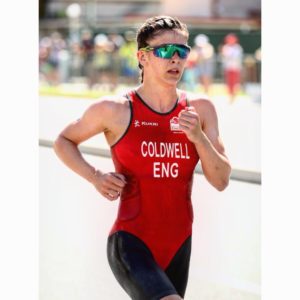
TRAILBLAZING TRIATHLETE & CHICKEN MUM | SOPHIE COLDWELL

2 February 2021 by

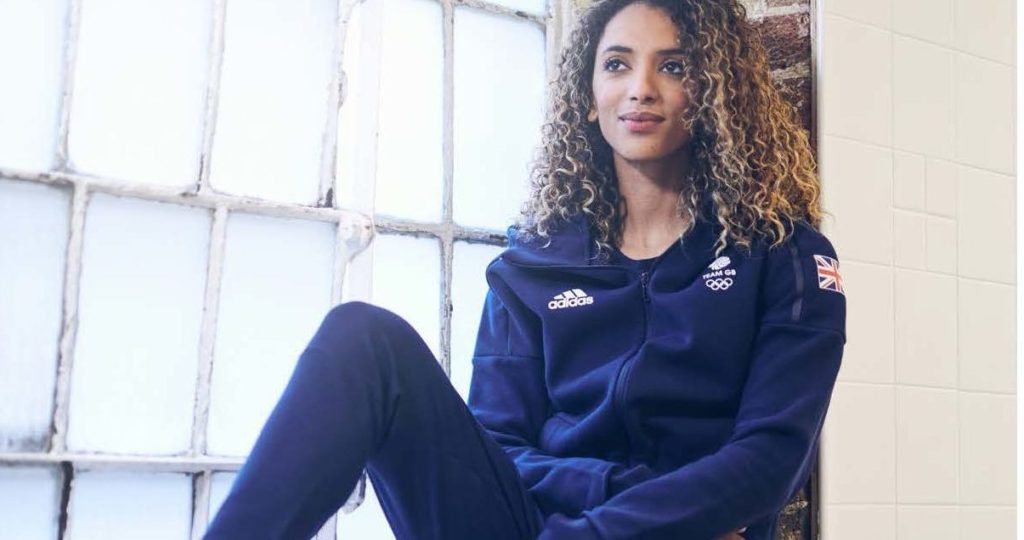
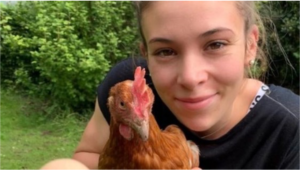
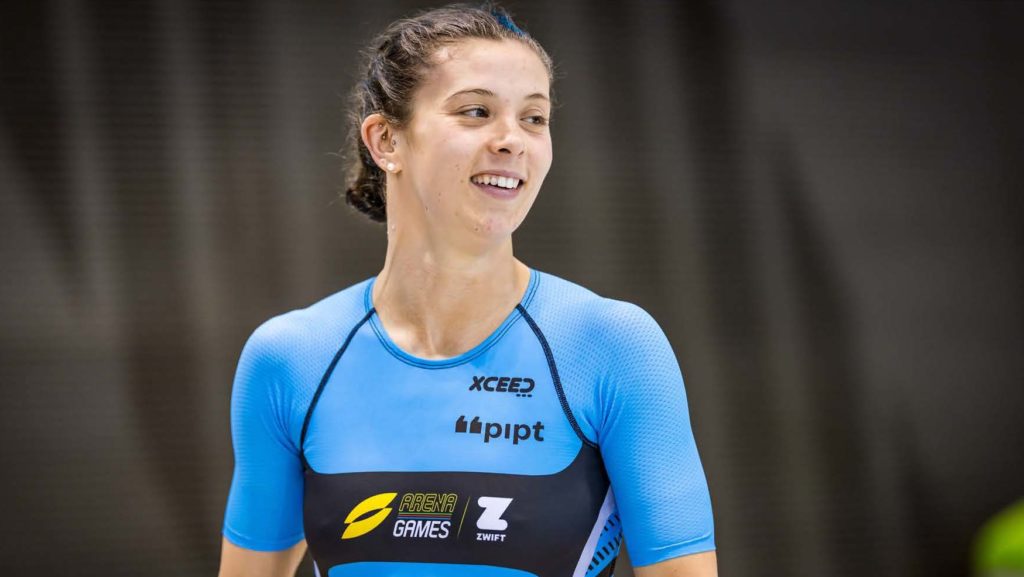
Though she presents a superhuman exterior Coldwell is more than personable. A self-proclaimed chatty chicken-rescuer, she is a down to earth and laid back when she isn’t Zwifting or completing tempo hill runs. Currently she resides in Loughborough in her home shared with elite ultra runner, and now fiancée, Tom Evans. However, let it be known that she is a revered triathlete on the international circuit, and is looking to medal at the next Commonwealth Games along with winning more ITU podium finishes.

For Coldwell, the reality that her sport is her job continues to be one of some disbelief.  She recognises that she is “fortunate” and “very, very, VERY lucky” to be able to race and be sponsored to do so. It is a rather modest and underplayed opinion of her chosen profession, as she has worked extremely hard to be one of Britain’s top triathletes.

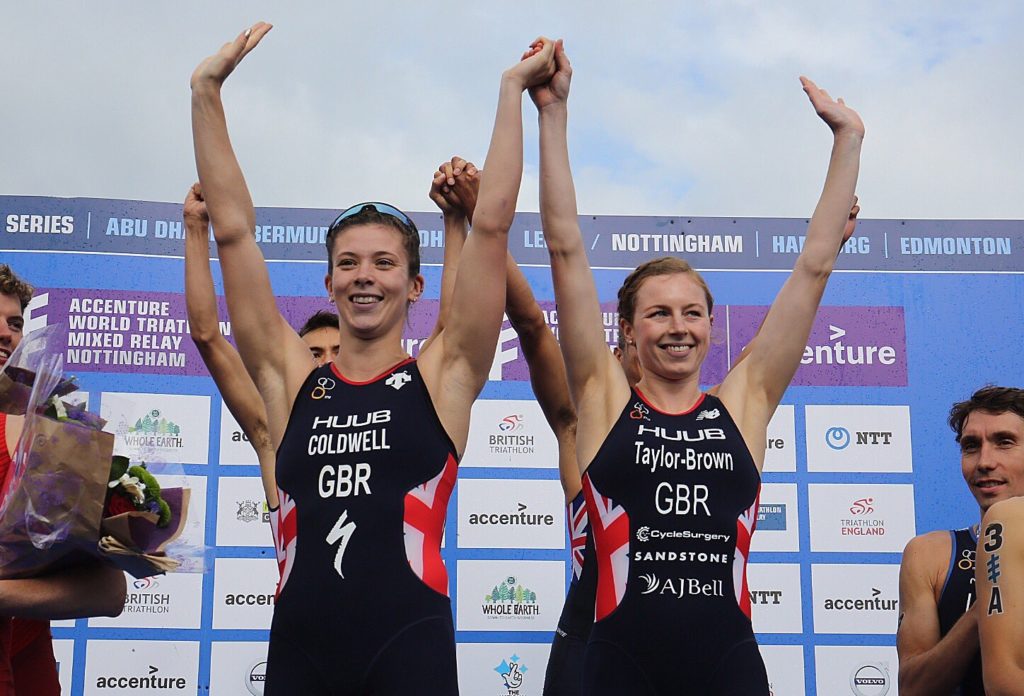
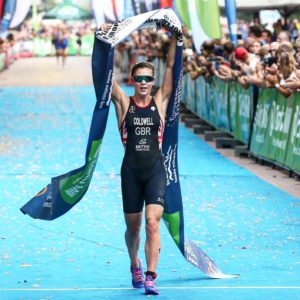
Having moved to Nottingham in 2000, Coldwell became involved with one of the largest triathlon circuits in the UK. She began competing at the age of 8, and has not looked back since. Over the years she has gone from good to great, winning gold at the 2018 European Championships, finishing 6th at the Gold Coast Commonwealth Games and several podium finishes at the ITU Triathlon 2019 World Cup races, including gold at Cagliari and silver in the mixed relay at Edmonton. She is currently ranked 15th in world.

Prior to the pandemic, Coldwell regularly trained in groups and found it extremely motivating when the tough got tougher. Due to similar goals the athletes are all able to push each other more than they may be able to do on their own – “we’re all very competitive, we are all pretty good at what we do” Coldwell explains “and we want to get the best out of each session”.

It is not unusual that Coldwell is out on the track on her own however, with triathlon often being a highly individualistic sport. Competitors regularly see themselves in a position where they are leading the front in a solitary style. “It’s a bit of an odd one in that situation” Coldwell begins, “because part of me is like ‘this is amazing, you’re out and you’re on your own, no one’s around you, you’re running fast and everyone else has to keep going’ and then the other part of you is like ‘Oh my God, I’m out here on my own! Everyone’s shooting for me.” This play off in the mind is something that can occur in competition, however staying positive, committing to the situation and not looking behind you is a tactic Coldwell enjoys executing.

Now that she has to train solo more, she is finding that a lot of adaption is required to get the best out of her sessions. On making these changes, Coldwell says that “A massive thing that gets me through [training] is having people around me, having a coach that is there for the majority of the sessions and them giving me support”. What she now must focus on more than ever is having specific targets. For her, the goals that she sets out to complete are often enough motivation to push her when the training gets gnarly.

Hunting down target scores and milestones is a huge part of keeping us motivated Coldwell believes, commenting that without it everything feels “slightly pointless”. Running organisation and community, Jogging Buddy, also promotes this. ‘Being clear about your intended goal is essential for ensuring that you progress towards reaching them’ is key they argue, pointing out that if you share your goals, particularly with those that matter, you are more likely to commit to them.

The prospect of an event is another motivator for Coldwell, even if we have to be a little tentative with many events’ materialisation being uncertain. Big or small, having a clear focus is key to changing our attitude: “whether you’re doing couch to 5k, whether you’re doing your first triathlon…it doesn’t matter how big or small you think that goal is” Coldwell tells AMG. “If you set that goal every time you start thinking ‘Oh, I can’t really be arsed but I want to achieve this, I want to be able to do that, I want to be able to run this far’…and all of a sudden your whole attitude changes because you’ve got a date, you’ve put a timeline on it and everything you do is a step closer to achieving that goal that you’ve set yourself.”

Another nugget of wisdom Coldwell offers to those who may be finding the training tough is accepting the reality that “bad sessions happen all the time”. However we should not dismiss them, but rather reflect on why the session was bad and how we can put in preventative measures to ensure that we can perform as well as possible. Even if they dampen the mood a little they are sometimes unavoidable says Coldwell: “we’re only human and you have still gone out the door and done it at the end of the day!”

Being home more has also allowed Coldwell to settle into a routine, and having a partner who understands the needs for afternoon naps and dinner after a late session is pretty beneficial – “ I like to say that I do half of the cooking, but I definitely don’t, Tom does the majority of that” Coldwell laughs.  Sometimes their training will cross over, and they enjoy mountain biking together on Thursdays; understanding each other’s training demands and supporting one another are key ingredients for fulfilment beyond the triathlon course.

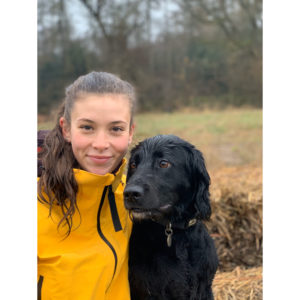
De-stressing is also a major part of being an athlete Coldwell highlights. A large contributor to her relaxation is her animals, dogs Poppy and Rocco, and her 8 chickens that were rescued from battery farming. She is also a qualified nail technician, and believes that it is important to have other things going on in your life that are unrelated to your sport. A good balance – and a dose of cuddles and attention from one’s furry friends – is essential.

Though only 26 years old and with many years ahead of her, Coldwell’s sagest advice is that “an arrow has to be pulled to go forward. So when times are tough and you feel like you’re being dragged back, keep firing, and you’ll go forward in the right direction.”

Tagged With: bike, commonwealth games, Olympics, run, swim, Triathlon

CAPTAIN DONALD LAWSON’S RECORD-BREAKING MISSION FOR DIVERSITY & INCLUSION

1 February 2021 by

There is probably only one thing larger than Captain Donald Lawson’s personality – his targets and aspirations.

Lawson was not raised in what we may call a ‘sailing family’ – he was the first of his generation to do so. He began sailing at a kids camp in Baltimore, Maryland, where his mother worked, and very quickly found his calling. Now, he has set his eye on 12 individual sailing records with the aim of beating every single one.

In the past, sailing has been known as a “white man’s sport”: for example, at present, only a handful of women have competed in the Americas Cup. British sailor Tracy Edwards, MBE recently commented that “Sailing is one of the last bastions of patriarchy.”  In 2017, the Royal Yacht Association revealed that the overall proportion of BAME (Black, Asian and minority ethnic) averaged at 2.6%. No UK clubs reported BAME membership proportions of over 4%.

For the most part, Lawson has been treated with a mix of curiosity and respect. “You’re a nine or ten year old kid, and you’re hopping on these maxis and big cruisers. People look at you like ‘why are you here?’ But at the same time, they’re kind of like ‘let’s see what this kid can do’” he recalls. “And some of it could be hope for failure or hope for success. But the way I looked at it, it was opportunity”.

Though he has grown accustomed to people assuming a lack of talent on the basis of his ethnicity, this has only made Lawson stronger: “It doesn’t bother me anymore because one of my hopes and one of my big goals has been changing their perspective…as previous generations have gone, new generations are a lot more open minded.”

To gain the attention of the sailing community,  Lawson knew he had to be one of the best around, irrespective of skin colour. Whilst harnessing his tenacity and seeking inspiration, he was given stellar advice from sailing legend, Dame Ellen MacArthur.  MacArthur advised Lawson to be actively involved with as many boat types as possible to become an extremely well-rounded athlete “and that turned out to be the best advice [I] ever received”.

Many, including Lawson, believe that America has fallen off the map in comparison to other big sailing nations such as Great Britain and New Zealand, and this was perhaps characterised by team American Magic capsizing at The Prada Cup in January and scoring zero points. Lawson plans to change this. His record attempts will not only be a win for those seeking racial equality, but they will also see the skipper using sustainable energy sources on his boat. Lawson believes he will have a speedier and lighter edge thanks to wind and solar power, resulting in “performance without compromise”.

As an African-American, Lawson has recognised that something – or someone – needs to champion diversity in sailing. So why not him? The sport will “die off and not be sustainable” in the USA altogether if it remains undiversified he believes, because it will not yield great enough interest from all communities. As a consequence, he has taken whitewashing by the horns, and wrestled it to the ground.

“A lot of people in my culture didn’t know that there was an opportunity [to sail]” Lawson explains. If they didn’t know, it was probably because they weren’t invited he goes on to say, “and then if they were invited they were probably shunned out” due to racial prejudices. In combatting such inequality, Lawson has set out on a two-fold approach known as the Race for Equality. Alongside the championing of a 4 Year racial diversity and inclusion campaign, Dark Seas, Lawson aims to inspire those by becoming the first African-American to sail solo non-stop around the world and the first to compete in the Vendee Globe in 2024.

He is also aiming to become the fastest American to sail solo non-stop around the world.  “It’s going to be a while before you see another sailor like myself who competes professionally” due to this lack of diversification says Lawson, however he hopes that he can inspire the next generation through his campaign, and put sailing back on the map for all Americans.

Lawson is already creating quite the fuss on social media platforms, admitting that he gets messages “daily” asking for advice on success and what it takes to get to where he is now “And I always tell people, you know, I’m a human being too, I need support too. And I get my support and inspiration from people who came before me or people who are currently doing it”.

Lewis Hamilton is a major source of inspiration for Lawson, because he is a “very focused and driven person” as well as a go-getter. Lawson has adapted this approach to his career by being scrupulous with his connections: “that’s kind of how I protect myself by looking at it as ‘Who should I work with? Who do I need to be around so I can maximize my abilities?’ And that’s always the hardest part – networking, finding the right people – but I’ve done that now with my partnership with WhiteCap and Simon Clay’s team who will manage both my records and the 2024 Vendee Globe Race.”

Now, Lawson is on a mission of speed, perseverance and diversification. It is by no means a small task, yet it is one he relishes. The captain has set course for not only championing minorities in sport, but the future of American sailing.

You can follow Captain Lawson’s journey into the history books on Facebook & Instagram, or contacting him via email at donald@captaindonaldlawson.com.

“Believing in something bigger than what I am has kept me going” | Imogen Sills

27 January 2021 by

When asked what Imogen thinks her twin, Saskia, and eldest sibling, Sam, may describe her as, what immediately comes to mind is “lucky” and “carefree”. “The stuff that I’m passionate about I don’t go about in the same way as them” she explains, “I never really tell people [about] my goals and passions, I just kind of get on with them and they either work or they don’t…I think that could translate [to my siblings] as being unfocussed”. Despite this unassuming description, Imogen recently placed 9th at the iQFoil World Championships last October, gaining a fully funded position on the British Sailing team.

This has not been Imogen’s first foray in the world of sailing, and it is certainly not her last dance. Imogen’s journey into competitive windsurfing began as a junior athlete alongside her twin Saskia. However, due to a terrible injury Imogen saw herself dropped by British Sailing – an event she thought would break her for good. For some time, she did not want to have any involvement with the sport and she was ready to put her sails away forever.

But as the saying goes, as one door closes another one opens. A short time after she received the upsetting news, Sam asked her if she would be interested in going to Norway to coach the junior windsurfing team as he could not fill the position. After some deliberation Imogen headed out to Norway for a trial period of coaching, falling in love with the sport from an angle she had not experienced much of: “I used to say getting taken off the team was the worst day of my life, but actually was the best day of my life. Now I look back and I just think, wow, if that didn’t happen, where on earth would I be now?”

The opportunity wasn’t exactly handed to Imogen on a silver platter though. Upon arrival it was evident that the team operated in a way that Imogen was unused to. The windsurfers sometimes clashed due to the belief that they had to compete against one another, causing uncooperative behaviour amongst them. In response to this, Imogen set course for an atmosphere of collaboration. Eventually she was able to instil the idea that teamwork was essential and “if you don’t work together, we’re not going to go anywhere”.

The fruits of her labour paid off at the 2018 European Windsurf Championships in Greece with every athlete exceeding their expected result –  “they sailed another level than they’d ever sailed before” Imogen recalls. Imogen was overjoyed that she could be part of the experience: “I think that regatta is one I’ll never forget because it just showed that if you believe in yourself, and if you believe in your way and [let] people believe in you and you work hard, anything is possible.” She credits the Norwegian team for throwing her a lifeline and taking a chance on her, providing her with one of the most exhilarating opportunities of her life.

As a woman, Imogen’s perspective of gender in the sport has gained new insight from her coaching role. The most prominent factor was the number of female coaches in the sport overall. Though the athlete gender divide is narrowing in windsurfing, the male to female ratio in windsurfing coaching remains vast, with Imogen approximating the ratio to be roughly 8% women on the international scene. Research by Dr Leanne J Norman of Leeds Beckett University show that the percentage of female accredited coaches across all Olympic sports stood at just 11% at Rio 2016, with 89 out of 197 of competing countries having no female coaches whatsoever.

Imogen is thankful that her boss is highly supportive of engaging women in sports management roles, however she believes that women have to jump through many more hoops as coaches in comparison to men, purely due to gender bias.

She also saw another side to the sport as the Norwegians had only began to offer a separate, dedicated race for women in September 2020. Prior to this, the cups which they raced for were open events and rarely allowed women to achieve any recognition. Imogen is nonetheless positive that change is happening outside of the UK – “the recognition of your efforts – no matter what gender you are – is really important”.

Imogen has now found herself in a position which she did not expect. Whilst working as a coach she was asked to try foiling at a British Sailing talent identification programme. Though she had not been on the board as a competitor for some time, it turns out old habits die hard. After grinding away through 2020 Imogen was once again a fully funded windsurfer, laying down an epic performance at the World Championships in Lake Garda, Italy. Now she has set her sights on Paris 2024, and is taking the advice of her older brother which he gave to her and Saskia: “work hard, girls, you won’t regret it.”

“Without sport I would feel incomplete” | Sedem Ama

21 January 2021 by

It is evident that women’s boxing is booming. Women’s boxing has existed as a sporting pursuit for a long time, however official competitions are a recent addition to the sports events calendar. According to sport sociologist, Professor Kath Woodward, the first European cup for women was approved in 1999, followed by a women’s boxing World Championship in 2001. Sometimes it is viewed as “controversial” Woodward writes – yet, irrespective of this, boxing is extremely positive for women. It allows participants to keep fit, learn discipline, and “gain self-esteem”.

Keeping active, disciplined and maintaining a good level of self-esteem are all useful tools if we are to try and bear the impact of a third lockdown in the UK. Experts have been vocal about the potential mental health crisis for generations to come post pandemic. Figures published by The Telegraph revealed that ‘the number of children referred to child and adolescent mental health services (CAMHS) was 4,615 per 100,000, the highest on record and up nearly 20 per cent on last year’. In 2020, the Office for National Statistics reported that during the pandemic, depression in adults had almost doubled from what it was pre-pandemic.

Athletes are by no means unaffected either, yet it is arguable that we have something to learn from them. The Sports Injury Bulletin recently wrote that routine and exercise are key to better mental wellbeing, particularly in a period where we may face isolation. Amateur boxer, Sedem Ama, also recognises the importance of these tools in a period of uncertainty: “Completing a task, whether it be going for a daily walk means you have accomplished something, so it’s really important to find discipline to help during times like these.”

For Ama the benefits of boxing on not only her physical health but her mental health are unparalleled. Alongside her amateur boxing career Ama balances a full-time career in PR. It certainly makes her schedule somewhat pressured. A typical day for the boxer requires an early morning wake up followed by cardio or strength and conditioning, a full 9-5 day of work, and then a 2-hour session of technique and bag work at the club. “I have found that without training, my mood can falter and that’s simply because of the exhilarating emotions I get, even during a really challenging session” Ama writes. “Boxing gives me a sense of accomplishment. When I train in the morning, it gives me a fulfilment to conquer the day, and my evening sessions also allow me to then close the day and sleep well which is so important for recovery. Personally, without sport I would feel incomplete”.

It is evident that Ama is not alone in the search for endorphins either. The interest in women’s boxing has grown exponentially in the last 4 years. Data produced by Sport England shows that between 2018 and 2019, 420,400 females were involved with boxing and boxing related activities (such as boxercise). This has risen from 386,000 in 2017-2018, and 356,500 the year prior to that. “I love the fact that I’ve come in at a time when it is booming and people are paying more attention to [the] females in the sport” Ama explains. She acknowledges that boxing remains a male-dominated sport, but points out the salient fact: “females have talent too”. The ring is no longer a ‘men only’ zone says Ama, “we’re not just in there to look pretty…we can fight. If we want to box, we can box. If we want to brawl, we can brawl.”

Perhaps what is key to Ama’s success thus far is her decisions to surround herself in a supportive, yet stimulating, environment. Not only does she have strong support from her family (though she does joke that they would prefer it if she “was playing golf” instead of watching her get punched), Ama emphasises the importance of her friendships too. “I only have friends who are as ambitious as I am” she highlights “and that’s not by accident”. For Ama it is crucial that to be passionate about one’s purpose those around her should be similar minded: “We all push each other to be the best in whatever area we’re in.”

Passion and purpose in Ama’s personal network translates directly to her sports ethic. Originally she started at Double Jab Boxing Club, however her hunger for progress lead her to Repton Boxing Club which prides itself on being one of the oldest established boxing gyms in the country, and one of the most successful. The club’s motto is ‘Non Viscara…Non Gloria’, which translates to ‘No guts…no glory’ and indicates how seriously they take their training, whatever level the athlete may be. Immersing herself in a competitive atmosphere is what brings out the best in Ama, pushing her harder and polishing her into an exceptional athlete. 2021 has begun unfavourably for many, however keeping active, being disciplined and staying connected in a supportive environment like Ama are key to moving forward.

FOR SON AND COUNTRY | Marlie Packer

19 January 2021 by

Named as one of the top ten female rugby players in the world by The Telegraph for ‘her industriousness at the breakdown’ earlier this month, one can only wonder how much more Marlie can give the world of rugby. The answer is: one hell of a lot.

Currently, Packer has made 74 appearances for England, and plans to make it more. However, her attitude to the game has changed over the years she explains. As she has had a few injuries over the past few seasons, she is looking to “Play every game as [her] last”, focussing on completing one game at a time. “Every game that I play in I want to be one of the standout players and be the best player on that pitch” says Packer, and this has reduced her number of long-term ambitions and bettered her outlook: her rugby style has shifted to one of quality over quantity.

2021 is set to be a huge year for women’s rugby, with many hoping that the 6 Nations tournament will still go ahead in early spring, plus the Rugby World Cup 2021 which is set to be held in Autumn in Auckland, New Zealand.  Statistics in 2019 showed that women’s rugby has had an unprecedented increase in interest, with participation levels reaching an all-time high with 2.7 million players globally.  England Rugby also stated that more than 40 per cent of rugby’s 400 million fanbase are female. Packer is hopeful that the year will take off.

When Packer started rugby at an international level she did not think that she would ever get paid as a professional rugby player. Much to her surprise, she was offered a Rugby 7s contract soon after making the statement in a televised interview in 2013, which lasted for 4 years until 2017. It was only in January 2018 that the England Women’s rugby team, also known as the Red Roses, were offered full time contracts, making them the first women’s rugby team in the world to go fully professional, reported rugbyspeakersuk.com. The game has gone “from strength to strength” Packer beams. As the game becomes more regularly televised the better the coverage of women’s rugby will be Packer believes, and the team will be even more motivated to show how exciting the women’s game is: “If we keep getting better and challenging each other…we will put on a performance that people will want to pay and come watch and really enjoy.”

Of course it is not just the fans which Packer is looking to perform for now, but her partner and their new-born son, Oliver. Life has changed drastically for Packer since becoming a mother, however it has only added to her drive to play the best rugby she can. Upon being asked whether her focus on rugby had lessened since her entry into parenthood, she was quick to highlight that Oliver and rugby are joint in priority. Though they are “two different sides” of her life they greatly complement each other: “everything I do from now is not about making myself and my family proud, but making sure that my son can look back and say, ‘that was my mummy at the World Cup’”.  To inspire the next generation, as well as her son, is a major goal for Packer.

It is by no means easy to balance the two however, evidenced by Packer’s deflation that she will be at the Rugby World Cup during Oliver’s first birthday. She likens parenthood to the game in that you can “read all the books in the world” on what to expect – you can analyse the tactics, replay the scrums – but you will not truly understand what to do until faced with the situation. “You have to adapt very quickly and deal with what’s actually in front of you” Packer advises sagely.  Though this is her first child, it is clear that the sport her has taught her valuable lessons beyond the pitch. She credits her partner, Tash, as well as friends and family for helping them adapt to family life.

With 4 Grand Slams, 1 World Cup win, and back-to-back Tyrrells Premier 15s titles it is possible that Packer is one of England’s most successful players, yet this is not slowing her down. “I’d like to become a back-to-back Grand Slam champion” says Packer, as well as beating the All Blacks on their home turf this autumn. The overall goal is to remain the number one women’s rugby team in the world, as well as a number one mum to Oliver.

BIG AIR AND BODY POSITIVITY | Lily May Young

15 January 2021 by

Unknown to Lily May Young, her life was about to take a dramatic new direction after she entered an athlete recruitment initiative with British Kitesports. Looking for talent ahead of the 2024 Olympics, the National Governing Body sought out the highest-performing junior women in a drive for more female talent. 160 applications were originally made, and after several rounds athletes were cut down to a group of 5 that would constitute the official GB Kitesurfing team. One of the 5 was Young.

Originally, Young sailed and windsurfed to a high level, competing at the 2015 Youth World Championships in Poland. A self-proclaimed water-baby, the transition for Young came naturally despite a very physically demanding programme which required her to learn how to kite in a short period of time. Now she spends most of her time training with the goal of Olympic qualification, hitting speeds of up to 35 knots (40mph) .

“It didn’t matter that I changed sports” Lily explained. “For me, it was just competing and being on the water. Being outside is just something that I absolutely love.” Though her swift transition appears close to miraculous to the untrained eye, Young freely discusses how there are many challenges which she faces in the sport: “With reaching those top speeds come pretty big crashes which can hurt quite a lot [and] can make your days quite mentally challenging… You’ve got to push through that. But it’s days like those that make us do better.”

What is particularly exciting about kiting’s Olympic debut in 3 years-time is that it is going to be a mixed relay, with one male and one female representing each qualified nation as a singular team. In pursuit of a greater gender balance in the sports, the Olympics 2020 programme will offer 9 new mixed events in archery, judo, shooting, swimming, table tennis, the 4x400m relay, and triathlon. Though the exact course and format for kiting is yet to be formally confirmed, Young states that it is likely that the mixed gender relay will be the only kiting event, making it unique in comparison to the other sports the Olympics offers. This also means that the selection will be even tougher, with one spot for a female kiter and one spot for a male.

Young is highly supportive of kiting’s attitude to gender equality, describing the atmosphere as “relaxed” and “cohesive”. “There’s less of a divide between the males and the females” she explains, “We all race together quite often, which doesn’t really happen in sailing. Males and females will sail slightly smaller [kites and] we can – if we want to – use those exactly the same kites as the men” – ultimately, it is down to one’s preference of kite.

Following on from this, kiting is making leaps and bounds in term of securing fair play during the Olympics. In May, SurferToday reported that ‘kite manufacturers must provide detailed information (material, dimensions, weight, etc.) on the developing process to ensure that all athletes have access to the same equipment.’ The reason for this regulation is that the Olympics is trying to prevent an ‘arms race’ with custom-made kit, eliminating ‘technology doping’ and ensuring that the winner’s merit is based on their skill, not their fancy foils.

Introducing a mixed gender event also leads to more respect for one’s competitors Young tells AMG. Young and her teammates often race against and with each other irrespective of whether they are male or female. Due to their competitive nature, the team will fight tooth and nail to out-surf one another, however sex and gender are irrelevant factors. Though they may compete in binary categories, they are at the end of the day a single team. Young sums it up succinctly: “you’re still on the same course as them”.

In pursuit of gender equality in kiting and beyond, Young believes that part of the larger picture is redefining beauty standards in sport. From her perspective, championing women as strong and competitive athletes is the way forward. There is some inevitability that we want to look good Young explains, but how we view what ‘looking good’ is in sport is not a one-look-fits-all approach. Rather, we should appreciate athletic bodies and feel good about what they can achieve: “I have really strong shoulders and legs from weight training but I am happy with the way I look”. Many people are mortified by the thought of wearing a wetsuit and being in the cold, however it does not phase Young. In sport she finds it “super encouraging” that athletes can simultaneously look strong “and have a great time”, and she hopes that this is something she can promote as an elite athlete.

  • « Go to Previous Page
  • Page 1
  • Interim pages omitted …
  • Page 14
  • Page 15
  • Page 16
  • Page 17
  • Page 18
  • Interim pages omitted …
  • Page 27
  • Go to Next Page »

Primary Sidebar

Recent Comments

    Archives

    Categories

    • No categories

    Meta

    • Register
    • Log in
    • Entries feed
    • Comments feed
    • WordPress.org

    Subscribe to AMG Newsletter here

    Footer

    © 2026 Athlete Media Group Ltd All Rights Reserved

    MENU

    • Our Story
    • Manifesto
    • Athletes
    • Pioneers
    • Journal
    • Work
    • Contact

    USEFUL

    • Advisory Board
    • Privacy Policy

    CONTACT

    mark@athletemedia.co.uk

    tel: 07952 304340

    VAT REGISTERED ADDRESS

    Thatch Barn
    Ryewell Lane
    Hoath Corner
    Edenbridge
    KENT TN8 7BS

    We use cookies to ensure that we give you the best experience on our website. If you continue to use this site we will assume that you are happy with it.